Category: Childhood Apraxia of Speech

  • The journal entry I wrote when I learned my daughter had apraxia

    The journal entry I wrote when I learned my daughter had apraxia

    [wysija_form id=”1″]It’s November of 2017 and we are decorating for Christmas!  I’ve been trying to do some deeper cleaning too because man do things accumulate!  I happened to run across some old journals of mine.  This one struck me, I guess because since I wasn’t yet blogging, I had not ever gone back and read what I wrote around the time she was diagnosed.  It’s a good reminder of just how far we have come.

    10/4/2012

    Oh Ashlynn.  How my heart breaks that you have apraxia.  You are such a sweet, fun, and happy little girl, and it makes me sad you can’t tell me what is in that pretty head of yours. People always stop wanting to talk to you.  You smile, but no words come out. You’re talking so much more at home, and I work on your speech with you everyday.  I don’t want to burn you out or have you think I’m disappointed when I correct you, and so far you are agreeable to the help.

    I always want you to know I love you and I’m so proud to be your mom.  You are a wonderful big sister to Jace, so sweet, loving,and caring.  Jesus is in your heart and shines through you.  Together we’re going to beat apraxia.  I love you Angel, my little Ashlynn Kay.

    Love,
    Mommy

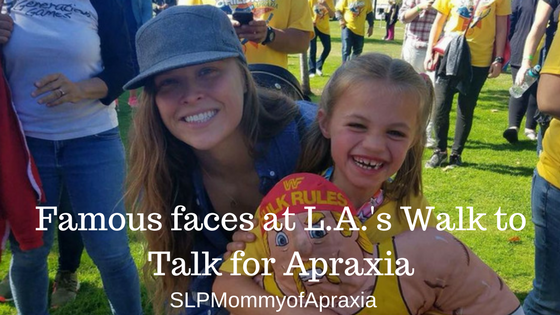
  • Famous Faces Walk for Apraxia in L.A’s Walk to Talk!

    Famous Faces Walk for Apraxia in L.A’s Walk to Talk!

    [wysija_form id=”1″]

    It almost seems crazy now, but just 3 years ago Apraxia didn’t have a face. There was not ONE well known person who had fought apraxia and overcome.  I was an SLP before my daughter was born and I can tell you after she was diagnosed, even though I was an SLP, the fear, worry, and guilt that gripped me hung onto me and wouldn’t let me go.

    It haunted me. It would keep me up at night.

    I would scour the internet but I could not find one famous person who had apraxia. Stuttering has faces.  Dyslexia has faces.  Down syndrome has faces.  Autism has faces of successful people living their dreams, but apraxia? Nope.

    The fear in my heart would threaten to overtake me at times.

    I remember wishing and praying with every ounce of my being that apraxia had a face.  Not even a spokesperson, but JUST a face that I could look at and say, “hey, that person had apraxia and look at them now.”  I tried to follow the advice of Ghandi who said “Be the change you wish to see in the world,” and I started my blog and my facebook page in an attempt to spread awareness.   I could have never dreamt or even prayed that awareness would come after I would read a Rolling Stone Article, an article whose first paragraph read like a case history for apraxia; and I would find myself standing in the rain that very night with my daughter waiting to ask Ronda Rousey if the speech impediment she had when she was little was in fact apraxia.  

    Since that time I have now met many, many faces of apraxia and I have found many of them in the unlikeliest of places. Mikey from Mikey’s Wish is one of them. This 16 year old boy from the UK started a Facebook page around the same time I started mine,  and he is probably one of my favorite faces who is always doing and writing amazing things and encouraging Ashlynn.

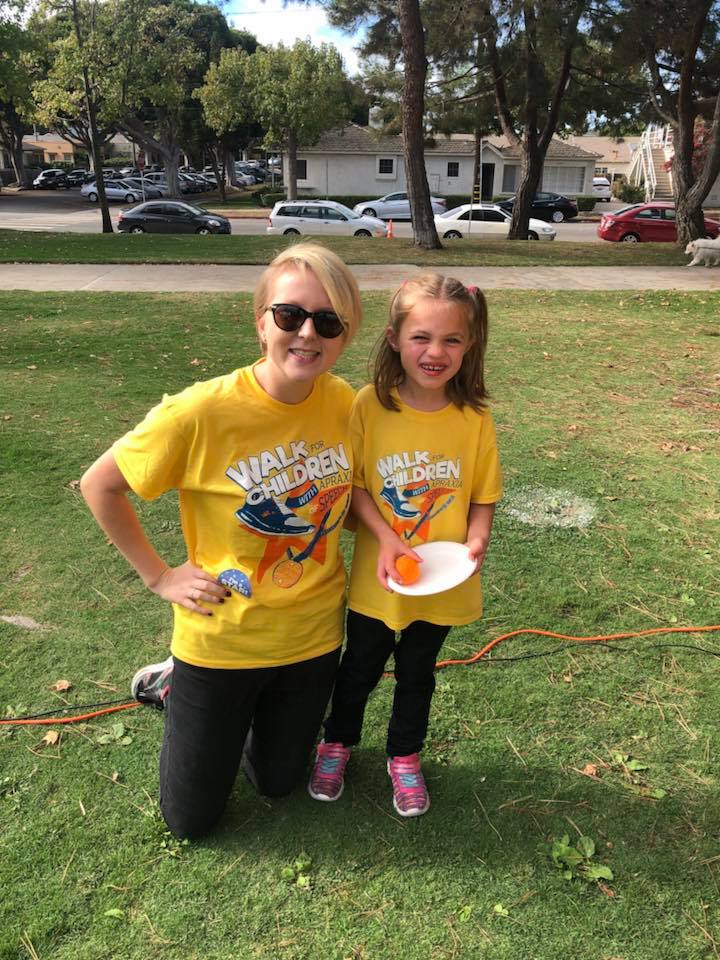
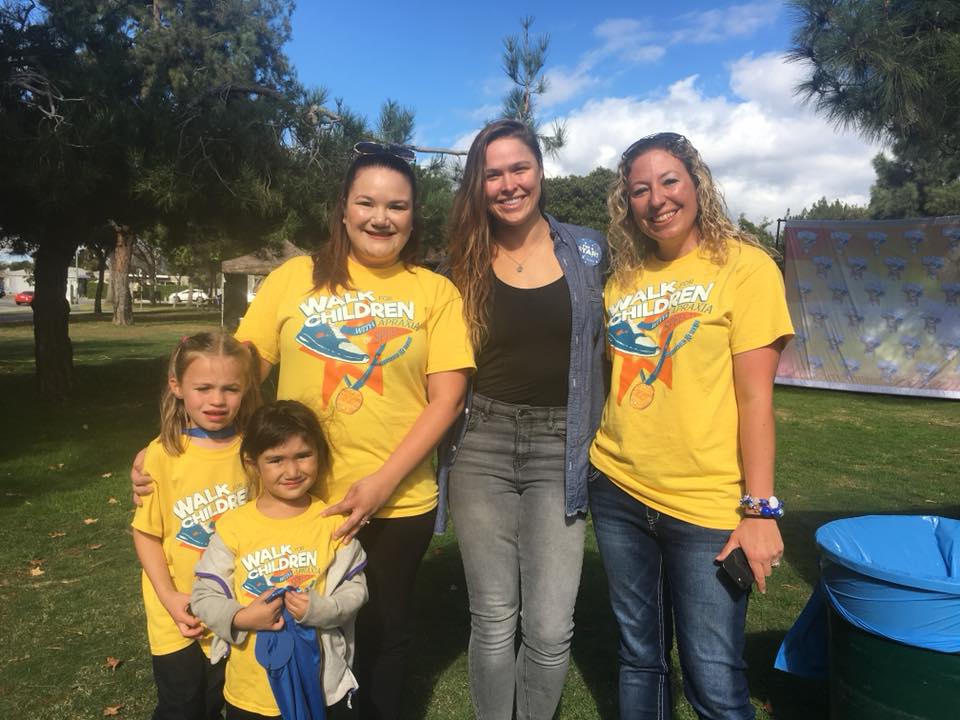
    This past weekend I once again packed my daughter up in tow on a wild adventure to go to L.A.’s Walk To Talk for Apraxia to benefit the Childhood Apraxia of Speech Association of North America.  Unlike the time I drove across town during rush hour and waited in the rain to see Ronda, this trip had more merit.  Ronda Rousey was confirmed to be a guest speaker and I knew if I didn’t go I would forever have regretted it.

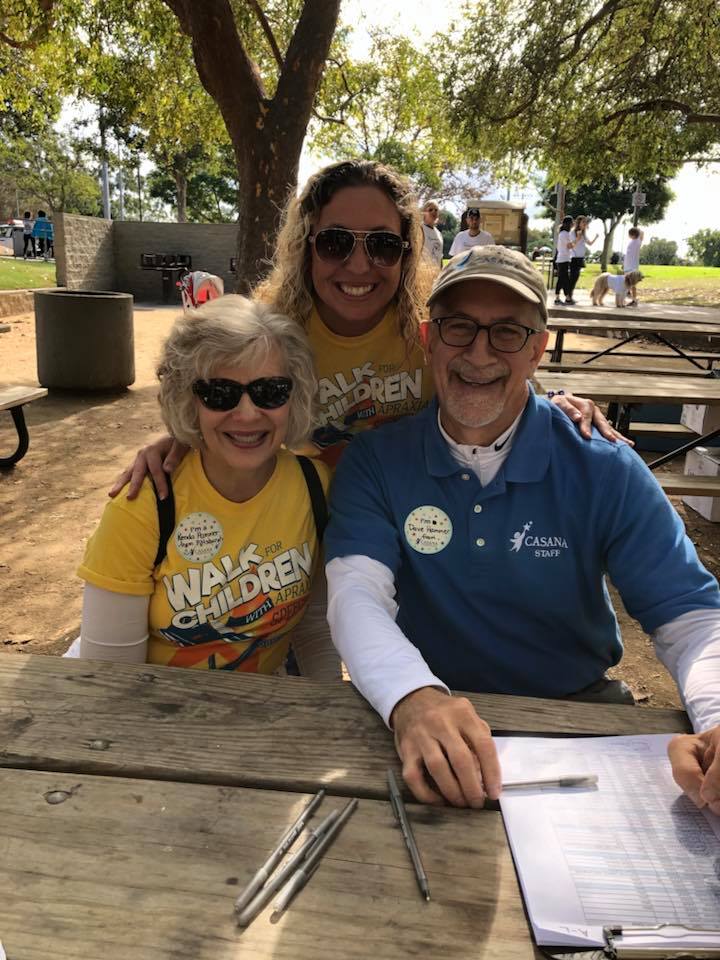
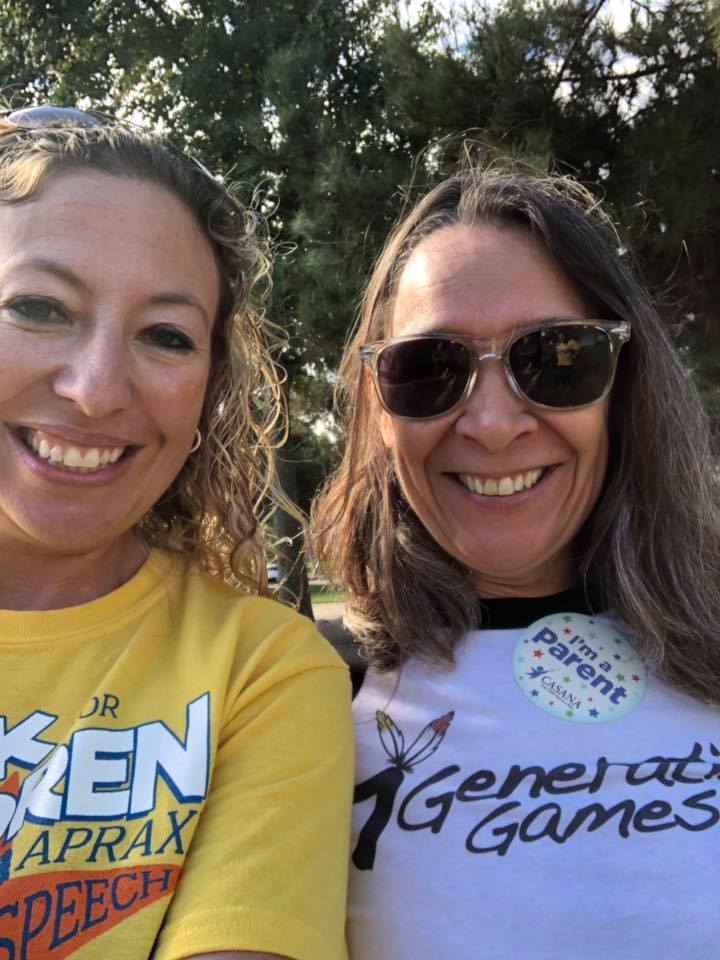
    Upon arriving at the walk, we happened to park our rental car next to my fellow apraxia mom and admin to the group Ronda Rousey: #knockoutapraxia, Bree Vanegas who drove down from Inland Empire, California.  As we walked to the registration table together, I saw one of my bootcamp apraxia mentors and apraxia SLP extraordinaire Dave Hammer.  He had come out from Pittsburgh as a rep for CASANA.  His wife Kenda was also there and I was excited to see them.  Ashlynn loved Kenda and they bonded while walking around the park petting the puppies.
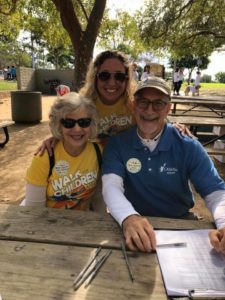
    Making my way through the park I spotted Alyson Taylor of A Girl with a Funny Accent, who I met in San Diego this past summer at the apraxia conference. I wanted so badly for Ashlynn to meet her then but we couldn’t make it work.  This time was different and was special for all of us.  Alyson immediately dropped to Ashlynn’s level and told her that she too had apraxia.   Ashlynn doesn’t always have the words when she’s put on the spot and gripped with anxiety, but I saw the spark and glimmer in her eyes.
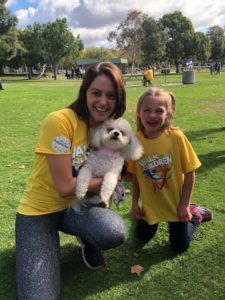
    As I meandered over to get coffee and check out the face painting station, I saw a cute fluffy white dog.  As I looked up I immediately recognized actress Gage GoLightly, who gave a revealing interview about growing up with global apraxia.  I went over to introduce myself and asked to take a picture.  Ashlynn was shy at first, but when Gage asked her to pet her dog she had Ashlynn hook, line and sinker. Gage was such a real, down to earth, and sweet person.  I was immediately struck by her genuineness and her joy at supporting a cause she felt so close to.  She laughed about still being severely dyspraxic and practically doing the splits in the shower the other day.  I smiled at her story and marveled about just how much she reminded me of Ashlynn and in that moment I knew Ashlynn was going to be okay.  How do you thank a person for giving you that moment of peace and comfort when they didn’t do anything but be themselves?  It was amazing.
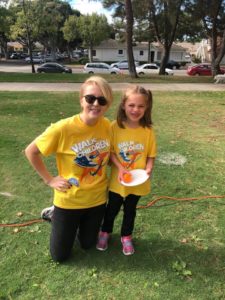
    As I was talking to my friend, I ran into the L.A Walk Coordinator Jaclyn Senis who made all of this happen!  Meeting fellow walk coordinators is in may ways, like looking in the mirror.  We all spend countless (unpaid) hours devoting every second of our spare time to creating an event that is memorable and meaningful to every child with apraxia that attends.  This was her first walk, and it fell on her BIRTHDAY!  I think that should speak volumes as to the character of people who volunteer to coordinate a walk.
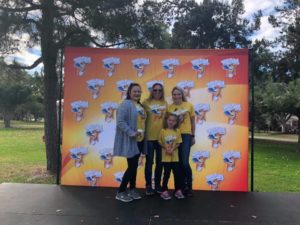
    Soon there was buzz Ronda has arrived with her family and supporters.  Nervously I made my way across the grass to the tent.  I immediately spotted Ronda’s mom, who I instantly recognized from social media. She apparently recognized me or Ashlynn too because she flashed a large smile and waved in our direction.  All my nerves disappeared in that moment because I recognized her not as “Ronda’s mom” but as a mom who understood me without ever even meeting me.
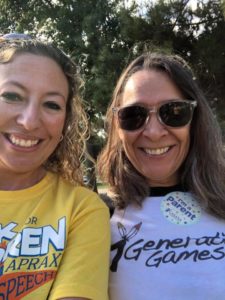
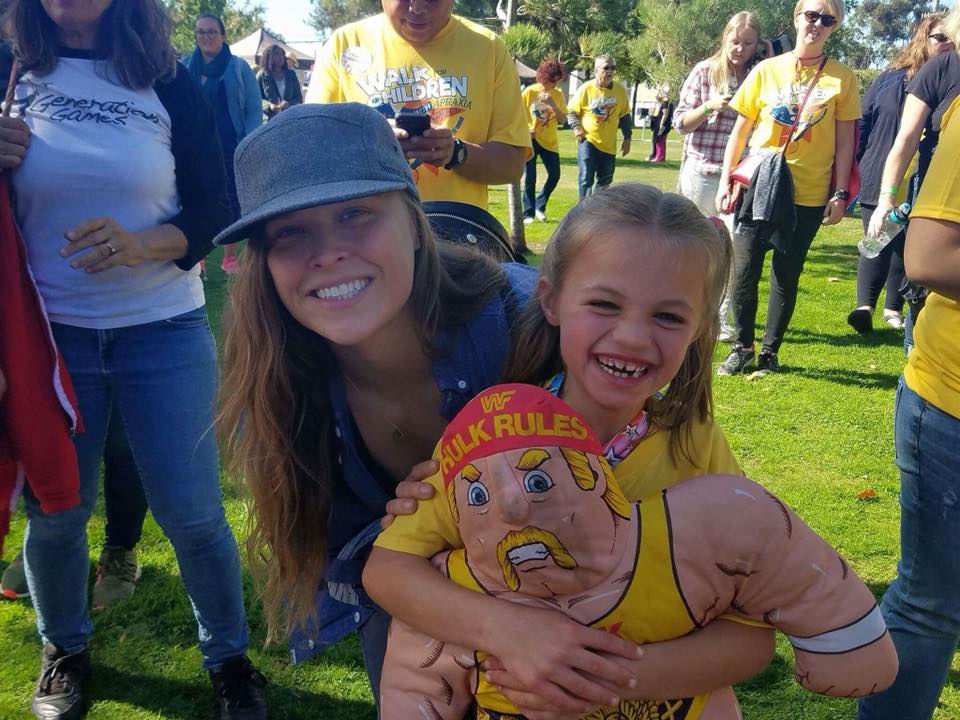
    As we rounded the corner of the tent, Ronda stood in the middle.  When I met her the first time I had no idea who she was, but this time I think I was not only star struck, but amazed she was actually HERE.  Ronda Rousey was HERE at an apraxia walk of just a few 100 people and was going to speak.  How did this happen?  I stared on incredulously.  Ashlynn immediately freaked out and got shy.  She basically ran away.  Haha.  Ronda said she had her “balgrin” in the car and asked if she should get it.  I immediately said yes and  if you don’t know what that is….read her book.  It’s amazing!
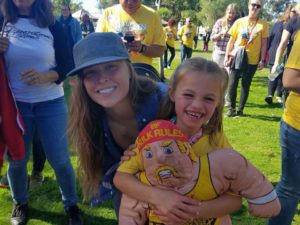
    When Ronda returned with the balgrin, the ice was broken and Ashlynn immediately came up and held it.  I marveled at the fact that ALL three adults with apraxia had managed to cut through Ashlynn’s anxiety by finding something to make her feel comfortable with first.  Alyson dropped down to her level, Gage offered her puppy, and Ronda offered her “balgrin.”  This is home people.  When I say I want to find Ashlynn’s tribe…..this is EXACTLY what I am talking about.

    The speeches by Alyson and Ronda were both incredible in VERY different but wonderful ways.  No two people with apraxia are the same, and as Alyson mused in her blog post, “There’s no right or wrong way, our fights were won in two different ways.” 

    Ronda, Gage, Alyson, EVERYONE walked the walk around the park.  In that moment in this small park in Santa Monica on this fateful day of November 5th, 2017;  there was no dumb kid or smart kid. No MMA star or actress.  No successful or not successful person.  There were just families and their children walking and raising awareness with the shared belief that EVERY CHILD DESERVES A VOICE.   On the walk Ronda took Ashlynn’s picture on her cell phone as I talked to Gage and we both remarked at the “goosebumps” we got while talking to each other.  Ronda’s mom talked to Alyson’s mom and the humanity of our shared experiences blurred out boundaries of fame, wealth, or status.

    There is the expression about pinching oneself to make sure it is real.  I literally did this during this moment in time.  It was THAT incredible and unreal.

    You know, the world is so much smaller than we think.  We are all so much more connected than we ever dare to imagine.  I’m learning every person, on every end of the country or even globe, famous or not, is walking a journey called life full of love and laughter, but also bumps and pitfalls.  The human experience is a shared experience that transcends money, wealth, power, or race.  We all have a story to tell, and we are all shaped by our story. We are all souls looking for a connection.  Olympian, Judo fighter, author, writer, actress, SLP, teacher, or any other walk of life; our lives take on meaning when we can connect with others who share a familiar story.

    What started as a mission for hope, turned into a lesson about life on one sunny day, in a beautiful park in Santa Monica, California.
     

  • No, not another diagnosis. Adding Dyslexia to Apraxia

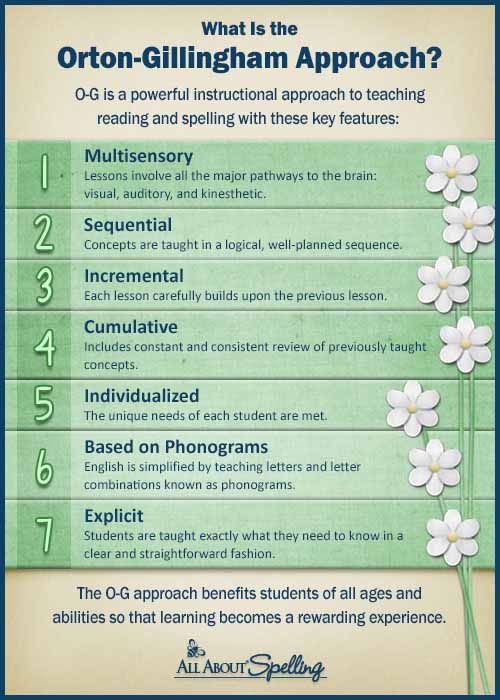
    [wysija_form id=”1″]I had an epiphany the other day.  It came after reading an article someone sent me discussing how American schools are failing kids with dyslexia.   It was an excellent article and accurate in every way.  I started my career in Denver Public Schools in 2004, and at the time, an approach called “whole language” was being used to teach reading.  Just four years before this time, in 2000, my mentor (and now Ashlynn’s SLP) was telling me about the 2000 National Reading Panel Results that showed there were 5 components of reading that children needed to read, and whole language was missing many of them, particularly the two that had to do with phonological awareness and decoding.

    During my career in Denver, a special education coach named Robert Frantum Allen, came out and was training our intervention and special education staff to look at struggling readers and identify the component of reading in which they were having the most difficulty.  I remember the ones that were the most prevalent were in the areas of phonological awareness and decoding.  Many teachers weren’t even testing phonological awareness, and since the schools were using a whole language approach, it wasn’t getting taught either.

    I was in a Title 1 school, which in some ways is good because we get more funding to get more intervention teachers.  We had a great response to intervention system set up, with teachers hired to do 6 week intervention and track data on struggling readers.  The interventions included LLI (leveled literacy instruction) and Reading Recovery.  These were great programs for our ELL (English Language Learner) students, but for our kiddos who would eventually fall into special education, they weren’t helping at all.  I remember Robert stressing to us that these interventions would not remediate our kids with a reading disability (dyslexia) because they did not identify and then focus on the root cause of the issue, which in many cases was phonological awareness.  He believed 100% in an approach called Orton Gillingham or approaches based off this reading program.  In the school I was at, I had two Kindergarten kids come in with apraxia, and they THRIVED on an OG approach called Fundations.  OG has a TON of research and is in many cases considered the gold standard for reading intervention approaches.

    At the time, I didn’t have the research to back up Mr. Frantum Allen’s claims, but I had my professional experience which consistently showed our kids with a reading disability did not make growth in these reading intervention approaches; but the kids receiving an OG approach to reading did.

    I have never forgotten all the training and professional experience, but a little thing called apraxia kinda took over my life.  That is, until I read that article I mentioned above.  Everything I learned in DPS came flooding back, especially when I read the line that said one teacher said she didn’t learn how to teach kids how to read until she was trained in Orton Gillingham.  It went onto say many are now advocating for a “balanced approach” to reading as opposed to a whole language approach, but basically we are just doing a bunch of things that don’t work with some things that work really well.

    In that moment, my dear readers, I had the same gut feeling I had when that SLP told me back when Ashlynn was 2:11 “Laura this is apraxia.”

    In that moment, that article told me, “Laura, this is dyslexia.”

    I started to cry at the end of that article.  Damnit.  I missed it again.  I missed another OBVIOUS dx in my OWN daughter.  Why does this keep happening??  What good was all my training and experience when I’m not applying it to my OWN baby??

    Maybe it’s not dyslexia Laura.

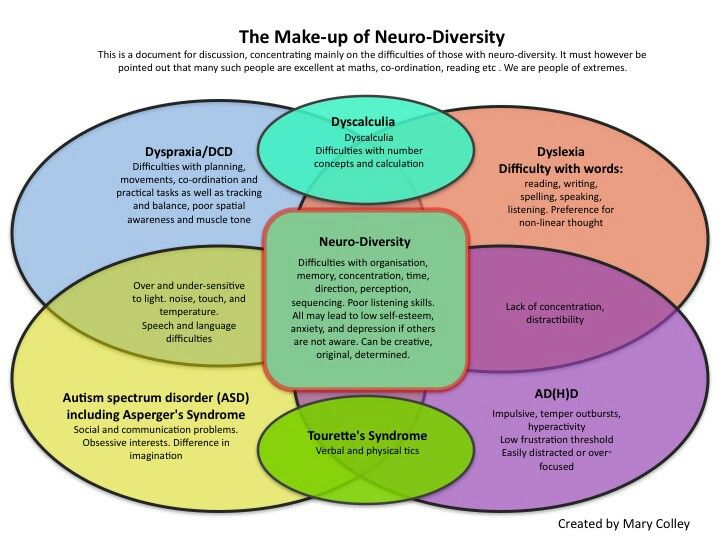
    Oh no.  It is. It IS. How do I know this?  Ashlynn participated in a balanced literacy intervention over the summer.  She did make progress in some areas, but she just took the test at school and her scores were….the exact same.  It changed by 1 point.  Didn’t I say I SAW THIS EXACT THING in DPS when I worked there?  My kids with reading disabilities didn’t make progress with those approaches. I started thinking about how she still can’t rhyme (despite me working on it constantly), still has trouble identifying how many syllables are in a word (despite clapping them out since preK), has a poor working memory….I mean everything I KNOW she is struggling with correlates with dyslexia.  Look at my graphic at the way top.  Dyspraxia and Dyslexia and all those neurological disorders overlap.  But here we are, my daughter is in 2nd grade, and I’m just NOW seeing the writing on the wall. I think for so long I wanted to explain her problems were based on apraxia.  I was totally missing the forest for trees again.

    You know what else sucks?  Kids who have poor reading skills by 3rd grade usually remain behind until 9th.  I remember that chilling statistic because when you work in an inner city, the fear is that by 9th grade if a kid is still struggling academically, they will drop out.  Someone will have to put me in a grave first before Ashlynn drops out, but I remember being worried about the 4th and 5th grade kids I had on my caseload at the time.

    Oh and this is not to mention we have older adults now who have grown up to talk about apraxia such as Gage GoLightly who says she had dyslexia too, or Daniel Radcliff who had dyspraxia and dyslexia.  I know these disorders all have crazy comorbid prevalencies.

    So, long story short, is, I have Ashlynn on the 6-8 month wait list for the learning center at Children’s Hospital.  Yes the school could test her, but schools don’t dx dyslexia. I know this.  I work in one.

    I hired a tutor who will come 2x a week trained in OG.  I should have done this two years ago, just like I should have had Ashlynn in the right speech therapy a year before I did too.  If I can take any solace in any of this, it’s that someone reading my blog will learn from my mistakes.  It wasn’t too late for Ashlynn’s speech, and hopefully it’s not too late for her reading either.


  • In the Zone: A look at Camp Speech Zone in NY

    In the Zone: A look at Camp Speech Zone in NY

    Adventures mother and son in the city that never “seeps”  

    By definition, “being in the zone” means that you are so happy or excited because you are doing something easily and with skill. It’s really about having your thoughts flow easily and creatively with regard to art, music, design or invention. It’s the achievement of a blissful and fulfilling state of mind. Some refer to this as “in the groove.”   

    Having grown up down the shore in the Atlantic City, NJ area, my personal experience with being in the groove had everything to do with summertime. For some reason, my happiness was directly equated to the sun on my back and the ocean’s waves meeting my skin. I was in the zone on the boardwalk, on the beach and just relaxing on the front porch. I felt centered, content and at peace June through August (and still do!).   

    I truly wanted this Zen-like feeling for my over therapized 7-year-old son, Brody. I wanted him to have a summer full of fun experiences, new friendships and exposure to things he’s never seen before. That’s why when I planned out his summer camp schedule, I included a week of Camp Speech Zone in New York City. Now, I know what you’re thinking…Jami, that’s still therapy…yes but the camp took place each day from 9:00am – 1:00pm. Which meant three things: 1) Mommy could explore the city. Meet up with old friends and chillax during the time that Brody was at camp (73/Broadway…um hello Bloomingdales outlet) 2) Brody could make new discoveries during the afternoon and evening hours with me 3) there would be continuity of services even though we were technically “away.”. This was a surefire win-win situation. While our Big Apple adventures only lasted a week, it seemed like just the right amount of time to embrace that change of scenery. I was also curious if Brody would respond to new faces and new demands in a brand-new setting.  

    Last April, I discovered Camp Speech Zone on the Casna website when researching potential camps for children with Childhood Speech Apraxia. I quickly set up a GoFundMe account to be able to afford this expedition. I was also fortunate enough to stay at my cousin’s apartment on the upper west side while they were vacationing in Maine. The universe was sending me messages! I raised the money, signed Brody up and we set out on our adventure. And yes, those consonant blends are challenging for Brody so it is now known as the city that never seeps (LOL). One thing’s for sure, I began to notice more vocabulary seeping into his repertoire throughout our time there – true story.  

    Speech Zone is dedicated to providing personalized services in order to best serve children with various needs. They provide a fun and super supportive environment while giving your child the necessary skills for success. The exceptional quality of their facility, services and knowledgeable and caring staff truly sets them apart. Their speech-language pathologists and occupational therapists work meticulously together to ensure that your child is reaching their full potential. They also collaborate with other specialists and related service providers to promote generalization of skills in other settings. 

    Programming featured themed weeks including Sports Week, Ocean Animals, and all things outdoors. Brody arrived at the beginning of Transportation Week which he really enjoyed. The camp also features outings to Central Park Zoo, Museum of Natural History, Riverside Park and more!  Brody was exposed to a New York City Style Super Market experience which he also really loved. The camp provided plenty of access to language-rich environments. While the focus was on speech-language and occupational therapy, the focus was also on fun. The staff was committed to making all the children (and nervous parents) feel comfortable. And it was really great to see some familiar parental faces in the waiting room from having been to the CAS Conference in Chicago a couple years back.   


    When our week concluded, I asked Speech Zone’s Melissa Weiss, MS Ed, CCC-SLP, TSSL. to answer a few questions so that other moms and dads could learn more about this extraordinary camp. Big thanks to her for taking the time to respond in the name of informing other warrior parents!   

    What is unique about Camp Speech Zone that other camps do not offer?

    The camp is run by two certified speech language pathologists and a certified occupational therapist. In addition, we have dedicated interns with us all summer who are studying speech and occupational therapy at both undergraduate and graduate levels. Prior to registering for camp, we screen each child and meet with their families to ensure that CSZ is the right fit for their child and their needs. Our camp has included children with a variety of diagnoses such as: Apraxia of Speech, speech sound disorders, Autism, receptive and expressive language delays, Cerebral Palsy and other developmental delays. The children benefit from having a small camp group with peers that are close in age and have similar communication needs. Both teachers and parents have reported that they have noticed a positive change in children’s confidence and abilities. It is a supportive environment allowing children to work on their goals throughout the day without feeling isolated from their peers. The clinicians incorporate both speech and occupational therapy goals throughout the entire camp day. It is a great opportunity for the clinicians to see the child across all contexts and work on goals accordingly.   

    Why should parents who have kids with Apraxia consider it?

    The clinicians at Speech Zone are trained in PROMPT. The Prompts for Restructuring Oral Muscular Phonetic Targets (PROMPT) is a touch-based method for reshaping individual and connected sounds as well as sound sequences. This approach is effective in working with children diagnosed with Apraxia of Speech as it embodies neuro-motor principles. In addition, Camp Speech Zone discusses a variety of child friendly themes. Children diagnosed with Apraxia benefit from mass practice of target words, thematic vocabulary is targeted throughout the week at camp. 

    What sort of activities do the kids do each day?
    We start each day with a morning meeting to practice calendar and weather vocabulary. Daily activities may include: art projects, shared storybook reading, following directions, sensory activities (i.e., obstacle courses or tactile play), yoga, food prep for snack time and neighborhood outings (i.e., grocery store) which all reflect our weekly theme. We take a daily trip to the playground to provide opportunities for independent social skills as well as a movement break. During lunch and snack time, clinicians assist children that have feeding difficulties including food aversions and oral motor sequencing challenges.   

    What are the weekly themes throughout the summer?
    The themes vary based on the age and communication skills of the group. Past themes have included: introduction to summer, sports, community helpers, transportation, colors, science, animals, and space.  

    Why do you love working here?
    Speech Zone is a great place to work. We work with such wonderful families and children that make coming to work a pleasure. The staff has aligned beliefs in work ethic and therapeutic approaches, making it easy to collaborate and learn from each other. It is rewarding to see the progress each child makes throughout the summer.  

    What other services are offered at speech zone?
    Speech Zone offers individual speech and language therapy sessions as well as individual occupational therapy sessions. Occasionally group sessions are held at Speech Zone depending on the child’s goals. We see children through board of education services, select insurance companies and private pay.  

    What makes the camp so special?
    CSZ is absolutely a labor of love. We originated as a camp program to provide a therapeutic and educationally based environment for children who had a lapse in their school programs during the summer. Families had expressed a need for a structured setting for their children. The children that attend Camp Speech Zone benefit from knowledgeable and professional staff as opposed to larger camp groups with inexperienced counselors who may not be familiar with their specific needs and abilities. Our staff is well equipped to design activities targeting a range of goals and modify activities accordingly. Since starting camp five years ago, we have grown to a full summer program which targets a variety of speech and language needs as well as developmental delays. 


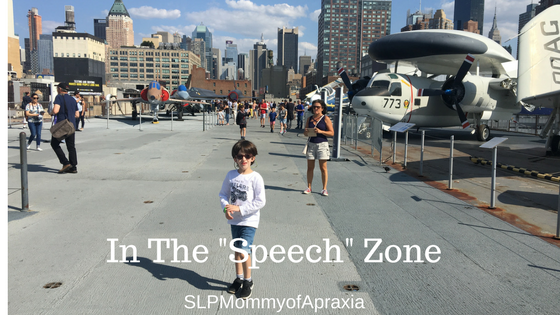
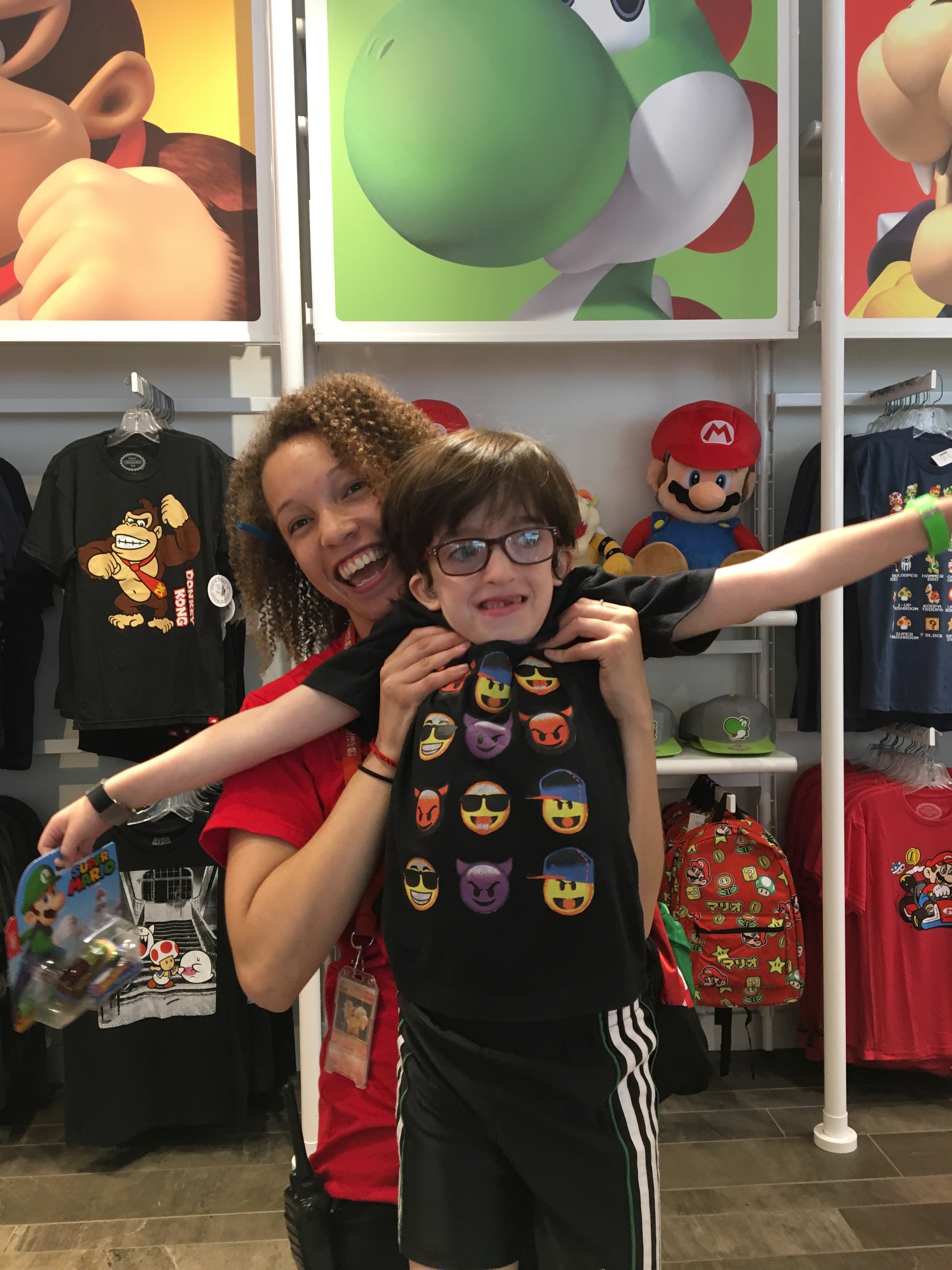
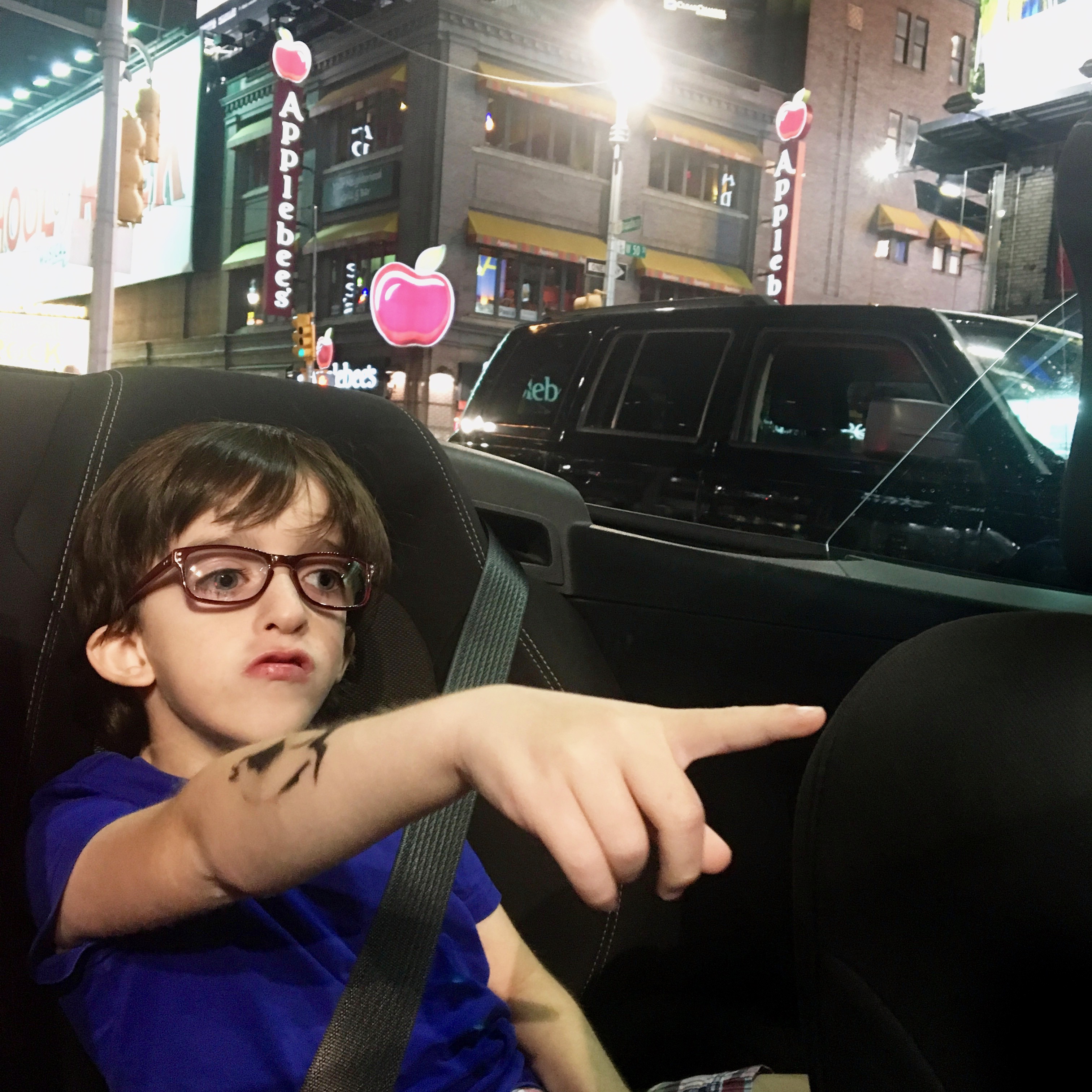
    As I mentioned, my strategy for spending a week in NYC wasn’t purely to have Brody attend this amazing camp. Our afternoons were spent exploring this iconic city and being immersed in urban culture. We visited Hippo Playground/Riverside Park, Central Park (including the penguins at the CP Zoo), and Serendipity 3. We took a double-decker bus ride (and went live on Facebook) and visited the Intrepid Sea, Air and Space Museum. We indulged in experiences at Times’s Square’s Disney Store, The Lego Store and the Nintendo Store. The Nintendo Store (Brody can say the word “Mario” very clearly!) went out of their way to create a special experience for Brody. All of them were over-the-top incredible. We ate new foods and visited new people in fancy apartments and where ever we went I repeatedly heard: “Wow! Look! Mommy I like that!” – and these verbal outputs were merely the cherry on top of our big city sundae. If you’d like more information on fun stuff to explore with kids in NYC, a good resource is mommypoppins.com. By far the best thing we did with Brody was to take him on a car ride around Times Square. We did this at night with the top down on a rented convertible and it was absolutely priceless. I highly recommend it! No kid can keep quiet with the intensity of the lights and cool things to see for the first time!

    For more information on Camp Speech Zone, visit speechzonenyc.com or call them directly at 212-799-1750. You can also email them at speechzonenyc@gmail.com and follow them on Facebook  

    If you are considering sending your child to Camp Speech Zone next summer and have questions for me, please feel free to reach out to me via email at jamislotnick@me.com. And remember, there’s a big world out there. Exposure to new experiences are by and large highly motivating. Get out there and explore a new city. It doesn’t have to be New York!  
    Jami Slotnick  

    facebook.com/jami.slotnick


    Author’s Note: I have not been compensated or sponsored in any way by Camp Speech Zone or any of the NYC destinations mentioned in this article. 

  • The Hulk and Rousey on struggling to speak.

    The Hulk and Rousey on struggling to speak.

    During an episode of “Battle of the Network Stars” Lou Ferrigno and Ronda Rousey shared a touching exchange about their childhood disorders and how it made them stronger.

    Ferrigno, best known as the Incredible Hulk, inquired into famed MMA star Ronda Rousey’s life.  He questioned about the fire she had inside of her and wanted to know where the first flame was stoked. In an incredibly honest moment, Ronda tells him that she grew up with apraxia, a childhood speech disorder in which she would talk;  but the message in her head was different than what came out of her mouth and would sound like jibberish.

    She continues to reveal she was made fun of for having trouble speaking and eventually venting that frustration physically.

    Speaking as a parent of a child with apraxia, my heart stood still.  Hearing the word “apraxia” on national television brought instant tears to my eyes.  No one knows the struggle it is unless you have it or live it.  There is so little awareness that even many professionals don’t know it or its presentation. I’m a walk coordinator for the disorder in a large metropolitan city and the local news informed us it wasn’t newsworthy.

    In that one moment, that one SECOND in time, the apraxia community blew up with excitement.  A video was posted that has been viewed 5K times in one day! That is the power of having a celebrity speak out about a cause.

    Lou Ferrigno again brought tears to my eyes when he said,

    “Everyone is handicapped either physically, mentally, or emotionally.  It’s all about maximizing what you have.  As a kid I had trouble speaking.  It’s all about overcoming adversity.”

    I watch my child do this very thing every day.  I watch her struggle to do a basic human right that comes so easily to everyone else.  Something that’s so important it’s our first amendment in the United States.

    Speak.

    Watching Lou and Ronda in that moment, I realized that overcoming adversity will put that fire in her belly just like it did Lou and Ronda and we can show our children their story to inspire them and inspire us to become our best selves.

    As Ferrigno pointed out,

    “We’re only here for a short time.”

    Make each moment count.

  • What is executive functioning and why do you need to know?

    What is executive functioning and why do you need to know?

    Does your child struggle with impulse control? Do they run out or touch things they know they shouldn’t but seem unable to help themselves despite consequences?  Do they struggle to get dressed?  Does it take you 30 minutes longer to get out the door in the morning than you think it should?  Do they frequently lose things like important papers from teachers? Is their desk, backpack, and folders completely disorganized and in disarray?  Do they have difficulties with attention?  Do they have emotional outbursts that seem atypical from other children?

    If any of these sound familiar to you, your child may be struggling with a deficit in executive functioning skills.  Executive functioning skills are regulated by the pre-frontal cortex in the brain. Many kids with developmental delays and disabilities such as: apraxia, dyspraxia, autism,  ADHD, sensory processing disorder, and others are at risk for deficits with executive function skills.  These skills include the following:

    • Impulse Control
    • Emotional Control
    • Flexible thinking
    • Working memory
    • Self monitoring
    • Planning and prioritizing
    • Task initiation
    • Organization

    My daughter has apraxia and developmental coordination disorder, but I think difficulties with executive functioning skills have the most impact on us and our life as a family.  Any task that involves planning, sequencing, organizing and then execution brings her a massive amount of anxiety and manifests itself as her looking defiant and oppositional.  Even a task like “brush your teeth” which she can and has done numerous times independently still stresses her out at times depending on how tired she is, or any other factors.  The same is true for getting dressed in the morning or at night, cleaning her room (not gonna happen), or doing her homework from start to finish without direction from us.

    How do I know it’s a deficit as opposed to her truly being defiant?  I just said she has done most of these things independently at some point. I know though, because when she becomes physically distressed at the thought of performing a task, when I offer to help her she immediately calms down and is willing to do anything that is requested of her; including cleaning her room.  An OT at Adam’s Camp this summer gave me this analogy.

    Have you ever changed oil on a car?  No?  Great.  It’s exactly like setting your in front of a car and telling you to change the oil.  You have no directions and you have no manual (think visuals), and you have no one there to direct you?  How would you act?

    This was such an “aha” moment for me.  Let’s look at our list above.  In this scenario, I’m going to struggle with: task initiation, planning and programming and organization at the very least.  If I can’t do it and feel I am messing up, it’s probably going to escalate into my emotional control which will potentially affect my flexible thinking and so on.

    All of these processes are independent, but they can also be tied together.

    So what do we do?  Can executive functioning skills be taught?

    The good news is YES.  There is so much more great research too coming out now, and I’ve seen educational institutions grabbing onto this idea and implementing strategies into their classrooms.  If you are a parent, accommodations to help executive functioning skills can be easily placed in the IEP under the accommodations sections; or if you want more targeted instruction, can be written as it’s own goal. Psychologist’s can administer a test to look at executive functioning skills. One such test we use at my school is called the BRIEF (Behavior Rating Inventory of Executive Functioning). Don’t be afraid to ask for testing if you think your child struggles with this.

    That’s great for school, but what can frustrated parents like you and me do at home? I wrote Part 2 to this series in which I outline strategies to do at home for various skills. (click here).

    In the meantime though, Sarah Ward is quickly becoming nationally recognized as a top expert in this area.  She gives talks nationwide and if you can see her I have one word of advice: GO.  She’s fantastic, fresh and has current ideas that incorporate technology and apps that I have never seen presented before.  Most talks on executive functioning that I go to now will almost always include a suggestion they got from Sarah Ward.  Her website is Cognitive Connections.

    You can also find books on the topic that have good reviews with practical suggestions for parents:


    These books are geared more for parents and what you can do at home.  I also found some kid books that I think are helpful when we are talking to our kids about their difficulties.