Category: BCL11A

  • Journey across a long trampoline

    When Ashlynn was three, I enrolled her in gymnastics. 

    I knew it was going to be awesome.  She was so cute in her little pink leotard and ponytail.  I can still remember how much fun she had.  I can also remember being heartbroken and sitting there hurting.  The favorite activity was a long, large trampoline.  The kids would all wait their turn and then happily jump forward down it with ease. 

    I didn’t know at the time Ashlynn had developmental coordination disorder and dystonic cerebral palsy. 

    Even if I did, I’m sure I still would have felt a tinge of pain as I watched her get on the trampoline.  Only thing was she couldn’t jump on a trampoline.  Her little body bent up and down at the knees knowing what it should do but she just couldn’t do it.  She started to hold up line. Anxious toddlers yelled at her to “go!” so she tried to walk.  She kept falling so an instructor had to go hold her hand and walk her to the end. 

    Though my heart was hurting her happy face caught mine and she was anything but sad.  This would be the start of this little hero teaching me the real lessons about life and spoiler alert it’s not about being perfect and never failing.  Quite the opposite.

    We’ve had years and years of OT And PT now at this point.  While other kids spent their time playing and doing things like jumping on trampolines that came easy to them, Ashlynn learned to do it alongside therapists. 

    Today I took my kids to an indoor trampoline park by our house.  It finally opened after being closed for COVID and we bought them a season pass. My husband has been taking them consistently for about a week.  It always takes Ashlynn time to acclimate to a place.

    At one point I looked over to see Ashlynn on a long trampoline. She was jumping across it with another girl that looked like her age.  They were playing racing games and other things.  Looking at her, the average person would have no idea how far this girl has come.  She looked like any other 11-year-old out there just being a kid. 

    My mind flashed back to that gym all those years ago now and the pain I felt.  I had not thought of it in such a long time.  I wonder if part of me had blocked it out.

    As I watched today, I saw years of speech therapy though allowing her to be conversational and speak to and play with this peer.  I saw years of OT And PT that built her strength and taught her the motor planning for something so many parents take for granted – a child jumping.

    I remembered the lessons I’ve learned on this 11-year journey with Ashlynn, and they are many.  Suffice it to say, I have learned progress beats perfection.  I have learned for each time you fall, to get up 100 more times still smiling. I’ve learned happiness is in the journey not the destination. I have learned that no matter how bleak it seems, the human spirit is limitless, and no one can ever predict the power of resilient soul who refuses to give up.

    Ironically as I was thinking these things a song came on.  It was Ashlynn’s first song ever she tried to sing along to on the radio.  It’s Mumford’s and Son’s I will wait.  I wrote about this in my book and quoted the lyrics that were poignant to me. They were poignant then, and they are poignant now, and Ashlynn I promise, I will always wait for you and be cheering you on.

  • Woes of regression

    Woes of regression

    If you’ve ever watched your baby fail to meet the simplest of milestones..

    If you’ve sat in meetings and offices and were told things like 1% percentile

    If you’ve felt a pain you can’t describe that is only eased by hope..

    You know why regression hurts so much.

    If you’ve ever driven your child back and forth to countless therapies..

    If you’ve ever felt a mix of pride, happiness, grief and so much more when they finally met a goal..

    If you’ve cried because you are always filled with a hidden grief but ecstatic at the same time when they made progress..

    You know why regression hurts so much.

    If you’ve ever watched your baby spend hours in an office while others kids played…

    If you’ve ever comforted them when they said life wasn’t fair needing comfort yourself because you agreed…

    But then watched them say a new word, jump, or write a letter thanks to those therapies..

    You know why regression hurts so much

    If you’ve ever been faced with professionals who don’t understand your child or their disability..

    If you’ve ever stayed up all hours with bloodshot eyes scouring Dr. Internet just to help your child..

    If you’ve ever then found a team and plan that was finally working for your child..

    Then..

    You know why regression hurts so much.

    Laura Smith, M.A. CCC-SLP is the mother to two beautiful children, one of which has a rare genetic mutation that caused a variety of developmental disabilities. She is the author of Overcoming Apraxia and has lectured throughout the United States on CAS and related issues. Currently, Laura is a practicing SLP specializing in apraxia at her clinic A Mile High Speech Therapy in Aurora, Colorado. 

  • The IEP meeting I wanted to attend.

    The IEP meeting I wanted to attend.

    I never knew before I had a child with an IEP (individualized education plan), how awful these meetings can be for parents.

    Before I had my daughter, IEP meetings were part of my job and I attended them weekly with a room full of colleagues and the parent or parents. I had no idea how it felt being on the parent side. I do now and it feels scary, nerve wracking, and very intimidating.

    I haven’t gone back and added it up, but today was at least the 9th and probably 10th IEP meeting (individualized education plan) we’ve had for my daughter Ashlynn. I don’t think I’ve ever had a meeting where I wanted to go to it. I can particularly remember the meetings that gutted me. Looking back it probably wasn’t any one educator’s fault. It was my position in the process of it all. It was like additional problems kept adding up. Just when I thought I had apraxia down, she would get ADHD, dyspraxia, issues with memory, issues with language comprehension……and the meetings were full of her can’ts. I could talk about how to write a strengths based report or run a strengths based meeting, but in the end even that wouldn’t have been enough to fill or patch the holes from the stab wounds from all of her can’ts.

    This time though was different.

    Starting last year, Ashlynn started to turn a corner. She was no longer speaking in as many “scripts” but was formulating her own novel sentences. She grew exponentially on her reading. The special education team got to know her and they saw what I saw and believed what I believed Ashlynn was capable of. Instead of the words “she requires more repetition than most,” hurting my soul, I was encouraged because they said it with the conviction behind it that they would get her those extra reps because she is capable.

    This entire past year I’ve felt the momentum and seen her IEP goals in action in Ashlynn’s everyday life.

    From SPED, I’ve seen Ashlynn finally understand money, time, and her math facts. She has RETAINED these facts. Did it take one hell of a lot of repetition? You betcha, but they did it and when Ashlynn has learned something, it’s like riding a bike; she doesn’t lose it. Ashlynn’s reading has continued to improve and we are working toward closing that gap. We aren’t there yet, but I SEE it. I SEE it and I feel the momentum. I’ve seen it within her book choices and through her reading out loud. In addition, many skills she needed accommodations for she is now independent with. She has mastered the classroom routine, she doesn’t need direct line of sight supervision for safety, and she is independent with basically all of her ADL’s (Activities of Daily Living). The one that made me smile was teaching Ashlynn to stop and think and give her time to process and understand what was being said so that she could give a thoughtful answer instead of just blurting out anything. We all laughed because she will frequently now tap her brain and say “hmmmm” to give herself time to think. Again, seeing IEP goals materialize in my child is not something I can quite explain. It’s phenomenal.

    From her SLP I saw the direct result from her working on formulating more complex sentences with “so” and “because” come to life at home. In addition, all the vocabulary work done in speech has seemed to literally lift Ashlynn out of her language disorder fog. Where before language was literally just flying over her head, she is comprehending and making connections like she was never able to before, and again I’m seeing that in her everyday conversations with me as well.

    From PT we remarked at how she can perform tasks like standing on one leg for 6-9 seconds and doing jumps etc, something that once seemed like a pipe dream with her hypotonia, cerebral palsy, and major motor planning problems. I told her how she could now ride a bike with no training wheels and that Ashlynn chooses to do workout videos and could follow along.

    From OT we marveled at her mastery of her ADL’s around school, how she can tie her shoes now, and her ability to follow up to 3 step directions that involve motor planning tasks. With adapted graph paper, Ashlynn’s can complete writing assignments and really is just working on putting it all together: getting thoughts on paper, letter formation, spacing, punctuation and legibility. She can do all of those tasks adequately if given separately. I’ll take that. There was a time she couldn’t write her name. That took “more repetition than most, ” but I smiled this time. I had it all wrong before when that phrase would burn me. No one said she can’t do it, and that’s what’s important. More repetition than most? Deal. Bring it on. THAT we can do.

    From mental health she is doing great with whole body listening and finding more peers to play with and inserting herself into play on the playground. Next step is learning how to engage socially with peers in conversation.

    The whole meeting was amazing. I was on cloud nine. The takeaway? Ashlynn’s going to make it.

    I sat there and thought back to Ashlynn’s early days. Was this really the same girl? The girl who would get too distracted she couldn’t even hang up her coat and backpack and get to class without assistance? Was this the girl who spent all of preschool, kinder, and preschool just learning the letters of the alphabet, much less learning how to read? Was this the girl who spent Kinder, 1st, and 2nd grade trying to master addition and subtraction and now was rocking that but also money and time? Was this the girl who was so clumsy and uncoordinated that she couldn’t ride a tricycle or put her shoes on the right feet much less tie them?

    It was and she was freaking killing it.

    Though there were many, many, many times I felt defeated, I NEVER was defeated. I always held the vision for Ashlynn. I held it steadfastly in my mind and promised her that even if I was the only person who ever saw her potential, I would never give up on her and I would fight to the end. I was prepared for war. I listened to inspirational songs and videos to keep the faith. I also worried and fought and lost sleep and prayed. Oh did I pray, but it wasn’t that she would overcome. I always knew that you see. I always knew she had a divine purpose. I prayed for a team that would see Ashlynn like I do and help her fly.

    A couple of months ago, filled with gratitude, I nominated her SPED teacher for a district award.

    It’s called the Golden Heart Award and is bestowed to any educator in special education who has gone above and beyond for a student in the program. Because coincidences are the Universe or God’s way of talking to us, Colleen received notice she was awarded this honor TODAY – the day of Ashlynn’s IEP.

    I thought to myself,

    “Sounds about right.”

    Laura Smith, M.A. CCC-SLP is a 2014 graduate of Apraxia Kids Boot Camp, has completed the PROMPT Level 1 training, and the Kaufman Speech to Language Protocol (K-SLP). She is the author of Overcoming Apraxia and has lectured throughout the United States on CAS and related issues. Currently, Laura is a practicing SLP specializing in apraxia at her clinic A Mile High Speech Therapy in Aurora, Colorado. 

    Purchase Overcoming Apraxia on Amazon.

  • A letter to my son, a sibling to a child with a disability

    A letter to my son, a sibling to a child with a disability

    There’s this saying if you want to know how to treat a child with a disability or special needs, watch their sibling.

    Today after school I chatted with a mom who has a child with Down Syndrome in third grade. We’ll call him M. Ashlynn my daughter is in the integrated learning center program with him though she is in 4th grade, but they frequently see each other in the resource room. This mom and I have a lot in common and so it was good to catch up on a brisk but sunny day in The Mile-High City.

    My son who is in 2nd grade, darted off to play on the playground with the other kids whose parents were letting them play after school. Ashlynn and M played near us before finally going off to also play on the playground independently.

    This mom and I were talking about things parents who have kids with special needs/disabilities always do. Increasing independence. IEP’s. SPED teachers. Para support. Special needs camp. Opportunities for inclusion. Peer socialization. Basically none of the same things parents who don’t have children with unique needs talk about and so when you find someone in your tribe there is a lot ot catch up on.

    On the topic of peer socialization, we also had a lot in common. With other special needs kids our children our both leaders and outgoing. The problem lies with other “neurotypical” kids in society where it seems more difficult for them.

    As we looked out on the playground, our two kids were playing happily on the slide with each other, but completely isolated from the other kids. All the other kids (including my son) of all ages were all playing with each other on the swings or on the blacktop. It was a perfect visual example of what we were in fact just talking about. I embarassedly remarked that even my son it seemed excluded them.

    She was kind and laughed it off saying, “In his defense, he has to be around his sister all the time.”

    The mom then begain telling me that some kids in M’s class had asked about Down Syndrome one day when she was there. She said they asked questions like “how did he get it?” The tone of their voice made her think they thought maybe you could “catch it” from being around him. My mind instantly flashed back to an apraxia awareness day event I had with a 5th grade student with apraxia who asked Ashlynn’s 2nd grade class who thought they could “catch it like a cold” and every child raised their hand.

    I told her as much and we remarked that instead of OUR kids needing the socialization, perhaps it was the OTHER kids needing more education on those who have differences.

    That’s when we looked back to the playground. All the other kids were still on the swings and blacktop playing and interacting with each other. Our kids with unique needs were still isolated by themselves on the slide. But something was different. Something that brought tears to my eyes.

    My son Jace was on the slide with them. He was playfully giggling and engaging with both M and my daughter and they were all smiling and having the best time. From a distance it would have been impossible to tell there was a neurotypical kid, a kid with Down Syndrome, and a kid with a genetic mutation. From a distance there were just three kids playing on the slide.

    Siblings. So wise. So authentic.

    Literally one of the proudest days of my life being Jace’s mom.

    Jace has it hard. He does. It’s not easy street being the sibling to a child who seemingly gets so much more attention. But today, I remembered that every situation can break us, or teach us and in turn, we can teach the world the lesson we learned through our example.

  • Will you push me, Mama?

    Will you push me, Mama?

    “Will you push me, Mama?”

    Lying on the couch after work, mindlessly scrolling social media when my sweet nine year old daughter says, “Will you push me on the swing, Mama?”

    I’m a pediatric speech/language pathologist and my job is AMAZING, but it’s also very demanding and zaps me mentally and physically by the end of the day. An introvert at heart, I need alone time to recharge and refuel. Needless to say, pushing her on the swing was not on my agenda for the night. However, as I looked into her bright eyes sparkling with hope, I put my phone down and asked her to give me five minutes. Enthusiastically she ran to the clock, figured out how long five minutes would be, and then bounded out the door.

    “Will you push me, Mama?”

    There was a time my daughter with apraxia couldn’t say “Mama” and had to go to speech therapy to learn it. Once she had words, she had to learn how to put them together to make a phrase because she also has a developmental language disorder. There was a time she had to go to speech therapy to learn how to add the /s/ to /s/ blend words, words in which an /s/ is next to another consonant as in “swing.” There was a time she had to learn how to use verb tenses correctly and once she understood and used verb tenses correctly, there was a time she had to then practice “interrogative reversals” in order to ask questions correctly. Those days seemed so long. The struggle seemed so long. Yet here she stood, effortlessly doing all those things as though she never spent hours in therapy offices learning how to do them. Here she stood asking to be pushed on the swing, something most kids were doing while she was working hard to find her voice.

    “Will you push me, Mama?”

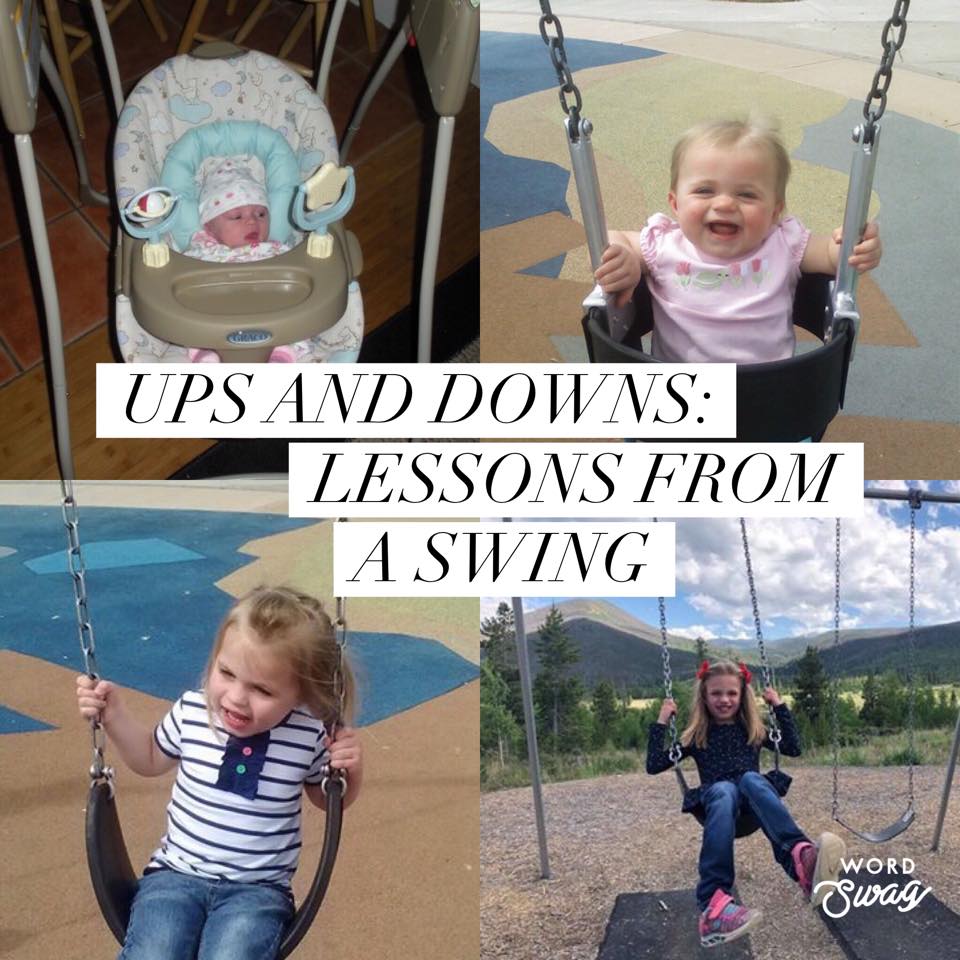
    Though my daughter can pump her legs herself now and swing, there was a time she had to spend hours in occupational therapy and physical therapy before her core strength could even support the act of sitting up on and pumping a swing. Then, once she was strong enough, she needed more therapy to get the coordination of the movements down. As she got taller, she then needed to learn how to change the motor plan and move her ankles out to the side so her feet wouldn’t hit the ground. Yet, here she stood, able to do all of these things now but still asking me to push her. She’s nine years old. We are getting close to her never asking me this question again and the gravity of that sunk in. Would this be the last time she asked me to push her? My mind flashed back to her beautiful smile when she is swinging. She literally came out of the womb and hogged the swing in the nursery. The nurses all laughed and mused at the baby who was only happy in the swing. It never stopped there. I have numerous pictures, too many to count, of her swinging in various ages of her life.

    “Will you push me, Mama?”

    I thought about how swings go up and down and up and down and how Ashlynn smiles and giggles through it all. I thought about how swings are a lot like life in that way. Ashlynn has a lot of challenges. She has a genetic mutation called BCL11A that has caused numerous disabilities and her life is anything but easy street. If anything, it’s more like the swing in that there are ups and downs, successes and challenges. Through it all though, she smiles.

    “Will you push me, Mama?”

    I thought about all the areas I’ve had to push her. Sometimes I wonder if I pushed too hard. Did I let her be a kid enough? Will she only remember speech therapy, occupational therapy, physical therapy, and tutoring? Nights struggling through homework? Nights struggling through activities of daily living that are so hard for her, such as brushing her teeth or getting dressed, because I know she needs to learn to do them for herself?

    “Will you push me, Mama?”

    So on this cool summer evening in June, tired from work and craving alone time, I got up and pushed her for an hour that night in the backyard. We laughed and giggled and made up games. I reveled in the fact my daughter still wanted me to push her, and I prayed to find a balance in the future of pushing her not a breaking point, but further and further to her potential. Oh, and making sure we find time to keep smiling and laughing along the way.

    Laura Smith is a mother to two beautiful children, one of which was diagnosed with a rare genetic mutation that caused a multitude of learning challenges.  She is a Denver based Speech/Language Pathologist now specializing in Childhood Apraxia of Speech. To learn more visit SLPMommyofApraxia.com

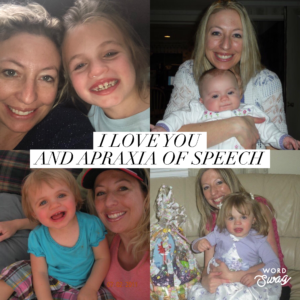
  • How do you say I love you?

    How do you say I love you?

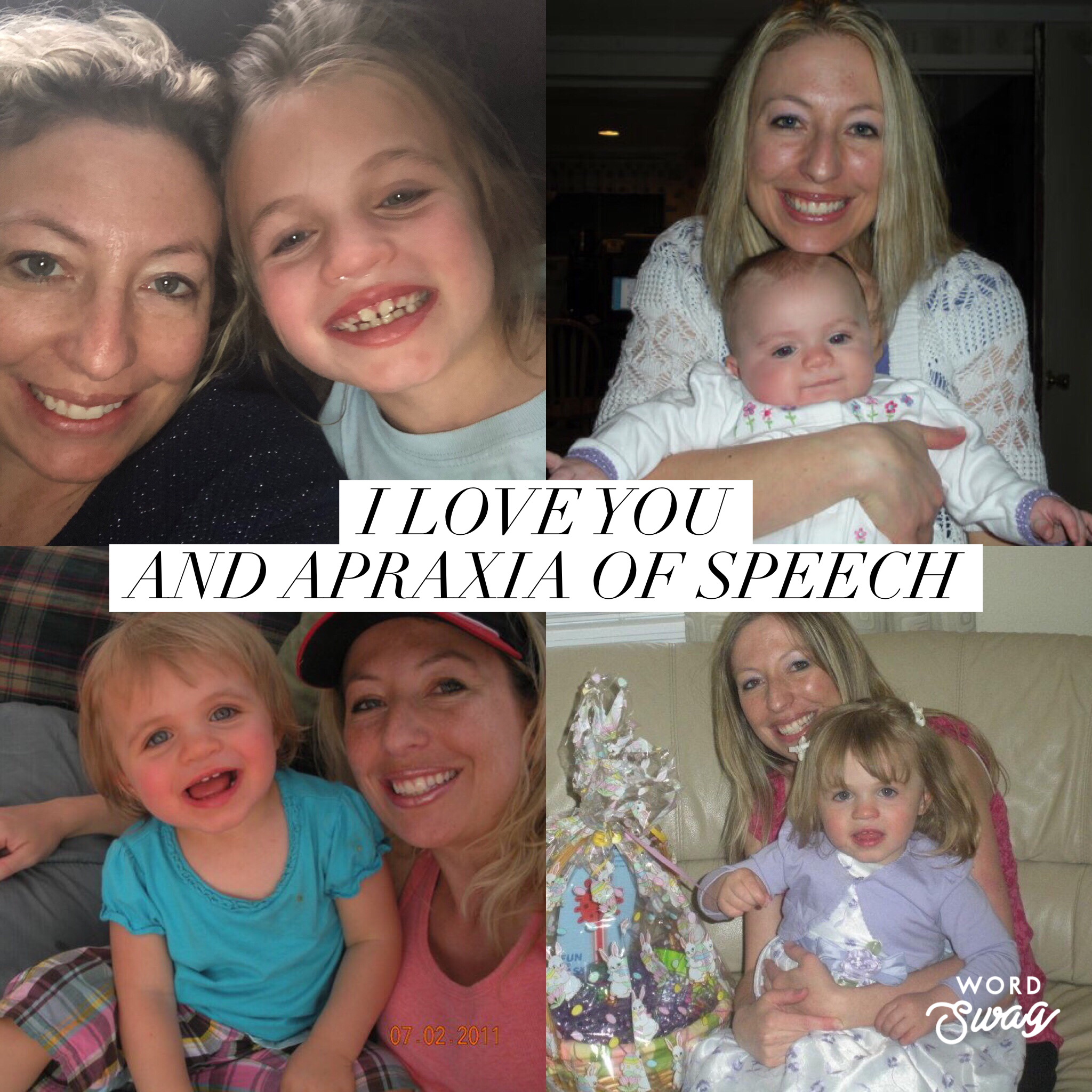
    There was a time I prayed for Ashlynn to tell me she loved me.

    Having apraxia and a language disorder made that tough.  Even when she could repeat “I love you” when given a model, that didn’t mean she could volitionally pull it out and say it spontaneously.  That took more years and work in therapy.

    Ashlynn, even before the birth of her brother, has always been attached to my hip.  An apraxia mom friend of mine lovingly calls them barnacle babies. I knew Ashlynn loved me before she could ever say it. Her actions have always spoken louder than her words.

    Ashlynn is now nine.  She has been able to say ‘I love you” without any prompts and on her own accord for at least 5-6 years now.  We had two back to back snow days in Denver thanks to a “bomb cyclone” blizzard that left Denver experiencing the lowest barometric pressure ever in its history.  That’s pretty incredible, but through it all, Ashlynn was attached to my side.  We don’t get a lot of down time.  We are always on the go from school to therapies to tutoring and then carving out family time, 1:1 time sitting at home and relaxing seems like an anomaly in our lives.  It seems like it, because it is.

    Wednesdays she usually goes to school.  Then I pick her up and we meet her dad at a place to drop off Jace and then I take her to PT and then swallowing therapy.  We get home around 6:30 where we gulp down dinner and then have to do her school homework and possibly the other hw from all of her therapies.

    Being a kid and relaxing doesn’t happen on this day.

    Thursdays she of course goes to school.  I’m working so her dad picks her up, lets her see her grandparents for an hour who live by school and then she comes to speech therapy at my office where my colleague/mentor treats her.  Afterward, we stop and get her a super nutritious meal from McDonald’s that she eats in the car before going to Girl Scouts, which has been nothing short of amazing for integrating her with her neurotypical peers and providing a “normal kid” activity among all of her therapies.  We then get home 10 minutes before 8 where we scramble to get her school homework done and I feel guilty for not getting to her OT, PT, and swallowing hw as she gets ready for bed.

    Not this week though.

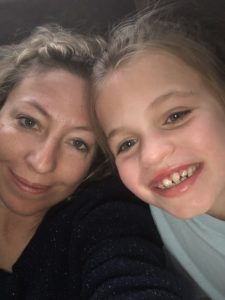
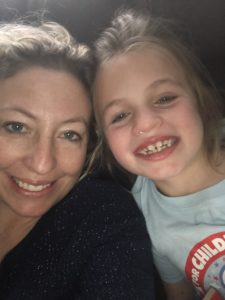
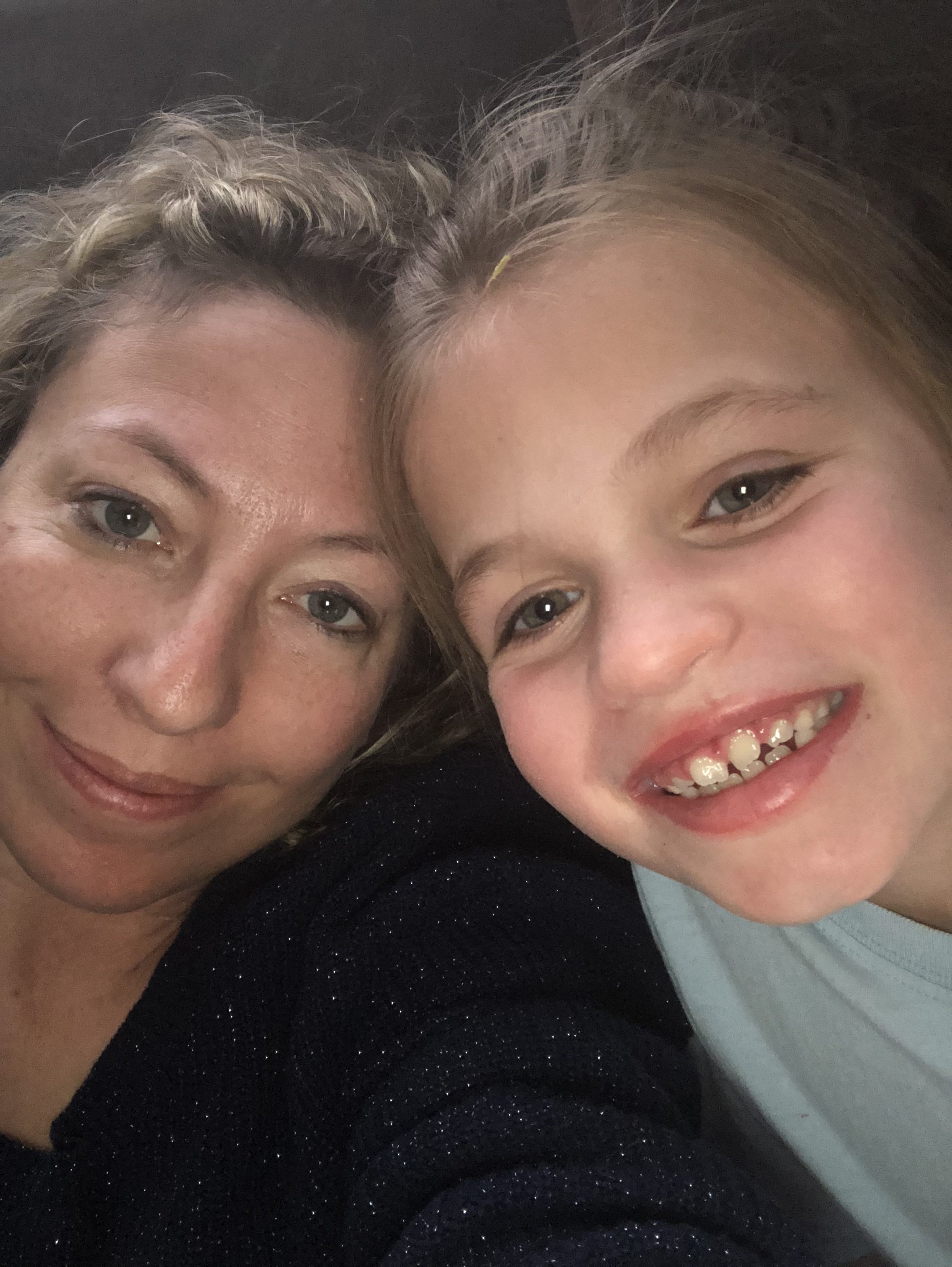
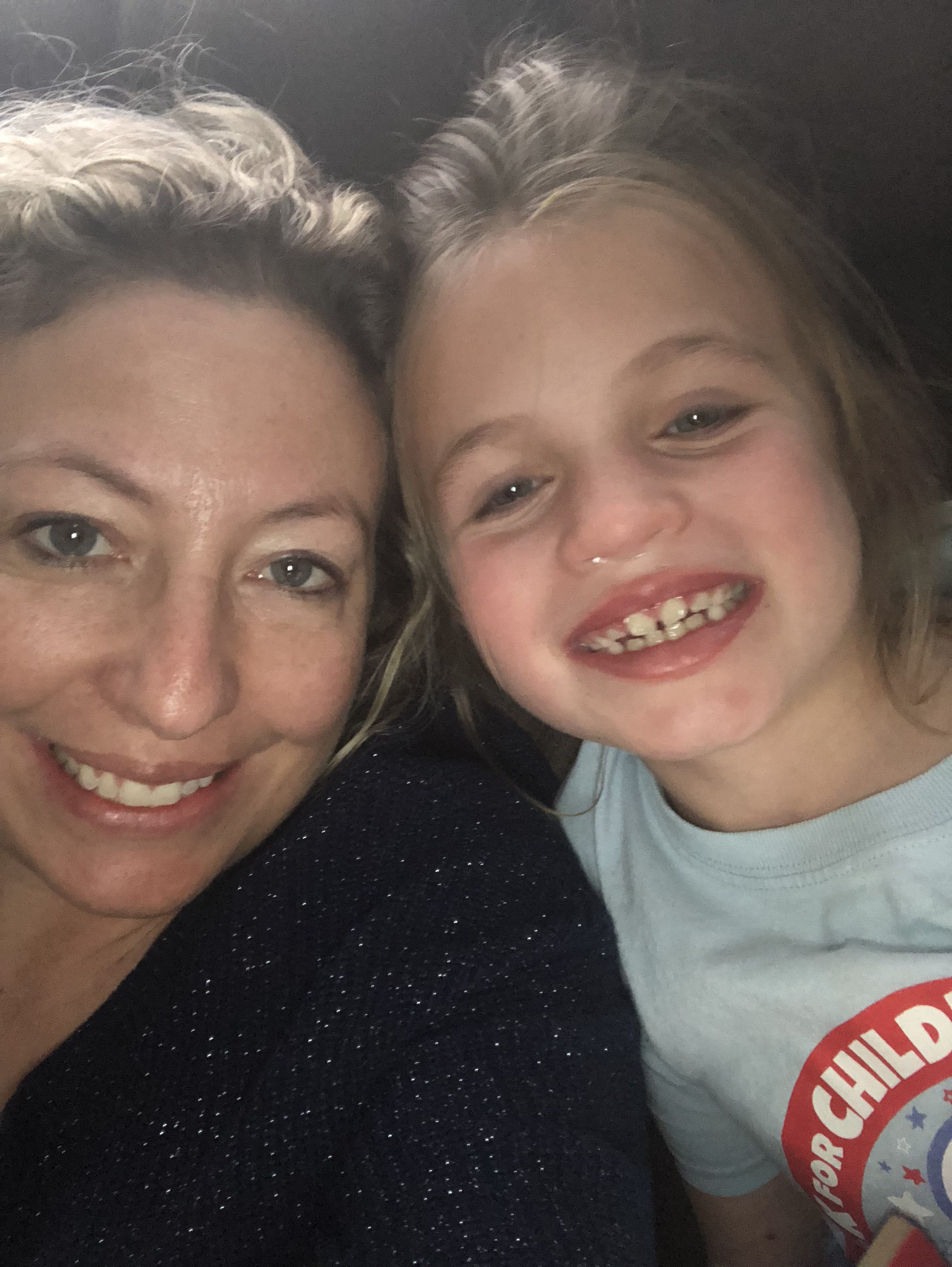
    ALL of that was cancelled thanks to the two consecutive snow days. We actually just hung out.  She sat by my hip and we talked, played with the dogs, watched the news that droned on about the blizzard and took silly selfies on my phone. It was amazing. Was this what life was like for “normal” people?  Are there any normal people?  What IS life like for kids who don’t have a therapy every day after school?  I’d ask my son, but he’s always caught in the cross hairs and even though he doesn’t personally have therapy, he has spent more than his fair share in waiting rooms.

    She must have told me “I love you” at least a dozen times or more.  I wasn’t doing anything special.  I was just here..and she was here…and we all were here snowed in.  I have to admit I didn’t even think about the days when I longed to hear “I love you” without having to prompt her.  I can’t believe that those three words started to lose their luster.

    Tonight was Thursday night.  In what was supposed to be a packed night of Jace’s Cub Scout Pack meeting and Ashlynn’s routine girl scout meeting, I also had an SLP meeting where I met with other area SLP’s.  My husband was to take the kids to both scout meetings that were now cancelled due to the weather.

    As I left, Ashlynn said goodbye as though nothing was wrong and then immediately her face fell and she started crying.

    “Ashlynn!  What’s wrong?  I’ll be back okay?”

    Ashlynn fought back tears and said she would miss me.

    “I’ll miss you too but I promise I will be back ok?” I said as my heart was breaking. She frequently gets like this when I leave.  I thought about the day and how she had told me she loved me at least a dozen times.  When you tell someone you love them that much it starts to lose its effect.  I think I (shamefully) started to take it for granted.  I gave her my work cell phone as a compromise.

    “If you miss me, text me and me only ok?”

    Her tears turned to a smile and she squeaked out an “ok.”

    “Do NOT text anyone else from this phone.  I will be busy but I promise I will text you back.”

    As I pulled out of the driveway I saw her face in the window.  She waved vigorously and then frantically blew me kisses.  I blew them back.  I wasn’t even off our street when she texted me her signature, “Ashlynn.”

    I usually make her text her name first because she uses my phone to text a small but approved list of family members who need to know it is her texting them.  I stopped at a stoplight and told her I would text her when I got to my meeting.

    In those two hours she texted me that she loved me three times.

    I wouldn’t think anything of it, except she frequently texts five other family members and though I know she loves them, that is not something she says to them.  She likes to send emojis, ask them what they are doing, or tell them about her day.  Due to her severe language disorder, I have many times talked about how Ashlynn talks in scripts.

    This “I love you” script though.  This particular “text” script was saved just for me.

    I almost cried reading it tonight at my meeting in between her emojis, selfie pics, and other comments.  I was sure this “script” was purposeful and meant just for me.  After one when I wrote back “I love you Ashlynn” I received an immediate response that said “I love you mom so much.”

    Ashlynn is nine.  NINE. Half her child life with me is gone.  My God.  Where did it go?  I still remember everything vividly.  Ashlynn was 2 years and 11 months when she was diagnosed and life took an accelerated pace after that.  We have been on the hamster wheel for six years now.  I can still look at the little table where I poured out those foam stickers while nursing my son and she said her first spontaneous “I love you.” I can close my eyes and remember like it was just yesterday.  I remember dancing in our living room to “Call me Maybe” and her laughing and throwing her head back like I was the most hilarious person on the planet.  And I remember wishing, hoping, and praying before I knew she had global motor planning problems that she would just try and imitate my dance moves much less my voice.

    As I sit here with tears in my eyes, I recognize  Ashlynn was and always has been so limited in what she could tell me.

    However I do believe now it was ALL going in.  I’ve always felt like my greatest job and purpose in life was to not only raise her and Jace, but to make them feel like the most incredible humans that they are.  With Jace it’s easier.  He talks to me.  I can get him to tell me his feelings.  That has never been the case with Ashlynn.  She struggles to express her basic thoughts much less complex feelings.  However, she has always found profound ways to express them with her limited language such as tonight when I was the recipient of multiple “I love you” texts.

    During the snow day we took selfies and she frowned at the pictures where I’m smiling but you can’t see my teeth.  “Why are you smiling like that? she demanded.  I thought to myself I liked how less of my wrinkles showed but instead just said, “I don’t know.’   She frowned disapprovingly.

    “Don’t smile like that, ” she said.

    I asked her why.  I wanted to know what was wrong with that smile.

    “It’s not YOUR smile mommy.  Smile real ok?”