Category: Apraxia

  • Did I cause her apraxia?

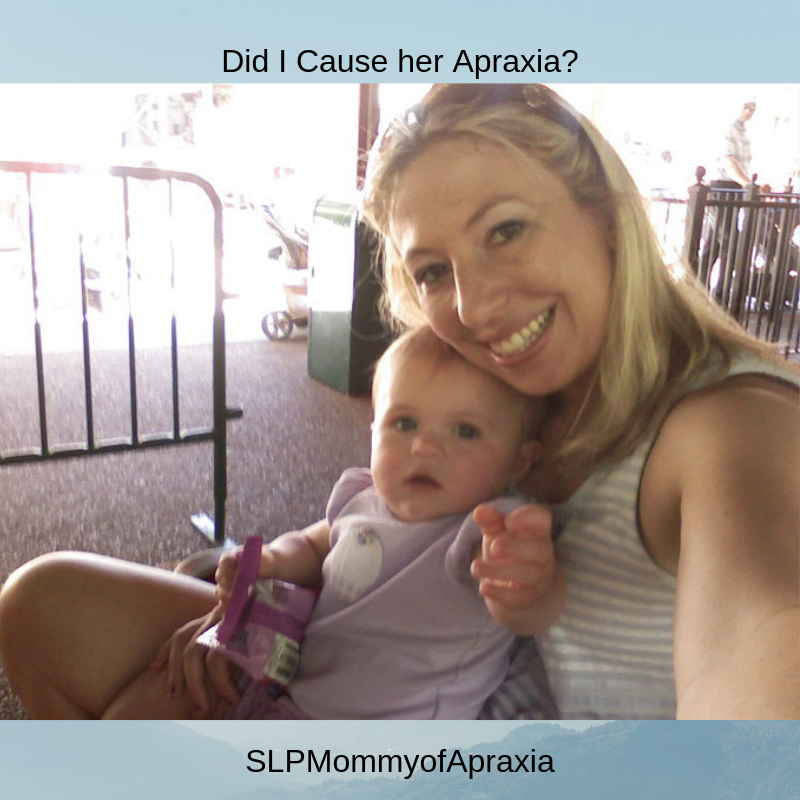
    Did I cause her apraxia?


    When Ashlynn was first diagnosed with Childhood Apraxia of Speech, I think most parents will relate when I say I spent (pointless) hours wondering what had caused it.

    Back in 2012 when Ashlynn was diagnosed, the most current information we had at the time was that it could have three main causes:

    1. Brain Trauma such as a stroke in utero
    2. Genetic causes
    3. Idiopathic – meaning of no known cause

    Though I knew this, I couldn’t help but cycle back to questions.  Questions that kept me up at night.  Any parent of a child with special needs has probably done this endlessly.  It is probably one of the main causes of sleep deprivation in special needs parents right behind “am I doing enough? and goes something like this.

    Was it that time when I was 6 months pregnant and I had the stomach flu?  Did I wear the painting mask long enough when I painted her baby room?  Was it because I had to have a C-Section?  What about the vaccines, giving her Tylenol, or that time she bumped her head?  Maybe it was……..

    And before I know it, I’m deep into the weeds unable to find my way out.

    It doesn’t help I had been privy to professional “inside” comments with colleagues who blamed parents for lack of reading, lack of talking, lack of stimulation etc.  You can read about my snub to those “opinions” in my article where I snub the 30 million word gap theory.

    It also didn’t help I would hear stories from other apraxia mamas who would share their personal experiences of being blamed and shamed.  

    So, I sought answers. It was a revolving door of specialists, waiting lists, and additional diagnoses, but still no answers as to the cause.  I would cycle through periods of acceptance and guilt, such as in this post I wrote when she was a little over 4 about a year after her CAS dx.

    Earlier this year, I thought we had found our answers when we went to rehabilitation specialist at Children’s Hospital who diagnosed her with dystonic cerebral palsy. Though I had more answers to her disability profile, I still didn’t have any answers as to what caused all the issues.

    No answers that is, until we found ourselves in the office of a genetic doctor and genetic counselor.  This is not to be confused with general genetic testing that a pediatrician can order either.  It was there that we would learn the cause of everything.  It was there, I would finally know why Ashlynn had apraxia, dyspraxia, hyptonia, ADHD, dysarthria, SPD, CP, and learning disabilities.  The answer was housed in a small set of letter and number combinations called:

    BCL11A

    A quick pub med article revealed that of the few case studies we have, children shared commonalities with:

    1. Non-verbal or low verbal status
    2. Abnormal muscle tone
    3. Gross motor delays
    4. Childhood Apraxia of Speech
    5. Dysarthria
    6. Hypotonia
    7. Dyslexia susceptibility

    The doctor explained the genetic mutation was “de novo” meaning it was not inherited and happened at conception.  It was a complete fluke when the sperm and egg came together that this mutation happened on the 2nd chromosome.

    Is it possible to be completely stunned and then not surprised at all at the same time?  Is there a word for that?  If there is, that is how I felt.  I knew as a professional researching this endlessly it wasn’t my fault.  Mom guilt though.  Mom guilt is a real thing.  It is strong, irrational, and overwhelming. So, in that sense, I wasn’t surprised.

    Knowing though that a genetic mutation was the single cause for all of her disabilities was shocking, but then quickly reaffirming. So many things went through my mind with the biggest one being,

    “This really wasn’t my fault, and furthermore, there is nothing more I could have done to change this.”

    The genetic landscape regarding apraxia is a new and quickly changing field.  We are going to see more research and information coming out now recommending that genetic testing be pursued.  Look for a follow up post with me talking about this new and changing frontier.

    For now though, I need time to process and learn.  A mother does better research than the FBI after all, when searching for answers about their child.
     

    Laura is a speech/language pathologist specializing in Childhood Apraxia of Speech and mom to two amazing children, one neurotypical and one neurodiverse. Laura is a speaker, writer, Denver Walk Coordinator for Apraxia, and is the voice behind the website SLPMommyofApraxia where she is passionate about Apraxia Awareness. 


  • When inclusion works: my hope for the rest of 3rd grade

    When inclusion works: my hope for the rest of 3rd grade

    This past break, I went over my posts from 2018, and read the article I wrote at the beginning of the year.  In it, I begged parents to teach their children to be kind as I wrote about the importance of inclusion.

    You can read about here.

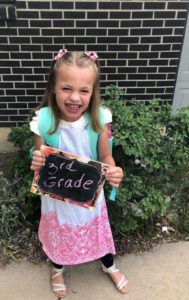
    I was filled with worry and trepidation as Ashlynn started third grade.

    Last year in second had been one of her worst years with peers and friendships.  She frequently came home with bloodied shirts from her picking her fingernails.  Many times, the nurse had to change her shirt it was so bad.  She always reported that she hadn’t played with anyone at recess and my heart broke for her nearly everyday.  In second grade, she was also bullied in the bathroom but thankfully some other students heard and told the teacher.  Fresh off the heels of a great summer, I worried to see her go back to school again.

    This year though in third grade, has been one of her best years for growth not only academically, but also with friends and feeling like she was part of the class.

    The teacher told me at parent/teacher conference in November that she had told her class if they see Ashlynn sitting alone to go grab her and include her because many times it’s not that she doesn’t want to play; but rather that she has a hard time jumping into a situation.  The teacher went on to explain the kids initially did it because they were instructed to, but as they got to know her they now do it because they wanted to.

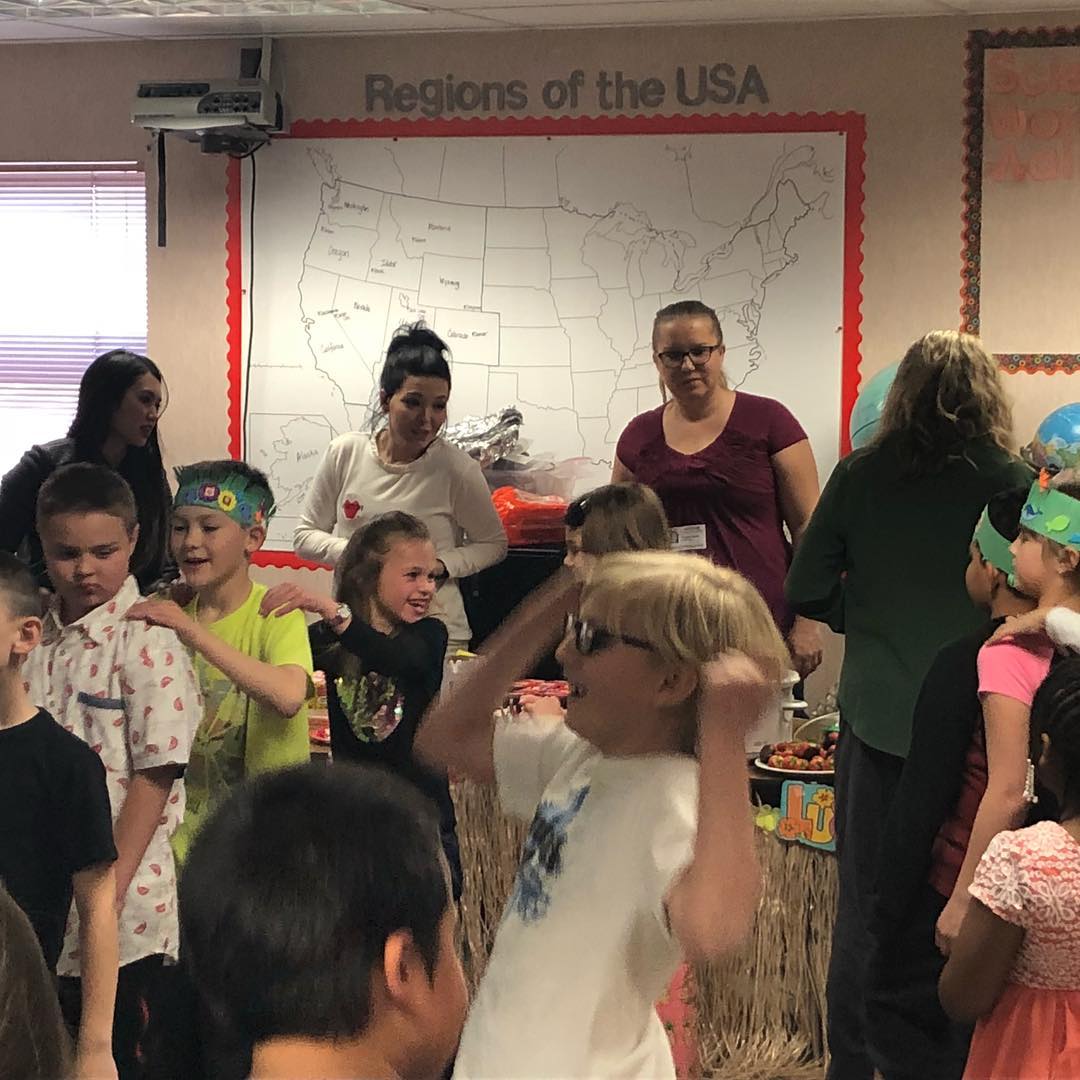
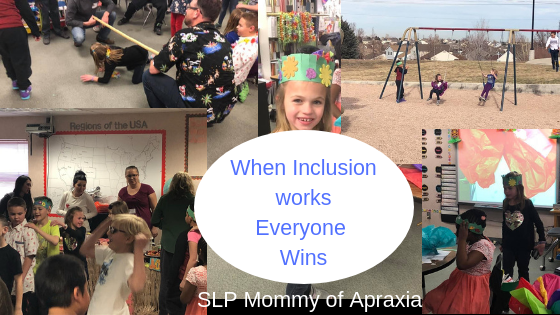
    Every year before winter break, 3rd grade throws a Luau party to add some fun and a twist to a normal Winter celebration.  I volunteered to run a craft with the class. I couldn’t believe what I saw when I got there.  Ashlynn was completely assimilated into the classroom as one of the kids, and not the “special ed kid” or the “ILC kid.”

    As she talked to her friends I thought of her speech therapy.   As she navigated the limbo stick like any of the other classmates I thought of her work in occupational and physical therapy. Her special education teacher wrapped up her current progress monitoring showing how she had rocked her goals because she knew it would be the best Christmas present to see all of her success and she was right.

    As she completed some seat work independently I thought of her TA who understands the difference between enabling and helping.

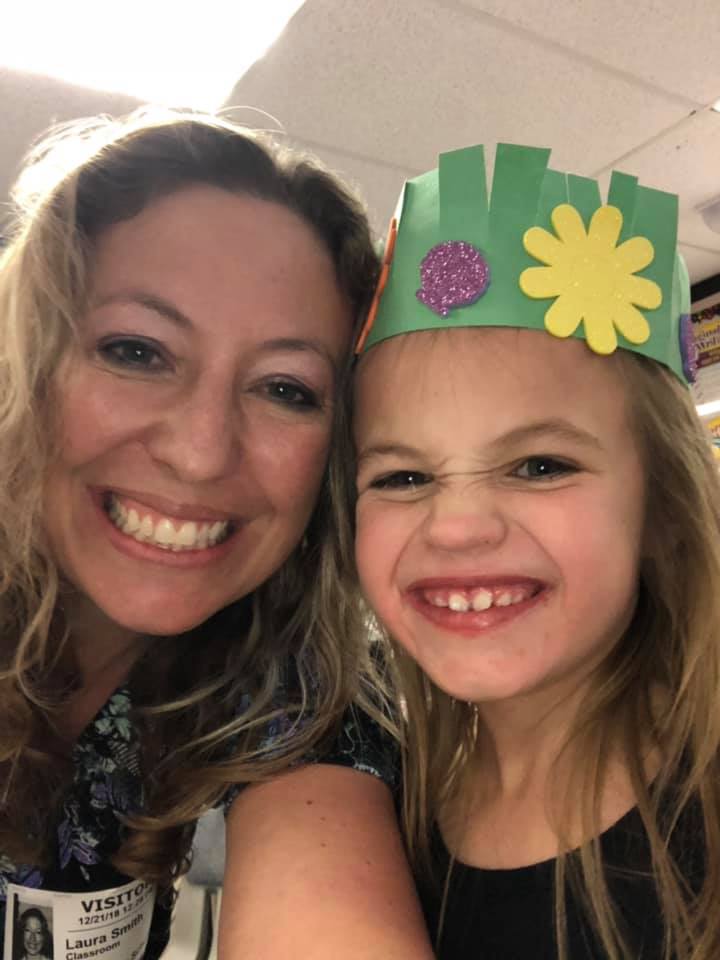
    This is how inclusion is supposed to look. Every human whether they have differences or not all want the same thing. They want to feel useful, included, and loved. Her smile says it all.

    Honestly I didn’t need any Christmas presents this year.  My cup was overflowing.  I just pray as Winter Break is over and she heads back to school, that the second semester will be as amazing as the first.

    Laura Smith is a mother to two beautiful children, one of which was diagnosed with a constellation of issues including apraxia that can be traced back to a genetic mutation entitled BCL11A. She is a Denver based Speech/Language Pathologist now specializing in Childhood Apraxia of Speech.

  • A source of hope: Natalie’s walk with apraxia

    A source of hope: Natalie’s walk with apraxia

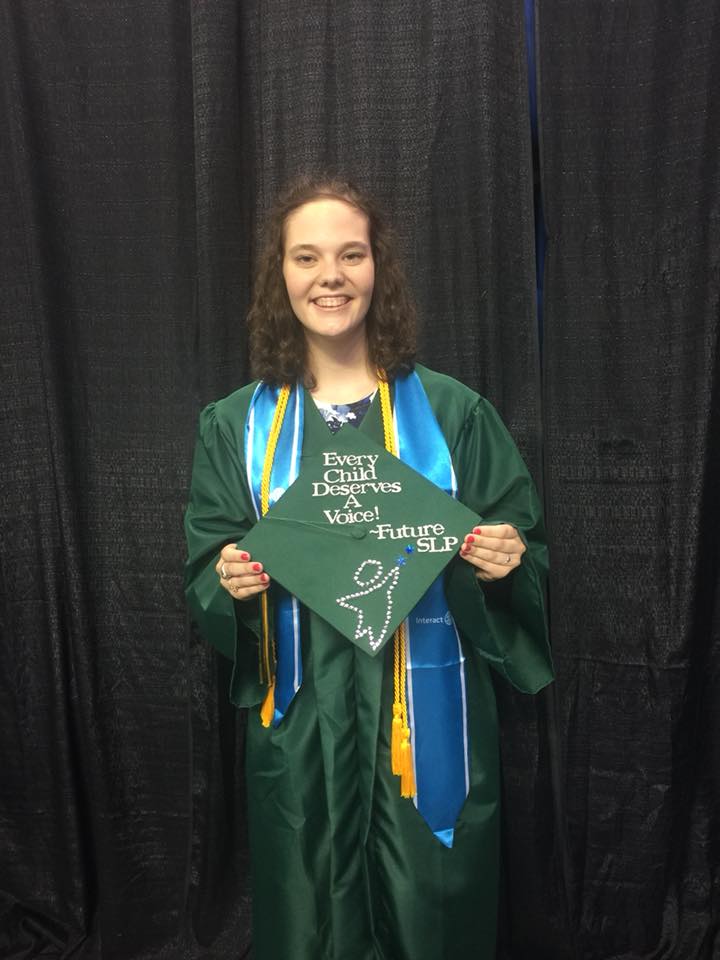
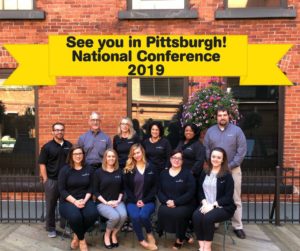
    Hi Natalie!  I had so much fun meeting you in person at the Apraxia National Conference this past July!  I had already heard so much about you within the apraxia walk community, as you overcame apraxia and are now a walk coordinator for your area! All by the age of 16! That’s amazing! Let’s start with you telling us a little bit about yourself.  

    What do you remember about speech therapy and how long were you in it?

    I just remember playing games and making crafts. I was in speech when I was 2 through second grade.

    When did you know you had apraxia?

    I was diagnosed with apraxia when I was two and a half.

    How has apraxia affected your life, or has it?  Do you have any residual issues?

    Yes, apraxia has affected my life on multiple levels. I have been diagnosed with anxiety because of the slow processing. I don’t feel like I have enough time to finish tests. I also still have problems with my sensory. Also when I get tired my speech starts to slip.

    What was your school experience like?

    My parents and I have had to fight for everything I have in place. I have a 504, which allows me more time on test, but the 504 is for my anxiety and not for apraxia because no one understands what apraxia is at my school. I have to tell my teachers what I have and explain what it means.

    Most parents are so worried about the future when their child gets an apraxia diagnosis.  What would you tell them?

    Apraxia is a long journey. It takes time. Don’t rush your kid’s speech, it will come. Everything happens for a reason and apraxia has influenced their life for some reason or another.

    What do you wish more people knew about apraxia?

    Apraxia doesn’t just affect your speech, it affects your processing speed and much more.

    What inspired you to become a walk coordinator at such a young age?

    I want to help families with kids with apraxia. My family has gone through the same things as others have. My parents didn’t know if I would ever be able to talk and live on my own. I want to give families hope, the same hope my parents got from Kate Hennessey.

    Thank you so much Natalie, for all of your advocacy work and continued mission to spread awareness and help other kids with apraxia!  You are absolutely a face of hope and inspiration!

    To see a news story on Natalie click here: Teen finds her voice and uses it to help others. 

  • Top Ten SLP Mommy of Apraxia Posts for 2018

    Top Ten SLP Mommy of Apraxia Posts for 2018

    Hi readers!  I haven’t been as active on the blog as usual because my goal for 2018 was to write a book and I’m happy to say I completed that goal!  My goal of 2019 is for it to be published, so we will see!  In the meantime, I did manage to get some blogging done and here are my top 10 posts for 2018!  Thank you so much for your support and your love throughout the years.  It truly means so much.

    1. The Problem With School SLP’s

    A

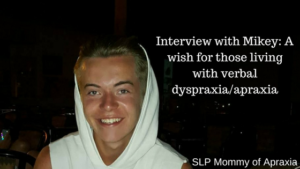
    2. Interview with Mikey: The Wish That Turned Into a Passion

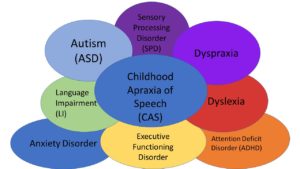
    3. Apraxia as a Symptom to a Bigger Picture

    4. Strategies to Promote Speech and Language in the Pre-Verbal or Minimally Verbal Child with Apraxia

    5. This School Year, Teach your Children to be Kind

    6. Finding our Umbrella

    7. Good SLP’s are Addressing the Head in the Hands

    8. The 6th Apraxia Awareness Day Brought Smiles, Tears, and a Jaw Dropping Moment

    9. Report Cards are Bitter Sweet in Special Needs Parenting

    10. Old Faces, New Faces, and the Passing of the Torch

    Cheers to an eventful 2018.  It was a year full of pain and happiness, love and sorrow, and hope and despair.  May we all remember that life can be intensely beautiful and irreparably sad all at once, because that my friends, is the definition of living.

    This 2019, I wish you all the gift of perspective in life.  We all have bad things happen.  We all have stress and we all have pain.  We also all have a choice, and that choice is to wake up each morning with a grateful heart and to focus on our happy and joyful moments rather than be sucked into the pain of despair and heartache.  There was a time Ashlynn’s dx seemed like the darkest event in my life, but I realized it was the beginning of my testimony to some of the most beautiful characteristics this human life affords us.  May God bless us all this year and always.
    Love and Peace,

    Laura

  • Favorite Winter Children’s books for Speech Therapy

    Favorite Winter Children’s books for Speech Therapy

    Favorite Winter Children’s books for Speech Therapy

    1. The Jacket I Wear in the Snow by Shirley Neitzel
      A great repetitive, rebus style book!  So many target words in this book include: cap, scarf, mittens, sweater etc.  Good for winter clothing vocabulary and sequencing too!

       2. There was a Cold Lady Who Swallowed Some Snow by Lucille Colandro
           Lucille Colandro always makes my list for favorite books because her Old Lady series contains all the elements I work on with apraxia therapy including repetition, prosody, and sequencing!

    Activity: Find my book companion in my TpT store here: Cold Lady Book Companion

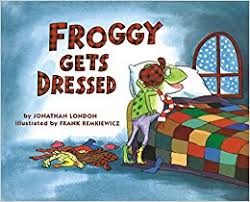
    3. Froggy Gets Dressed by Jonathan London
    Another great winter clothing repetitive book that the kids LOVE.  I work on target words “out” and “in” a lot in this book since Froggy is always going outside and inside; however, I can also hit “put on” when he’s putting on his clothes or work on prosody when Froggy and his mom are yelling back and forth to each other.

    4. Polar Bear, Polar Bear by Eric Carle
    It’s a classic for a reason!  Repetitive and engaging, kids love to participate in the book read.

    5. Bear Snores On by Karma Wilson
    Love the Bear book series!  Bear is hibernating and sleeps through a winter party while his friends all gather in his lair to escape the cold. Target words for this book include: “on” in the early stages or “snores on” when working on /s/ blends.

    Activity: Free character cutouts from Making Lemonade in Second Grade available on TpT here:

    6. Bear Feels Sick by Karma Wilson
    I was going to stick to a top five list, but I couldn’t resist adding another Bear book.  Kids relate to poor bear feeling sick and the familiar and lovable characters are always heartwarming!  Target word in this book is “sick” so you have to make sure you have a kiddo who can produce both /s/ and /k/; but if they can, this is a great target word.

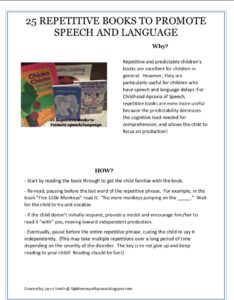
    Below you will find a free graphic I have on my TpT store explaining how to use repetitive books with your child to promote language and practice speech. My targets and books are always strategically selected based on the child’s sound repertoire. Click the picture to get the free download.

  • Billy Gets Talking: Book Review and Giveaway!

    Billy Gets Talking: Book Review and Giveaway!

    Mehreen Kakwan first emailed me a couple of months ago to simply ask if I could be listed as a resource for her new book on apraxia, “Billy Gets Talking.”  I asked to read the book and she sent me a PDF version, in which I was instantly hooked.

    I don’t just say that lightly either….

    I get a lot of pitches in my email to review or promote a product, but honestly I have to feel it in my soul to promote it because I know what it is like to be a parent and to grasp or buy anything you think will help.

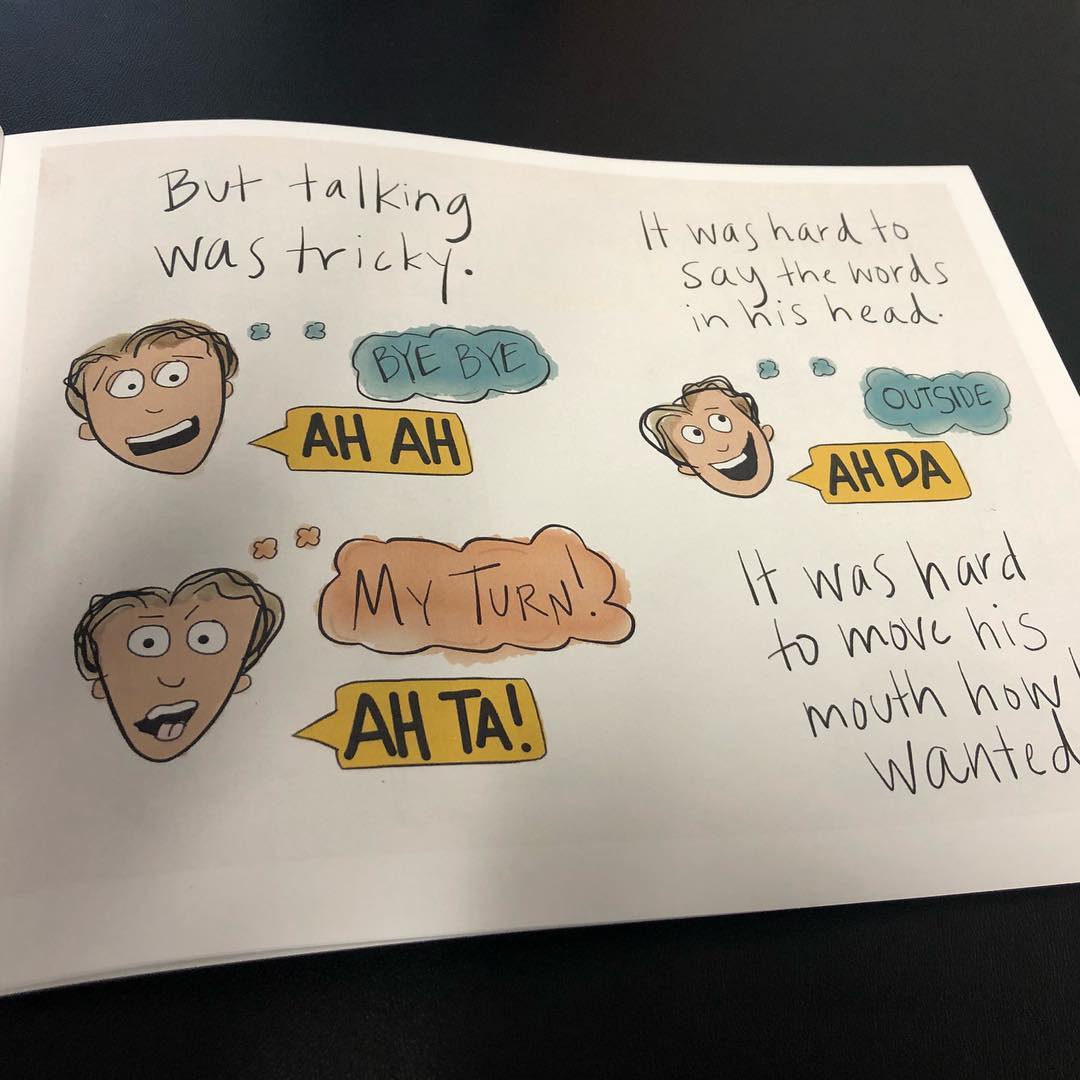
    Last apraxia awareness day, I was searching for a book I could read Ashlynn’s classmates that was simple, yet accurate enough to understand her life as a kid going through speech therapy.  This book would have been perfect.

    However, I knew this book was gold when I trialed it on a client of mine.  She has and continues to endure a lengthy battle with her ability to speak.  I read her this book and she was enthralled. She hung on every word.  When I was done, I asked her if she could relate and she enthusiastically nodded her head in agreement.

    As a mom to a child with resolving apraxia, and as a speech/language pathologist specializing in apraxia, I highly recommend this book!  You can enter to win a free giveaway below!

    a Rafflecopter giveaway