Category: Apraxia

  • “You say it best, when you say nothing at all.”

    “You say it best, when you say nothing at all.”

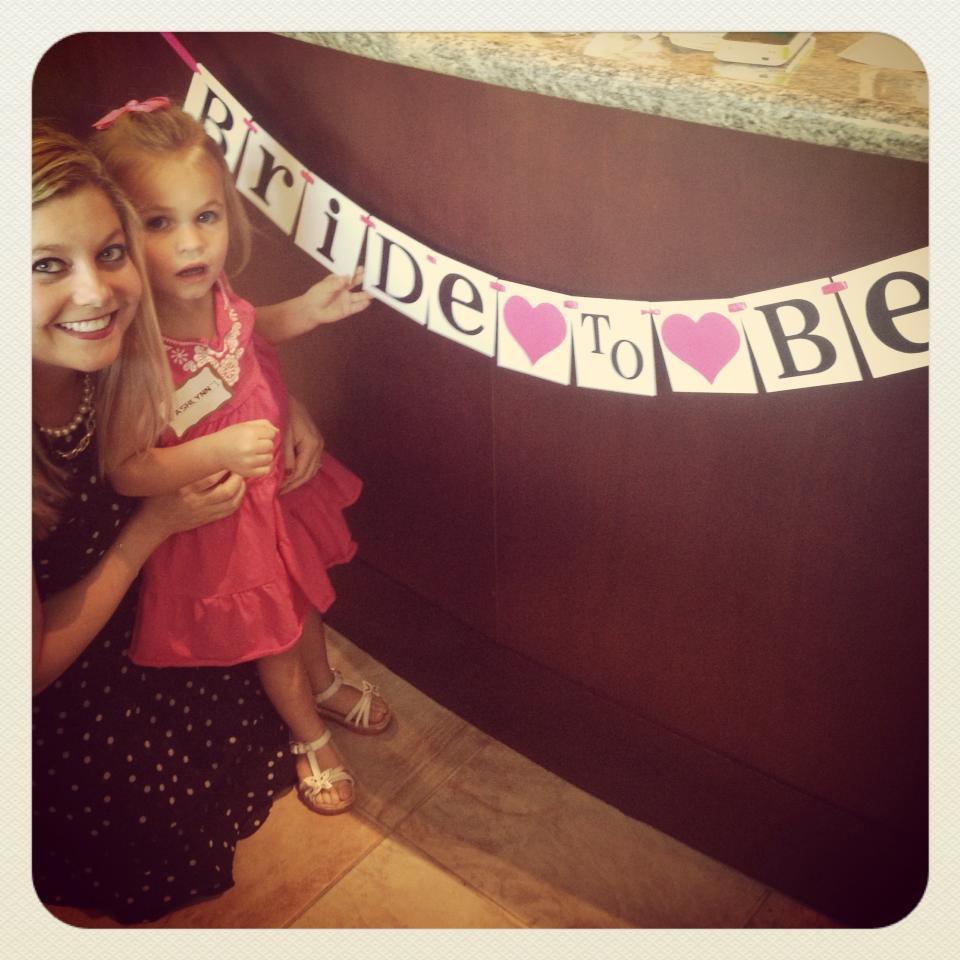
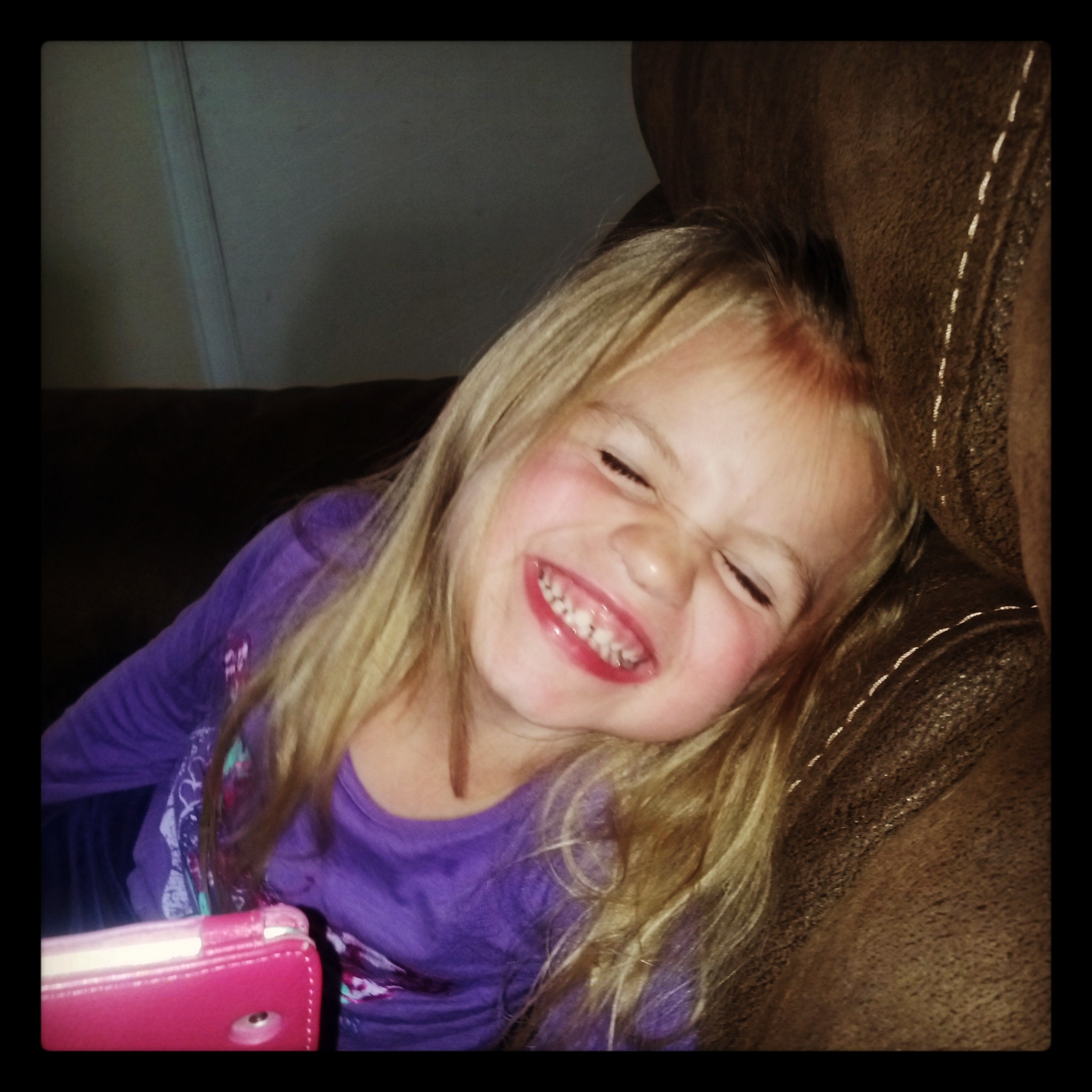
    Today I took Ashlynn to one of my BFF’s bridal shower.  There weren’t going to be any other kids there, but Ashlynn is so good around a group.  When I think of people who have charisma, I think of great speakers and people gifted with words.  The Martin Luther King’s and the John F Kennedy’s of the world.  But Ashlynn makes me realize charismatic people don’t need to speak.  There is so much else to them.  Their presence, their unseen light that people can feel and gravitate toward, their inner goodness that shines brighter than words can resonate.  The latter I believe, fits my daughter.

    She is talking now in 3-4 word phrases, but in a group she gets shy and I have to prompt her to even utter one word responses.  Somehow though, she manages to light up the room.  Flitting by from person to person, looking at them with her curious, kind eyes; touching them with her baby soft hand.  Yes I’m in a room full of women, but even so, strangers reach out to touch her hair, take joy in her smiles, feel happy in her presence.  They hold her hands, give her hugs, and let her sit on their laps.   I know I’m her mom, but I’m telling you, I can see it and not just because I’m her mom.

    She is so special to me, and even though she’s not this outwardly verbal person, she somehow demands attention in the room.  Eyes are drawn to her, smiles are cast upon her, and mutual love is relayed from each other.  All this, without her hardly speaking a word.

    There’s a country song by Allison Krause entitled, “You say it best, when you say nothing at all.”  Ashlynn truly personifies this.

    Dear Ashlynn,

    “The smile on your face lets me know that you need me, there’s a truth in your eyes saying you’ll never leave me.  The touch of your hand, says you’ll catch me whenever you fall.  You say it best, when you say nothing at all.”

  • Brain plasticity changes in children receiving PROMPT therapy for children with idiopathic apraxia of speech!

    Brain plasticity changes in children receiving PROMPT therapy for children with idiopathic apraxia of speech!

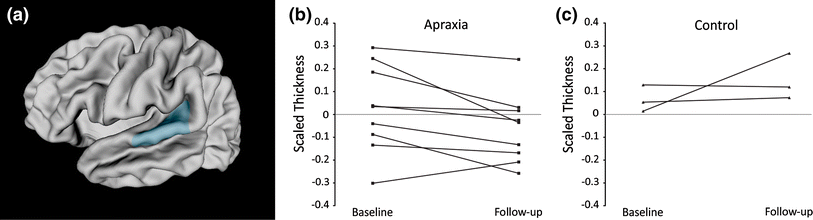
    A research article in Brain Topography: A Journal of Cerebral and Dynamics, has a published a new study that demonstrates actual brain plasticity in the brains of children diagnosed with idiopathic apraxia of speech after undergoing intense PROMPT training.  According to the article, it’s the first study of it’s kind to demonstrate “experience dependent structural plasticity in children receiving therapy for speech sound disorders.

    I’ve been waiting for this kind of functional MRI proof for speech sound disorders.  I’ve seen the brain imaging changes in kids with dyslexia, and I knew the research for speech sound disorders would be just around the corner.  It’s exciting to see scientific proof that therapy works!

    Click on the link below to read the full article.

    Cortical thickness in children receiving intensive therapy for idiopathic apraxia of speech

  • Lessons from a tricycle

    Lessons from a tricycle

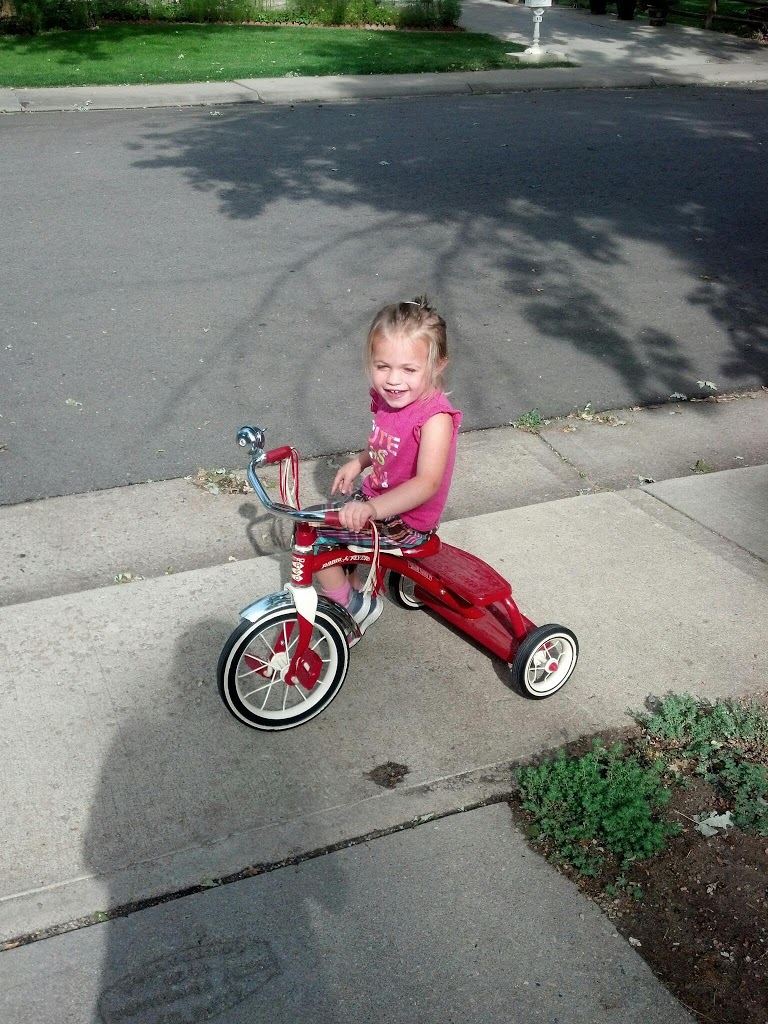
    We bought a tricycle for Ashlynn three months before her third birthday. My husband and I took her to Toys R Us, excited, full of hope and expectation. I had seen two-year old children on Facebook gleefully riding their trikes with big goofy smiles on their faces, and I couldn’t WAIT to snap that happy gleeful face on my little girl.
    Pregnant with my son, we all left the store and I had visions in my head of me walking to the park, with her riding her trike in front. I would occasionally have to call for her to stop so she wouldn’t get too far ahead………….
    ….but it was me getting too far ahead that night. One year later, with aching backs and frazzled patience, my Ashlynn still can’t ride a trike.  She has made progress though and can now not only keep her feet on the pedals, but can also keep them “straight” on the pedals where her heel isn’t constantly coming into contact with one of the bars.  As for the actual alternating pushing motion, that is still to come.  
    You’d think she would be frustrated, but the opposite is true.  As kids whiz by on their bikes, she happily laughs, giggles, and asks me, “See bicycle mama?”  and then with determination in her face she gets up on her tricycle again, ready to practice. Like most other motor tasks, this one too will take time.  It will be a journey to success, but success will surely be there; waiting more patiently than me.
    However, I’ve learned success is never really about the outcome, just as riding a bike is never really about the destination.  Every bike rider will tell you the fun and the meaning are found in the journey.  The sights seen, the hills climbed, and even possibly the falls taken.  The lesson learned from the tricycle is more than just learning to ride.  It’s a metaphor for life, and of one thing I”m certain.  Ashlynn will always be a success because she has already learned: the fun is in the journey.
  • Ashlynn update 3.10 years

    Ashlynn is in a regular preschool this year with about 15 other kids.  Most are typical with about six on IEP’s.  I asked the SLP if she was talking at all in the classroom, and she looked at me like I was crazy and then answered “yes?”  I presumed it meant she was surprised that I didn’t think Ashlynn was!  In the Spring, Ashlynn was still gesturing and pointing in the the classroom to express her wants/needs, even though she was speaking at home in 2-4 word phrases; so this is major progress!

    Ashlynn for all intents and purposes can be considered verbal at this point.  She no longer gestures to comment or request; rather, she relies on her speech to communicate.  Her sentences are approximately 2-4 word in length, usually including a subject and verb.  Since she started school, I’m getting a lot more of, “momma wook(look)!!” or “momma! watch!”

    Her Grandma and Grandpa both had surgery recently, and a cute thing she said was,

    “Dama (Grandma) ha (have) an owie, Papa ha an owie…..daddy ha an owie too?”  Haha  She says a lot of stuff now that makes me laugh.  I remember waiting for the day I would hear her say cute things, and actually being sad thinking we were missing out on all the funny things kids say as they are learning language….but we are experiencing it…just a little later than some.


  • “Say what you want to say, and let the words fall out.  I want to see, I want to see you be brave.”

    “Say what you want to say, and let the words fall out. I want to see, I want to see you be brave.”

    I heard a new Sara Bareilles song the other day.  I love music, but I really felt like this song was written for A.  It’s been a struggle to get her words out.  Even now, the other day at the park she was talking to a little girl appropriately saying ‘come on” and “let’s go again!”  It sounded more like, “tum on!” and “yet do adain” but she was DOING it.  She was putting herself out there, and REALLY talking.

    After a short time, the little girl asked her, “Are you a baby?”  A, looking confused, just covered her eyes and laughed at her.  On the sidelines, my heart broke.  How DARE this child say that!!!  Didn’t she know how much it took for my daughter to put herself out there and talk??!!

    Of course the rational side of me realizes this girl is just a kid who didn’t mean to be malicious or mean.  But the mommy in me wanted to teach her a lesson.  Instead, as usual, the person doing the teaching was A.  As she laughed at this little girl, it was really A who had the last laugh.  It was my daughter who is so wise despite her challenges.  Much wiser than me.

    Shortly after I heard this new song.

    “Say what you want to say, and let the words fall out.  Honestly, I want to see you be brave.”

    A is braver in one hour than I ever have been in my entire life.  I love you little girl, and I love seeing you be “BRAVE.”

    http://www.youtube.com/watch?v=QUQsqBqxoR4


  • Switching private SLP’s

    There is no easy way to “break-up” with an SLP, but  I made the decision to discontinue private services through the SLP that was seeing Ashlynn.  A lot of parents wonder what is the best way, and I don’t think there is a right or wrong way.  I personally just wrote an email and said I was switching her to my mentor.

    I am very appreciative of all that she did; however, I feel like we had hit a wall with her therapy style.  Her style was to have my 3 1/2 year old daughter sit in a chair across from her for the entire 30 minutes.  The first 15 minutes she would do Kaufman cards, and the last 15 minutes she would play with a fun toy and have my daughter request and comment on it.  However, it was very controlled and my daughter couldn’t hold the toy or play with at all.  It had to be done all her way.  If Ashlynn threw a temper tantrum, she would look at me and tell me that when she has kids they are going to hate her because she won’t put up with that.

    Ya, well, good luck lady.  Kids throw them whether you “put up with them” or not.  It’s called being a toddler.

    After a couple months of this, my daughter was pretty over it.  The first 15 minutes turned into more like 20-25 just trying to get her to say the cards.  Apraxia therapy can be boring, but my goodness, I needed her to get creative!  I did bring up that maybe we could put it in a more naturalistic setting, having them play etc.  In her defense, she did try; but she still had Ashlynn sitting in a chair.  If she didn’t get something accomplished, she just told me to do it at home.  I remember thinking to myself that Ashlynn is one of the most compliant toddlers I have seen.  I wondered how “typical” toddlers who need to MOVE do in therapy with her?

    I tried to be polite, but I informed her that as a school based SLP, I don’t have the luxury of having my carryover plan include parents doing homework.  I have to get creative!  Kids need to be having fun, and besides, that’s how they learn the best!

    I had a great mentor whose therapy plans usually included 3-4 different activities in one thirty minute session. They were multi-sensory in nature, which are methods that involve using any sensory and motor input available to enhance verbal skills.  This usually involves some type of play activity that might have them throwing a bean bag, walking like a crab, or even using felt and velcro boards just to do something different with those same old picture cards.

    David Hammer, a well known CAS expert out of Pittsburgh does this as well.  I’ve been to a couple of his presentations now and he shows a lot of video.  I rarely see a child required to sit in a chair across from him. He has them doing puppet shows, hitting the cards with a nerf gun after they say their sound, or tossing bean bags in and out of a huge dinosaur’s mouth aiming at the artic cards.  He has them banging on drums to represent each sound or syllable etc.  This is the way to promote carryover, and I could see this SLP wasn’t going to do that.  She may have known the Kaufman method, but her therapy style wasn’t what I was looking for.

    That’s the thing.  There are always going to be reading programs, math programs, and speech programs out there, but teaching style or therapy style plays a big if not bigger part in facilitating change.

    When I was an SLPA (assistant SLP), I worked under a lot of supervisors and was able to see a lot of different styles.  All therapists are qualified and trained professionals that will most likely get the job done, it’s just some got the job done a lot faster.  That’s the kind of SLP I strive to be, and that’s who my mentor is.

    Since it’s summer and my mentor is off, I”m switching Ashlynn to her.  I know Ashlynn would have progressed, but I need her to progress faster, which means I need someone more multi-sensory. This is where I have seen my mentor shine and I’m excited for Ashlynn to start with her.