Category: Apraxia

  • Speech and Language with Post it Notes

    Speech and Language with Post it Notes

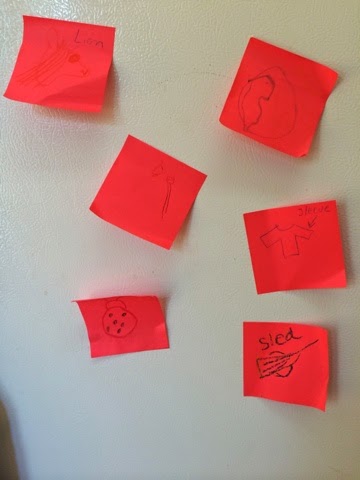
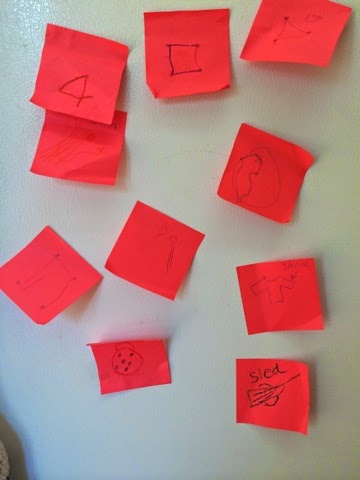
    My daughter loves Post it Notes.  LOVES them.  She loves writing some small scribble on them and then proudly sticking them up around the house to put on display.

    Today we drew pictures that included her target sounds to work on speech, but we also drew shapes to work on our pre-writing strokes for OT.

    Based on the response from my facebook post, my kid’s not alone in loving them!  Try it!  Easy and fun way to get speech practice in at home.

  • “I love you mommy!”

    “I love you mommy!”

    These words are cherished by any parent.  These words are eagerly anticipated.  When you have a child with a speech delay, the eager anticipation eventually gives way to desperation, and maybe, (though hopefully not) apathy.

    Ashlynn has been able to say “I love you” for awhile now.  Once she really got good at imitating, we had her imitate it every time we told her goodnight and tucked her into bed.  Now that she’s older, she automatically says it after we say it in any situation, and we are happy.  We are very happy.

    Today though, I heard these words spontaneously.  She said them in a moment of pure joy and blessed me with them.

    First, a little back story.  I’ve been home for a month now on summer break with my kids. It’s awesome and exhausting.

    I am admittedly not an artistic person, and I really could live without the messes that art creates.  I’m a writer.  Writing is so clean.  A pen and paper is all you need to create beauty out of words, which then are easily put away until later.

    Kids are not writers.  They do not yet appreciate the beauty within words, but they love a good mess.  A good mess and me are not on good terms.  However, kids and neatness are not on good terms either….so what is a mom to do?

    Ashlynn begs to do messy things.  Play with play-doh and proceed to get it everywhere including in her hair, in her shoe, and ground into the carpet even though she’s playing on the tile in the kitchen.

    Let it go mama.

    Play with water in the sink.  Except the water inevitably ends up in a huge puddle all over the (small) counter, the floor, her shirt, her pants, and possibly needing a change of underwear.

    Let it go mama

    Play with the dirt outside.  However, the dirt somehow happens to turn into mud that gets under her fingernails, in her shoes, on her shirt, and again ground into the carpet that is INSIDE my house even though she was playing outside.

    Let it go mama.

    And I really have been trying.  Messes make her happy.  The tactile input is helpful for her SPD (sensory processing disorder).  I’ve really, really been trying to just accept the mess.

    Today I was at Target getting some odds and ends.  I’m not an impulse shopper.  I only buy necessities and if I do I usually have a coupon or it was on sale.  I saw the dollar bins and I decided to take a peek.  I’m also not a window shopper, so this is unusual as well, but you know, I’ve become more flexible this summer and I don’t know what has gotten into me.

    I ran across foam stickers and my memory instantly recalled paper after paper that came home in Ashlynn’s backpack this year full of random papers that had some scribbles and foam stickers on them.  I would never buy foam stickers.  What a waste.  They serve no purpose.  You put them on paper and then throw the paper away.  What’s the point?  Something in me though remembered all of those papers and thought Ashlynn really likes these things.  I stood there awhile debating.  They were only a dollar, but it seemed like such a waste!!  But I think, Ashlynn really likes creating with them and (and this is my internal argument that allowed me to buy them) they are good for bilateral hand coordination since you need both hands and fine motor control to get the paper off the back.

    I bought them.  Good.  Ashlynn will practice fine motor skills.  I’m a good mama.

    I brought them home and she was happy.  Not overly happy, but happy.  She was busily creating when she randomly walked over to me and tapped me on the leg.

    “Mama, Mama, MAMA!!”

    “What honey?”

    “I love you!!”

    I’m stunned.  What on Earth prompted this?  And that’s when I looked a few feet beyond her to the messy table, backs of foam stickers littering my carpet, and paper after paper full of foam stickers.

    I gave her the biggest hug.  I might have cried.

    As it turns out, a good mess and me have gotten closer.

  • Early literacy skills: Print awareness activity

    Early literacy skills: Print awareness activity

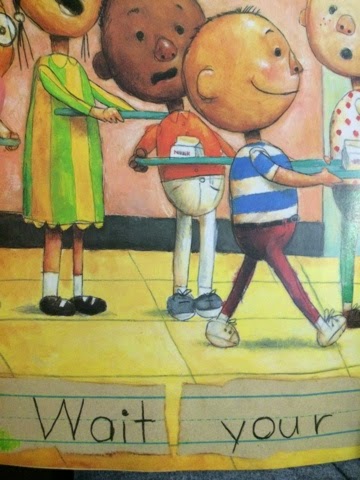
    The other night I was reading this book to Ashlynn.

    If you’re not familiar with the “David” books, they center around the main character David who is mischievous and frequently getting into trouble.  
    These books are great for early print awareness!  As you can see, the print is larger and is written as though a child wrote it.  Ashlynn kept pointing out all the capital letters she recognized from her name.  Her favorite was /S/ and she would declare, “Look!  That’s in my name!”  This is great for transfer of early letter recognition skills. 
    The sentences are typically short, and contain no more than maybe 5 words per sentence.  On some pages, the words are separated onto separate bits of paper (see below).  

    The reason this is great is because you can get your child pointing to each word.  This doesn’t mean they need to be reading the word.  They just begin to get an understanding that those combination of symbols denote an orthographic representation of a word.  Ashlynn can’t read, but she is starting to get the hang of pointing to each word while she reads (from memorizing the book).
    As a bonus, the stories are relatable and entertaining to your child, allowing you work on oral language as well.
  • You play dirt with me?

    You play dirt with me?

    We took our annual Fourth of July camping trip to Glendo State Reservoir in Wyoming.   It’s a family tradition, so I decided to document her progress each year.  Last year’s experience can be found here: Glendo 2013
    This was only a few short days after our near drowning incident at her pool during swimming lessons.

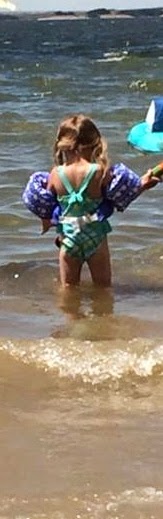
    Glendo is a HUGE reservoir, and a lot of our time involves the beach.  I was worried about Ashlynn’s safety, and also if she would be too scared to go in the water.  The first day she kept her distance from the shoreline; however, the second day she walked to the shoreline and was watching her dad who was floating in the water maybe 10 feet away. Sensing she wanted to come in, he held out his arms.  I didn’t see him at first and my sister motioned to me that it looked like she was going to go in.  I went running to her, but stopped just short behind her.

    I saw my husband with arms outstretched encouraging her to come to him, and then I saw her little shoulders rise up big as she took a deep breath, and she marched in the water.  She marched through the waves, keeping her balance, until she fell into his arms with a big smile upon her face.  He hoisted her up into a floaty with him to enjoy floating in the water under the warm sunshine.

    I looked on in awe.  She’s so brave.  Her character is quite astounding to me, and I’m her mother.  She faces challenges, fears, and obstacles head on.  She never gives up. She is determined and resilient.

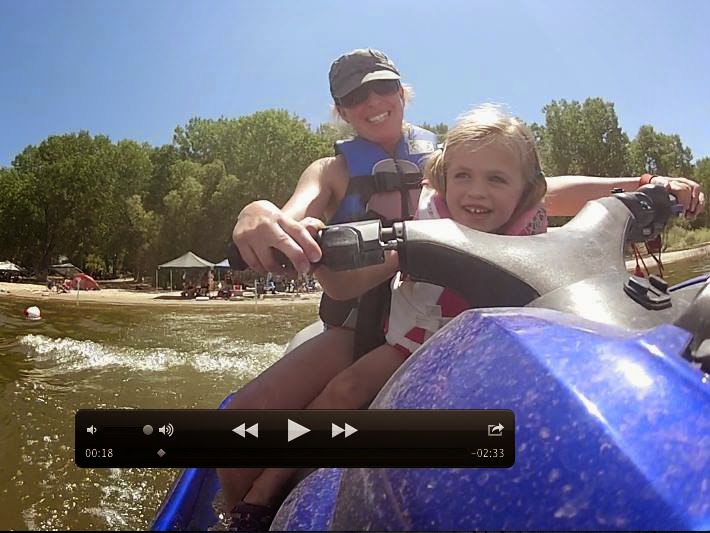
    She also of course, rode our jet ski.  I wrote last year that she asked, “Ashlylnn play boats with daddy?” and this year, she announced proudly after riding, “I ride the je-si huh!”

    One of her favorite requests this year was, “you play dirt with me?”  imploring anyone who would listen to play in the sand with her.  No one had the heart to say no, so she made quite a few friends and suckered in quite a few family members!

    When it was time for fireworks, Ashlynn has historically stayed in the car.  However, this year, she again put on a brave face and ended up enjoying the show!  At times she would say, “that was too close!!!” but she never went back in the truck.

    I like documenting some of her milestones on the Fourth of July, Independence Day.  It’s so fitting since each year she becomes more and more independent.

  • Good teachers change lives

    Good teachers change lives

    What a busy month!  Life definitely doesn’t slow down just because I’m off for summer break!  I signed both the kids up for swimming lessons.  Ashlynn would be in the Guppy class for probably her 5th time, and Jace and I would be in the parent/tot class.

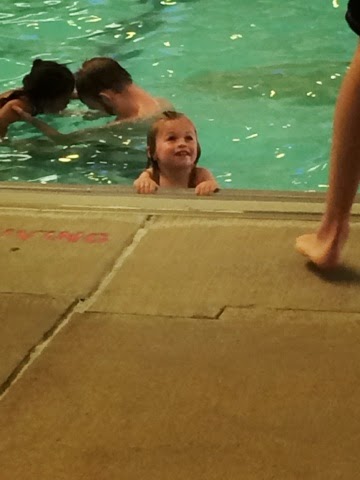
    I decided that since it was the first day, and considering Ashlynn’s aversion to water now following two traumatic pool events, here: I would stay on the side with Jace and watch to make sure she was ok. I realize now it was totally irrational, but I guess I was expecting she would have her same instructor from last year and she would be off and running.  She sure was excited at the thought of going swimming.  I snapped this photo while we were waiting for them to call off the classes.  Doesn’t she look excited?

    I have to admit, when they called off her instructor, he looked like he was 12.  Okay, not really, but he was young, new, a little hesitant himself.  Ashlynn refused to get in the water.  She cried hysterically as fear gripped her whenever they even mentioned it.  Another little boy in her class had autism, and his mom had to literally sit on the side and hold his arm or he would go swimming off under water, and another little boy had no desire to listen or follow directions.  I actually kinda felt bad for this kid as much as I did for Ashlynn.  He was in waaaaay over his head!

    Week two, Ashlynn would let him take her out to practice skills, but she either had her arms gripping his face, her neck up, or her knees pulled to her chest.  She also refused to stand in the water and would only sit on the side of the pool.  It literally broke my heart.
    There were some cute moments though.  When it was time to stand on the edge of the pool, she would hold the little boy’s hand who had autism and talk to him and repeat the directions.  He never looked at her, but he seemed to listen and his mom seemed more than grateful.  Ashlynn was the only child to talk to him and she was the only person beside his mom that he would let hold his hand. I just thought, “Well that’s Ashlynn.  Maybe she isn’t here to learn to swim.  Maybe she has a bigger purpose.”  Even though I was proud of her, my heart was still sad.  I lamented to my husband that I felt that she was actually worse than when she started swim lessons last year because now she wouldn’t even get in the water.  
    We tossed around private lessons and decided to do it.  I heard the instructor of my parent/tot class saying she and another instructor were the only two current certified staff.  I figured I’d go with her and had her write her number on the back of the card.  That was Thursday.  
    On Monday, Ashlynn started her new two week session.  I just figured she would have the same boy, and I thought, well, maybe it’s best because at least she knows him.  However, I was surprised when they put her in “Josh’s” class.  I had seen Josh since last year.  He normally taught the older kids, or so I thought.  I would marvel about his amazing teaching ability and how his kids would respond to him.  I wished he taught the younger kids, but I had never seen him do so, until today.
    Ashlynn went shyly with me holding her hand.  Instead of my usual speech of “Even though Ashlynn doesn’t look like it, she has special needs and has a motor planning disorder that affects everything from her speech to her gross motor skills, so please keep an eye on her because she has had to be rescued twice” I said, “You teach little kids?  I only thought you taught older kids?”  He seemed surprised and said that was weird because he usually only teaches the little ones.  
    I stepped back with Jace and turned around to see Ashlynn red faced, freaking out not wanting to get in the pool.  He put her in anyway and then bent his head in and said something to her ear.  I have no idea what he said, but she stopped crying.  Before I even knew it, I was in tears on the sideline watching her not only stand in the water but blow her bubbles and do her head bobs.  I sent text messages to my husband.  
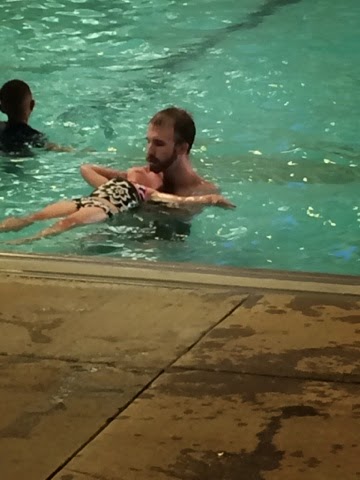
    When I looked up again, I saw this:

    Full back float, head down, arms AND legs out relaxed, and trusting Josh.  She has NEVER, EVER, done this with anyone.  I looked on stunned and snapped another picture.  When she started to tense up, he leaned his head into her ear again and told her to trust him.  He told her he had her, and when she did it he gave her the biggest hug.  

    Tears flowed.
    To see the pride on her face, the confidence in her smile, the sparkle in her eyes….he did this in ONE day!! 
    And what I realized was, I actually didn’t care about the swimming.  I mean I do, but I was more proud of her being proud of herself.  He gave her confidence, he instilled a sense of accomplishment in herself and that is what being a teacher is all about.  He made her WANT to learn to swim.  
    Good teachers change lives.
    In this journey in apraxia, I realize and learn over and over and over again, that maybe we have to know the darkness to truly appreciate the light, and the light sure shone on us today.  

  • Baking with speech and language

    Baking with speech and language

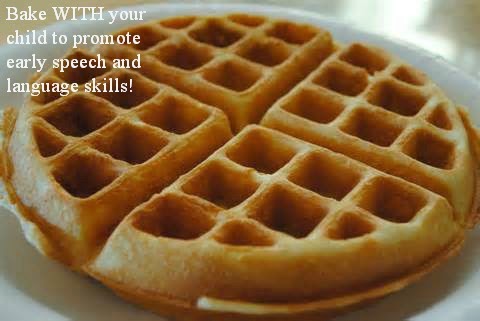
    Parents are always looking for ways to incorporate speech and language activities at home.  Whether it is to stimulate a typically developing child’s vocabulary and language, or to help a speech or language delayed child; baking is great and fun way to work on speech and language.

    The first and most important rule before you start, is you have to accept the fact that your toddler will make a mess, and that is just part of the process, or um, fun.

    When I do baking or food activities with kids in school, they absolutely love it.  That’s the key. When kids have fun they are at their best learning.  Also, baking is a multi-sensory activity, meaning many sensory systems are activated.  When children are using multiple sensory systems, acquisition and retention of skills is more likely.  Baking with your kids inherently promotes:
    Vocabulary development
    Sequencing
    Following directions and comprehension
    Pragmatic language – the social piece of language

    Let me explain a little bit further.

    Vocabulary Development:  

    For the young child, words are learned best in context.  Certain authors refer to this as “event-based knowledge.”  Many of children’s first words are usually embedded within scripts that are part of their daily lives.  Examples could be: bottle, cookie, doggie, bath, etc.  These words are said to them frequently throughout the contexts of their daily lives.  Baking provides the same event-based knowledge experience, and exposes them to new vocabulary.

    Sequencing:  

    The ability to understand sequences and to sequence is an important skill.  Sequencing most simply refers to the order of things.  When kids get into school, sequencing is very important to understanding: patterns, math, a story etc.  Following a sequence of steps is inherent in baking and makes it the perfect activity for this skill.

    Following directions and Comprehension:

    These two things fall under receptive language skills; however, they are very important to the development of overall language skills.  Kids who are good at retaining and following directions have less difficulty in school since they are not devoting a lot of their cognitive load on simply understanding and remembering what they are supposed to do.  Baking is a fun and easy way to help your child practice these skills at home.

    Pragmatic Language:

    This is usually referring to the “social” element in language.  This involves the way language is used to communicate with others.

    With a little forethought, baking can also be a way to sneak in more direct speech language targets while working with your kid at home.

    Muffin Mondays and Waffle Wednesdays

    This summer I implemented Muffin Mondays and Waffle Wednesdays. Ashlynn is VERY interested in what day of the week it is, so I did this to also give her a framework of her week.
    Ashlynn’s current speech/language needs include: syntax (the form or structure of a sentence), and consonant blends (two consonants found together in a word: sp, st, sl, fl, bl, for example).

    It’s important to know your child’s goal, and then structure your baking around the goal.  Get creative, but it’s not as hard as it seems.  In Ashlynn’s case, I chose  the words: spoon, flour, stir.  For syntax, I had her ask me “Can I do it?” to work on her questions forms.

    Then each time we used a spoon I had her repeat “spoon.”  While she was mixing the batter, I would ask her what she was doing and cue her as needed to say the “st” blend in “stirring.”  Instead of using 1 cup of flour, I broke it up into four parts to give her more practice saying “flour” each time she poured in the flour.  For an extra bonus, she had to put “stir flour” together in a simple phrase.  I would hold the spoon until she said the desired words, and then I would give her the spoon back when she was successful!  She loved it.

    If your child isn’t yet talking as much as Ashlynn, hum the ‘m’ sound while you mix the batter or if your child isn’t great at imitating yet, just have him/her make any vocalization to request an item.  If they can’t yet imitate even a vocalization, imitate any spontaneous sounds they make to provide an opportunity for vocal play. If they aren’t really vocalizing yet, don’t get discouraged!  Practice turn taking and reciprocal play.  They pour then you pour.  You stir then they stir.

    With other clients who needed a final stop, I might have chosen the word “dump” and then every
    time we pour in an ingredient, we work on the word “dump.”

    Really, the possibilities are endless!

    In addition, you can also tell your SLP that you incorporated some great “distributed” practice throughout your child’s day.  In motor learning approaches to therapy, mass practice refers to the production of a large number of repetitions of a single target(what you should be seeing in therapy) and distributed practice refers to hitting targets with a greater amount of time between trials or sessions.  However, distributed practice is very important for stabilization and generalization!  Parents are the greatest asset when it comes to carryover, because you are in a better position to afford the child numerous opportunities for distributed practice!  In addition, you can do it in ways that are fun and multi-sensory in the child’s natural environment.