Category: Apraxia

  • Working our way out of the apraxia tunnel

    Working our way out of the apraxia tunnel

    Ashlynn has been saying things lately that are really showing higher level thinking. You’d think this would be glaringly apparent to me, but it really IS crazy how much language gives us an idea of what is going on in their brain.

    She’s been VERY interested in her schedule, and where she is going the next day.  I still haven’t made our visual schedule, but it’s on my to do list.  She usually asks me though while she’s laying in bed to go to sleep,
    “Mama, what are we doing today?”
    “you mean tomorrow?
    “yes”
    “Tell me that.  What are we doing tomorrow?”
    What are we doing, tomahyo?”
    And then we talk about it.  She loves it when her grandma drops her off at school and I get to take her to her class.  This happens on Tuesday and Wednesdays.  She used to just keep asking 
    “you takin me to school?”
    I would reply, “Grandma will take you to school and I’ll take you to class.”

    I’ve been telling her that since she started school.  This week she finally said, 
    “What are we doing today mama?”
    “you mean tomorrow?”
    “yes”
    “Say that, What are we doing tomorrow?”
    Instead of repeating it back to me, she asked, “Grandma take me to school and you take me to class?”  
    This may seem small, but I was sooo proud!
    She also asks me who I work with almost everyday and I usually tell her my coworkers or colleagues.
    Well the other night, she said, “who you go to work with, mama?  Construction workers?” 
    LOL  
    I love it.  It makes my heart smile, and in those moments, I know everything is going to be okay.
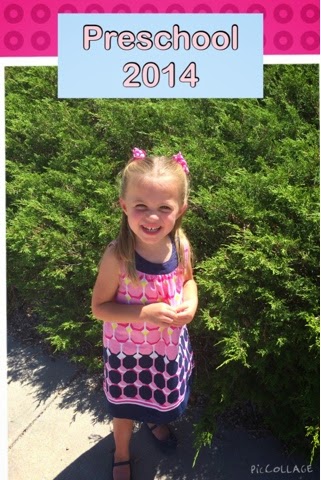
    My last update has to do with school.  This is her third year of preschool.
    The first year she came home singing (with 1-2 sounds) the melody to the baby bumblebee song.  By the end of that year, she was also telling me who her friends were in school.
    The second year, she would tell me who she played with for that day, but that was usually the extent of her school reporting.
    This year, her third year, she’s identifying the letters of her name all over the place.  She also told me the other day when we were talking about arctic animals and that polar bears live there, 
    “I live in Colorado.”  
    Me: “Did you just say you live in Colorado?”
    Ashlynn: “Yes, my teacher tell me that.”  
    I sat their in awe.  This is the first time she’s ever told me something she’s learned at the school.  Heck, this was the first time she said something that she hadn’t learned from me or that I hadn’t heard her say before. 
    I see the light at the end of this tunnel that is apraxia.  To be honest, I’ve seen it for some time now, but I feel we’re getting closer to making it completely out.
  • September Specialty Series: Using AAC (Alternative and AugmentativeCommunication). A mother’s story.

    September Specialty Series: Using AAC (Alternative and AugmentativeCommunication). A mother’s story.

    To continue my September Specialty series, I want to introduce Merry. Merry is an amazing mom, and I wanted to feature a mother because in my opinion, parents are the experts on their child.  I think it’s important professionals keep this in mind, so I’ll say it again.

    Parents are the experts on their child.
    Her daughter is using an AAC (Assistive & Augmentative Communication) device at the age of 2 ½!!  I thought she was the PERFECT guest to talk about AAC because many parents aren’t even told it’s an option, or they are told their child is too young.  I’m a big believer that mothers know their child better than any professional and are their biggest advocate.  Merry is proof of this!  Thanks Merry for guest blogging!

    Tell us a little bit about yourself and your child with apraxia.
    I am a young stay-at-home mom with no background or experience with speech or medicine. I’m actually a funeral director by trade and education. However, I consider myself very science-minded and I try to do things in an evidence-based manner whenever possible. I think that’s been very helpful to me in my journey as a special needs parent.
    My daughter, Elanor, is my only child. She is 2 ½ and absolutely loves music, dancing, animals, and most children’s television programming. She is especially fond of Blue’s Clues. She has a lot of trouble learning to speak due to childhood apraxia of speech. She also has dyspraxia, which is basically a full-body apraxia. This makes a lot of other things hard for her, including things like running, jumping, or putting on shoes. She has had her communication device for about a year now. It is an iPad mini with a communication app called Speak for Yourself and an amplified case called an iAdapter. We call it her talker.

    When and how did you discover your daughter would benefit from a device?

    I remember being at a friend’s daughter’s birthday party when Elanor was about a year old. There were several parents all bunched into a corner talking about their children’s speech problems. Most of their kids were older, and some were already in speech therapy. My husband and I looked at each other kind of pridefully, because that was one problem we knew for sure that Elanor didn’t have. At one year Elanor may not have been walking (or anywhere near walking) but she had a good number of words, probably about 10.
    At 15 months when Elanor stillwasn’t walking, we followed a random tip and pursued ear tubes for her. We had heard that fluid in the ears could mess with a child’s balance, and that seemed to be Elanor’s problem. We had about a month of many many doctor’s appointments to look at her ears and talk about tubes. It was during this time that my husband and I kind of looked around and realized she hadn’t said anything in a while. Sometime between 12 and 15 months she lost all of her words and most of her sounds and we had barely noticed. It was assumed at this point that the ear tubes would fix everything. She had ear tube surgery at 16 months and walked two days later, but she remained nearly silent.
    At that point we were already in the process of getting early intervention from the county due to the walking issue. At the first assessment they were no longer concerned about her walking but shared our concern over her speech. We were told to come back in a month if she still had no words. It was during this nearly silent month that I happened to read something in a mommy forum about apraxia of speech. A lot of it really seemed to fit. Elanor couldn’t stick out her tongue, she couldn’t pucker to kiss. She had a lot of trouble eating. Her speech had progressed backwards instead of forwards. The symptoms really seemed to match. Of course, I couldn’t be sure about any of the main symptoms of apraxia (like inconsistent errors in speech) because in order to see those symptoms she would have to be able to speak, which she really couldn’t.
    During one of my many googling sessions I came across a video on YouTube of a child with apraxia using a communication device. He was using Proloquo2go (a communication app on the iPad) to ask his mother for a snack. I remember how incredibly happy he was to be able to tell his mom exactly what he wanted. I knew then that I wanted that for Elanor. I made an appointment for a speech evaluation with a private clinic. We discussed a communication device at the very first appointment and things went from there. Elanor was 18 months old when she started using her device. Here is a video of the first time she ever used it:

    What advice would you give to other parents who have been told their child is not a candidate for AAC.

    Here is what I have to say to them: your child deserves an opportunity to communicate their thoughts and needs without having to wait to learn to speak and they CAN do it. This recent blog post from a Speak for Yourself creator basically blows away the entire concept of needing certain skills to be able to use a device: http://www.speakforyourself.org/2014/07/22/myth-augmentative-alternative-communication-aac-pre-requisite-skills/
    I know that Elanor continues to be one of the youngest AAC users that many speech pathologists have ever seen. This isn’t because toddlers can’t do it, it’s because they haven’t been given an opportunity to do it because people think they aren’t ready. They are. Your child is too.

    A big myth regarding AAC is that the child will “give up” trying to talk if they are given a device.  However, research refutes this.  As a mother though, how do you respond to this?

    Using a communication device is hard. It’s slow. It is so much easier for me to say things out loud than to say them on the Elanor’s device. For Elanor that’s not true because speaking is so difficult for her, but the moment she can speak a word intelligibly she will always choose to speak it because it is faster and easier. Not only that, but not everyone has a device. Everyone around her is speaking aloud all the time. She would obviously prefer to be doing that.
    I also think this worry about your kid “giving up” on speech is really misguided because the device helps with speech so much. There are a lot of theories I’ve heard about why this is the case. What I know for sure is that it works. The more we push Elanor to use the device the more her speech blossoms.
    Here she is a couple of weeks ago telling her Daddy “I don’t know”, her first real sentence.

    Who programs the device and who teaches your child how to use it?

    Me and me. I know this is different for some people who get their device through their child’s school, but since we bought it ourselves we are in charge of it. Programming Speak for Yourself is actually really easy. That’s one of the reasons I chose it over some other communication apps. There’s also a Speak for Yourself User’s Group on Facebook that is incredibly helpful with any questions about programming or anything else.
    I am able to quickly add words and pictures to Elanor’s device to make it more personal. She has all her family members and friends names and pictures in there, every cartoon character, every cartoon. Her device is really very specialized for her.
    Here she is asking to watch Blue’s Clues:
    Video: https://www.youtube.com/watch?v=rZAPrJu89VU
    As far as teaching her how to use it, I mostly do that through modeling. This means that I speak through the device just like she does. If you think about it, children learn to speak by hearing us do it. It doesn’t make sense for them to learn to use a communication device without seeing someone do that too. I get guidance on how to do this from Elanor’s speech therapists and also from the creators of Speak for Yourself, who are incredibly involved and helpful. Sometimes it seems tedious, especially if it doesn’t seem like Elanor is paying attention. I learned pretty quickly that she is always paying attention, even if it doesn’t seem like it. It is incredibly rewarding to see her use a word or sentence I showed her days before when she seemed entirely uninterested.

    Many parents of children with apraxia report increased frustration and tantrums due in part to their inability to speak or communicate in some way.  Did you have a similar experience and find that the device reduced your child’s frustration?

    I didn’t have that problem before we got the device because she was so young when we got it. She has had some means of communication, whether it be ASL or her device, for a long time. However, now that she has become more verbal I have noticed some frustration when I don’t understand what she is trying to tell me verbally. I usually have to redirect her to the device, where she can usually tell me what she was trying to say. That’s why it’s so important for me to keep modeling and using the device with her even though she is able to talk more now. It is an amazing source of relief for both of us!
    This video shows her right after I spent about 5 minutes trying to figure out what she was asking for:

    How did you pay for the device?  Are there funding sources?

    The first device we had was an iPad 2. My parents bought the iPad (around $500) and my husband’s parents bought the Speak for Yourself communication app ($200). We later replaced the iPad 2 with an iPad Mini, which we paid for ($300), and we used GoFundMe to crowdsource funds for the amplified iAdapter Case ($400).
    Compared to dedicated devices like a Dynavox, it’s pretty inexpensive to purchase an iPad mini and communication app. We’re talking the difference between $500 and $5000-$10,000. That being said, $500 is still a lot to come up with out of nowhere. For funding sources I suggest family members, churches, and local charities. I know most churches would love to fund something like this for a child in their congregation.  CASANA also gives away iPads once a year to kids with apraxia, so that’s something to look into as well.

    Do you have any additional comments/recommendations/or final thoughts that you want to tell parents who are experiencing the pain of having a child who struggles to speak?

    I just want to say that having this device has helped my daughter immensely in ways I never knew it could. I am a part of many groups of parents with children using AAC, and all of these children are doing better than they would be without a device. Their speech isn’t hindered, it’s helped, and their parents have been given a chance to really know them.
    Almost every day on online apraxia groups I see parents complaining that their child can’t tell them things. They don’t know their child’s favorite things. They don’t know what their child did at school that day, etc. I sympathize with these parents, but I can’t empathize with them because I honestly don’t know what that’s like. Elanor can tell me all those things and more with her communication device.
    I guess in the end what I want to tell all the apraxia parents out there is that you can know your child, and they can have a voice now.There’s no need to wait until they can speak. This technology is available and it is amazing. It can change both of your lives forever.
    Incredible Merry!  Elanor is so lucky to have a mama like you! 
    To read more about Merry and Elanor visit her blog: http://aacabc.blogspot.com/
  • Turning Pain into a Purpose

    Turning Pain into a Purpose

    Two years ago,
     I found out my almost three year old first born had Childhood Apraxia of Speech (CAS).  Despite being an SLP and treating CAS at the elementary level, I failed to recognize it in my baby.
    It was a VERY difficult time filled with overwhelming sadness for my daughter and guilt as her mother…an SLP who didn’t realize she had CAS.

    It rocked my world.  
    Not only did the dx devastate me, but her silence and struggle to speak was truly heartbreaking.  You CANNOT  appreciate how complex speech is until you watch a child struggle to speak.
    I was sad and I was angry.  I had a master’s degree in Speech/Language Pathology, but my education about CAS consisted of 20 short pages. Every time I think about this, write this, or say this, I can’t help but shake my head.  This isn’t right.

    I decided soon after I would become an expert in CAS and I would help not only my daughter, but other children who were the same.  I had NO idea how I was going to do this.  I researched like crazy.  I found out a national Apraxia conference was coming to Denver the next year.  I took it as a sign.  I signed up for webinars.  I created a binder full of CAS treatment and research.  I watched a three hour Kaufman video at my private practice.   I talked to my cousin who is also an SLP, and she said she had two videos from David Hammer and Ruth Stoeckel I could borrow.  I devoured them.   I expressed my desire to specialize in CAS to my clinical director.  She didn’t blink.  I had her full support 100%.

    After attending the Apraxia National Convention, I found out about an apraxia bootcamp.  I wanted in.  I talked to the founder of CASANA, and she explained it was highly competitive.  The wind kinda went out of my sails.  She still encouraged me to apply, but I didn’t feel confident.  The clinical director at my private practice started filtering the kids with apraxia to me.  Her faith in me was affirming, and I was more determined than ever.

    Then, I found out I got in.  I was a mix of emotions.  This is what I wanted, but it also meant leaving my family for FOUR days. Being without my babies, my heart, would be hard…..but I absolutely believed in this cause.  I was going to go, but…. I had never flown alone.  I had never been to the East Coast.  I had never left my babies for this long.  I read a quote, “if it’s both terrifying and amazing, then you should definitely pursue it.”  Check and check.  Its “go time” as my daughter would say.

    Then today, a little over two years after my affirmation, I received this.

    CONGRATULATIONS go to Laura Smith for successfully completing her case study and now being:

    CASANA Recognized for Advanced Training and Expertise in Childhood Apraxia of Speech. 

    I AM an apraxia expert, recognized by CASANA for advanced expertise. I am elated.  The road here was difficult, but amazing.  I once read that the definition of happiness is “the feeling we feel when striving toward our potential.”

     When striving toward our potential.  NOT when we achieve it.  So here I am.  What is my next goal?  What is my NEXT potential?  What am I striving toward?  I have some ideas.  Some small and some REALLY big.

    One thing I’ve learned from Ashlynn though…a positive attitude, perseverance, and a willingness to fail and try again = success.


  • Last year of Pre-K

    Last year of Pre-K

    Today was Ashlynn’s official first day to her last year of preschool.  It was also two years ago today I heard the words, “Laura, this is apraxia.”                                                                                                   I’ll never forget that.  It was like hearing something for the first time you don’t want to believe, but that you instantly know to be true.                                                                                                                   Apraxia.  Apraxia.  No.  Not my baby.  Why apraxia? That one word brought forth all sorts of things in my brain.  Speech will be a struggle.  Learning to talk will be a struggle.  She will have to have a lot of therapy and she will have to work for every sound, every word, and then every sentence.                                                                                    I texted a colleague.                                                                                                                          “She has apraxia and I’m devastated.”                                                                                                     I cried. My little social butterfly whose favorite word was “HI” would have to fight to be able to talk.  She would have to earn her right to do the ONE thing that brought her joy: To be social and speak to others.
    It was a hard pill to swallow.  I remember I put her in her car seat, and as I leaned over to hug her I cried.  She smiled and asked me, “hi?”  I cried some more.        
    Her first week of school though was nothing short of amazing.  She qualified for free preschool in a special needs classroom due to her needs.  You can read about that here. First week of Pre-K
    Her second year of preschool brought even more exciting developments.
    Today she was sooo excited for school.  When she came home, she wasn’t able to really tell me WHAT she did, but it typical Ashlynn style, she could tell me WHO she played. with.  There was Mia and Carly, her teachers Kubra and Donna.  I’m excited, hopeful, and maybe a little nervous.  This IS her year to catch up. I’m doing everything I can as her mom.  She’s in private speech and OT, she’s still getting private swim lessons since swimming has been amazing for helping with her bilateral coordination, we’re doing sensory and OT/PT activities at home, and of course the speech she always gets from me.  
    We sure have come along way from that day in the car that I cried, and from that text message that said I was devastated.  Our ENTIRE family is different now, and we’re all better for it. 
    So bring it on school year 2014/2015!  We’re going to give it all we got!
  • The high of summer! The fear of “back to school.”

    The high of summer! The fear of “back to school.”

    Oh summer, how I love thee. Filled with swimming lessons, play dates; visits to the park and zoo.

    During summer, I get to see my children be children. Their carefree smiles light up a room, and the echoes of their laughter can be heard long after they lay down their head. Yes, therapy appointments are a way of life for Ashlynn, but even speech and occupational therapy bring positive updates from the session and we can quickly return to our days of play.

    This summer I signed up to a few good facebook pages I found: MamaOT and Inspired Treehouse. I LOVE these pages! Instead of the packet of ideas I would get heaped upon my shoulders during the school year, these pages provide an idea a day to do with your child. Simple, easy, fun! When I just get one idea a day, the load seems MUCH more manageable. I was so inspired, I tried to do the same for speech and language on my SLP Mommy of Apraxia page, since I’m usually doing something related throughout my day with my kids since that at least, comes naturally to me. I really think they helped Ashlynn, and I felt good about incorporating some sort of speech, sensory, or occupational/physical therapy at home.

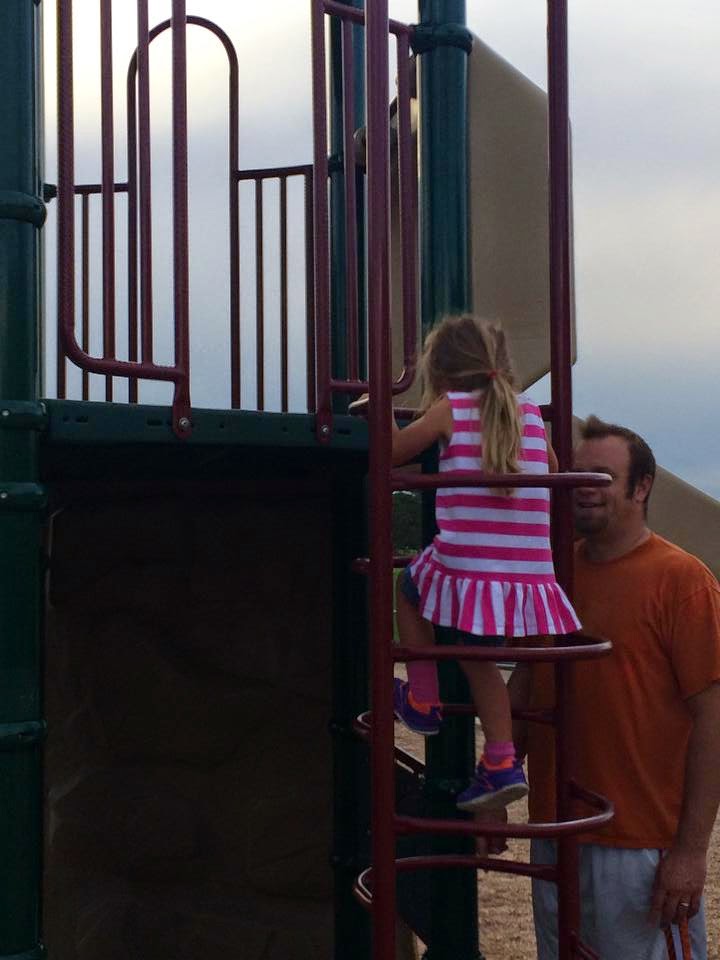
     My husband and I also saw HUGE improvements this summer in the motor realm. Ashlynn climbed a play structure that she had yet to conquer at our nearby park. Who knew how much core stability, bilateral hand coordination, and crossing midline play a part in climbing a simple play structure! Well, I’ll tell you who know.

    Parents of children who have dyspraxia!

    At the local amusement park, she was riding the tea cups independently. My husband shot a video. During the first two go rounds she was just sitting there, but by the third go round she figured out how to spin the wheel to spin her teacup! You should hear my husband cheer. Who knew how much core strength, bilateral hand coordination, and crossing midline play a part in being able to operate a simple teacup ride.

     Oh yeah, parents of children who have dyspraxia.

     However, now summer is coming to an end. I see facebook posts ripe with updates along the lines of “I’m so happy school is coming up!” Or memes like this one:

    Not me. School. Sigh. What can I say? I have a love/hate relationship with school.

     I firmly believe school helps children develop their social skills and gives them important language models, which is especially important for kids with speech and language delays. The first week my daughter went to school shortly after she turned three, she came home singing a tune I actually could decipher, and at that time she was nonverbal! That my friends, is the power of school!

     On the other hand, school brings new fears and new worries. I always thought, once she starts talking, I’ll be okay.

     Not true.

    Now I’m worried about her phonemic awareness skills, language lag, slow processing speed, and being able to write.

     My God how much do kids need to do and know now just to be ready for Kindergarten???

     I’m not looking forward to the IEP meeting, the parent/teacher conferences, the comparisons I try not to make when I’m visiting her classroom.

     Quite frankly…. It SUCKS. Apraxia STILL sucks!

     So no. I’m not ready for Ashlynn to go back to school. My SLP friend and mother to two young boys with apraxia who has a blog: Landon Journey just posted this song lyric the other day:

    If I could make days last forever
    If I could make wishes come true
    I’d save every day like a treasure and then,
    Again, I would spend them with you.

    As my brother says though, “Life’s not fair. Get used to it.”

    So farewell summer! I bid you adieu. You have been so kind to us this year. We have made castles in your warm sand, felt the glow of the sun upon our face, cooled off in your waters, and celebrated the milestones and successes at our pace. Though I’m anxious for the coming school year, I have faith you will be waiting on the other side.  Welcoming my children to your sunshine, casting light onto their beauty.

  • Why we need milestones, and why I can still be proud of my daughter.

    Why we need milestones, and why I can still be proud of my daughter.

    I recently read a blog article about not buying into speech and language milestones.  The writer asserts:

    “Because here’s what I think of traditional milestones: f*ck them…………My baby will do that when she’s ready. This is not the Olympics, people.”

    She went onto explain that parents seem to make milestones into some sort of competition, and she doesn’t want to buy into that.  I get her point probably even more poignantly that she does.  

    My child was late with all of her milestones, and because she was late, I felt the sting and continue to feel the sting every time someone else’s child on social media or in my life meets a milestone with which my daughter still struggles.   

    This author was already sick of the comparisons, real or imagined, and just wanted to enjoy her baby.  Yeah I can relate, but lucky for her it seems, her child was just on their own timeline and would still go on to develop typically.  Some kids aren’t so lucky, and those “milestones” become very important so that kids can get early intervention when they need it.

    Oh she goes onto say, “Is your pediatrician happy at your baby’s checkups? Good……remind yourself that no one’s counting.”

    Unless of course your pediatrician IS concerned, or worse they’re not and your child misses valuable early intervention.  

    Oh, and no one’s counting, unless of course you get to feel a punch to the gut when you are faced with low standard scores, percentile ranks, and descriptors like “definite dysfunction” or “severe apraxia of speech” or “below average,” in black and white reports that have your child’s name on the top.  Lucky for her, her pediatrician is happy and no one is counting.  

    What about the other kids she wasn’t considering who don’t meet them?  

    Yes, milestones make any parent crazy.  Yes, parents can get stuck on being overly proud of their offspring, but then again, they should be.  They’re the parent!  I’m proud of Ashlynn for other qualities that maybe some other kids her age don’t yet possess as adeptly including: 
    Empathy
    Sensitivity
    Kindness
    Thoughtfulness
    Optimism
    Perseverance
    Bravery
    Compassion

    And why shouldn’t I be?  I’m her parent, and I’m supposed to be proud of what she is good at.  I don’t look at other parents with disdain who have kids meeting or blowing the lid off the milestones.  Jealousy maybe, but not disdain.  I think, good for them.  They should be proud of their child,  and every child deserves and needs their parents to be proud of them for their unique God given talents.

    So, I decided to write a printable for the parents who are forced to look at milestones.  Who have googled milestones and felt the pit in their stomach when they know their child isn’t meeting them. I wrote this so that parents will not say “F*ck them” but will instead pull up their big girl panties, and get the help they need for their child, no matter how hard and painful it is.


    Speech and Language Milestones: Birth to 3