Category: Apraxia

  • It all happened, Apraxia or Not

    It all happened, Apraxia or Not

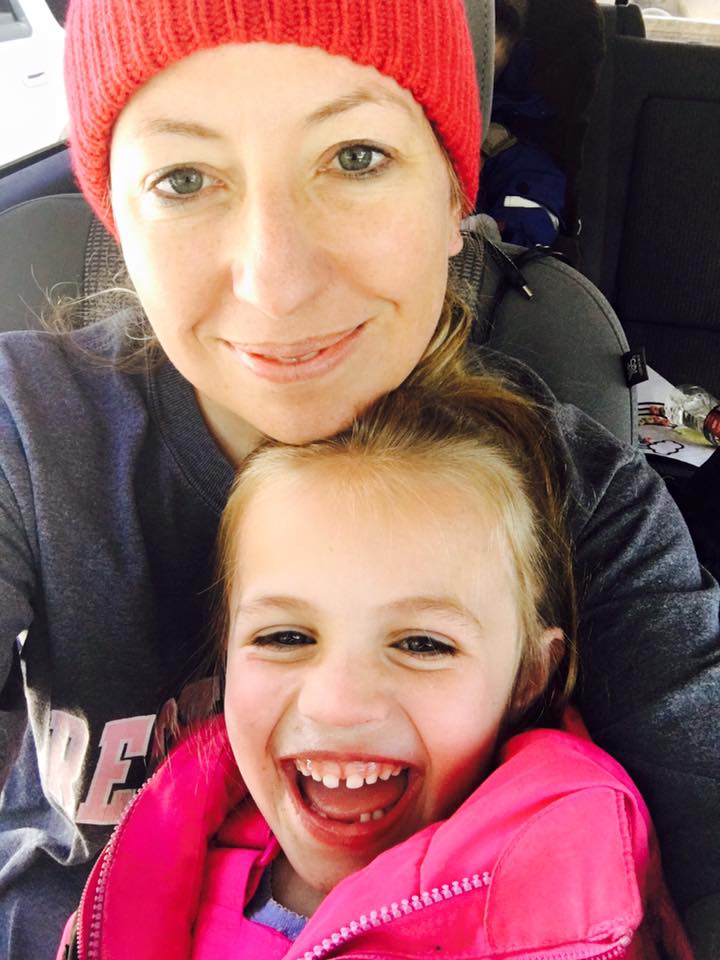
    We went on vacation for Spring Break. I took a picture of me and my girl on an amusement park ride:

    20160329_181611105_iOS

    She told me the chairs we were sitting in were “penguin chairs.” Two years ago she couldn’t do that. Mark a noun with an adjective like that. Adjectives let us be creative with our speech. She barely had the basics down, but I was still happy then because she was talking.

    My time hop showed me this picture today.

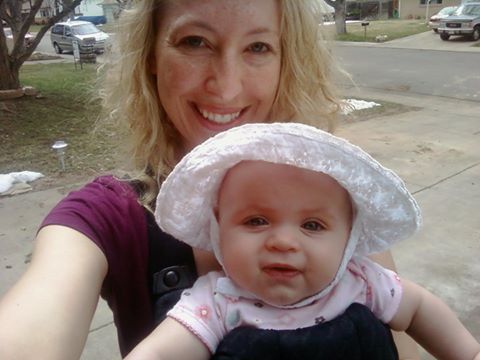
    baby A
    This was before I knew the no-no’s of baby wearing so don’t judge! My son was the happy recipient of a moby…..

    Anyway, I digress. She would have been six months here. I had no idea she had apraxia in this picture.  I  look so happy. Haha. Just kidding, it’s not that apraxia made me sad….okay never mind, it DID make me sad, but the point is I’m also happy in the first picture. I’m also wiser and more compassionate. So is my daughter. Apraxia is in our life, but it isn’t our life. I’m still as happy with her now as I was back then. Apraxia didn’t change that. Her words or no words didn’t change that.

    She keeps growing and maturing in spite of apraxia. She’s no different that way, and I’m still the cliche mom who shakes her head and wonders where the time has gone. The days are long but the years are short, and I try to remember that on the days I am fraught with worry. Suddenly six years have passed and I went from having a new baby to a school aged girl, and in another six years I will have a pre-teen, and then in another six she will be 18 and beginning to embark on her own path; and it will all have happened with apraxia or not.

    I love this song by ABBA. I think of it often, especially on the days Ashlynn seems more grown up.

    Sometimes I wish that I could freeze the picture
    And save it from the funny tricks of time
    Slipping through my fingers
    Slipping through my fingers all the time
    I try to capture every minute
    The feeling in it
    Slipping through my fingers all the time

  • The day she had enough!

    The day she had enough!

    When I was in 1st grade, a little boy kept kissing me on my head.  After the third time, I told my mother in exasperation.  I explained that even though I kept telling him to stop, he still kept doing it.  That night, both my parents had decided my mom would go to school the next day and let the teacher know and put a stop to it.

    “Nooooo,” I remember begging.  “He’s trying to be nice!”

    “You just said you don’t like it and you want him to stop,” my mom said matter-of-factly.

    “Yes, I know, but if you go in there he will get in trouble and I don’t want him to get in trouble,” I pleaded.

    My parents stood firm.  No meant no.  The boy did get in trouble, and I did feel terrible, but as a woman now, I realize the message that sent to me then.  No meant no…everytime.  Even if I thought someone was trying to be nice, no still meant no if I didn’t like it.  I didn’t have to pretend.  I shouldn’t pretend.

    My 6 1/2 year old daughter with speech apraxia got in the car last Friday.

    “I’m tired mommy,” she sighed.

    Oh no.  My senses went on alert.  She never says she’s tired, like ever. She must mean she’s sick.

    “Are you sick honey?” I probed.

    “No.  You know E?  He hits me and bats at me, and GOSH! I AM TIRED!”

    Oh wow. She means she’s tired of someone bothering her.  I asked if she had told the teacher and she said no.  I asked if the teachers had seen it, and she said no.  I told her to tell the teacher, and she just said ok with an unconvincing smile.  She told me again she was tired, and then said,

    “I don’t like him mommy.”

    Wow!  Ashlynn has NEVER said she doesn’t like someone.  Not even to me or her dad or her brother when she’s mad.  I kinda chuckled inside.  I recalled a conversation between the boy’s mother and Ashlynn’s grandma in which the mom had said how much E loves Ashlynn.  He’s obviously acting that way because he likes her.  I was about to say that when I thought of this meme I had seen on facebook about a month ago:

    910a445ef6b34f94d9f91842afe6b2ec

    No means no.  It didn’t matter if he liked her.  I told her I would talk to the teachers Monday and she seemed visibly relieved.  It’s hard to know all the time because of how much apraxia impacts her word finding, but I could see in the rear-view mirror her entire body heave a sigh of relief.  This girl who has always maintained everyone is her friend, this girl who when she was bullied in preschool still maintained the bully was just, “sad,” this girl had had enough and needed help.  I’m so glad my response was to tell a teacher and not tell her he’s just being mean because he likes her.

    No means no, Ashlynn, everytime. A boy who loves you is a boy who respects you, and I will always have your back on that one.  I’m just so thankful you had the words today to tell me, and that I understood.


    10418541_10207040829991763_2521707221450008513_n


  • International Women’s Day includes my “apraxic, IC kid”

    International Women’s Day includes my “apraxic, IC kid”

    I practice person-first language.  I make sure I use it in every setting.  If you’re not familiar with person first language, it’s the idea that you put a person *before* their disability.  The idea is that when we put the disability first, we define a person by their disability.  However, no person is defined by their disability.  A person is just…..a person first.

    So, instead of saying that bipolar guy, you would say, “that guy who has bipolar.”

    Instead of saying my apraxic daughter, I would say, “my daughter who has apraxia.”

    Instead of saying that “stutterer,” you would say, that child/man/woman who stutters.”

    There is a lot of debate about this honestly.  Some people think it’s political correctness gone too far.

    I have never had much of an opinion, except for the fact I made sure to use person first language so as not to offend anyone personally or professionally, and I never minded if someone said my apraxic daughter.  It’s all semantics.  Whatev.

    Well, that is until today.

    I work a day and a half in the same school as my daughter.  She is in a program called ILC (Integrated Learning Center).  In most districts, this program would be a Center Program, and it is, kind of.  In this district, there is more a focus on inclusion, but with para (classroom aid) support.  To get an aid though, you need to be in the ILC program.

    Ashlynn’s ILC teacher is AMAZING.  I mean, my daughter is on grade level in math and she is making huge gains in reading.  I can’t really even believe she can read a sight word book at times.  It took 3 YEARS of me helping her just be able to name the letters in her NAME!  Word finding impacts her BIG time.  Even if she could read I thought, she would NEVER be able to show it until years down the line.

    Wrong.  She’s coming home with new books every day she is “reading.”  It’s incredible.  I mean seriously incredible people.  She couldn’t talk three years ago.

    Anyway, other kids who need help reading get pulled out too, but they are pulled into a “resource room” that has no specific name.  They just get “reading support.” Ashlynn gets reading support too, but her programming has a name, and that name in this district is ILC.

    I’m part of many, many, many IEP meetings.  Parents ALWAYS worry about putting their kid in the “special classroom.”  Usually, it’s based off of their own experiences growing up, knowing and remembering the kids who were in the “special classrooms.”  They don’t want their child to be labeled “special” “different” or made fun of.  We assure them things have changed.  It’s not like that anymore.  And it’s true.  Seriously!  I do think things have changed drastically since even when I was in school.

    I have to digress really quick, but it reminds me of my colleague I worked with many years ago named Mr. G.  He was a SPED teacher from Brooklynn and he was funny, engaging, and the kids absolutely LOVED him.  Apparently he was in SPED when he was younger.  You know, the “special classroom.”  He said the buildings and programming were so archaic in Brooklynn when he was a child at the time, that he was literally separated from his general ed peers into a classroom in the basement of the school, and the only window had bars on it. He was also a bit of jokester, so when he told the story it was funny.  However, if you think about it, there is nothing funny in what he said.  How awful.  A man who was able to get a master’s degree in teaching, was once banished to a basement of a school with bars on the window.  How on Earth did he make it out on the other side?

    Anyway, yes, times have DEFINITELY changed since then thank goodness.

    Where is this story going, you might be asking.

    Well here it is.  I never worried about Ashlynn being my “apraxic daughter” or in “ILC” until today. I was working at her school with a child who has been identified as GT (gifted/talented) and a double X’r (twice exceptional).  The twice exceptional refers to the fact he is gifted, but still needs support from SPED (me…speech).

    We were walking in the hallway and I looked out the window toward the playground where I knew Ashlynn was playing.  I said I just wanted a quick peek at my daughter.

    He asked me, “Is her name Ashlynn?”

    “Yep,” I quipped proudly.  “Wait, how do you know?” I inquired.

    “Oh, she’s an IC kid,” he said matter-of-factly.

    My face fell.

    “How do you know she’s an “IC kid?” I said, and my entire body literally cringed.

    “Well, she goes to that room.”

    I studied him.  Innocent.  Blunt.

    I wanted to ask him what an “IC kid” was, but I just couldn’t bring myself to ask.  I was too scared of the response. Maybe it would have been innocent too.  Why did I automatically think it would be negative?

    I don’t know.  All I did know, is I do NOT, definitely, never, ever, want anyone EVER to label MY daughter as an “IC kid.”

    She’s a kid.  She’s a kid who goes to ILC because she has apraxia, and that’s it.  There’s nothing else to see here.

    I don’t blame this kid.  He’s an innocent KID for Pete’s sake.  I still felt bummed though.

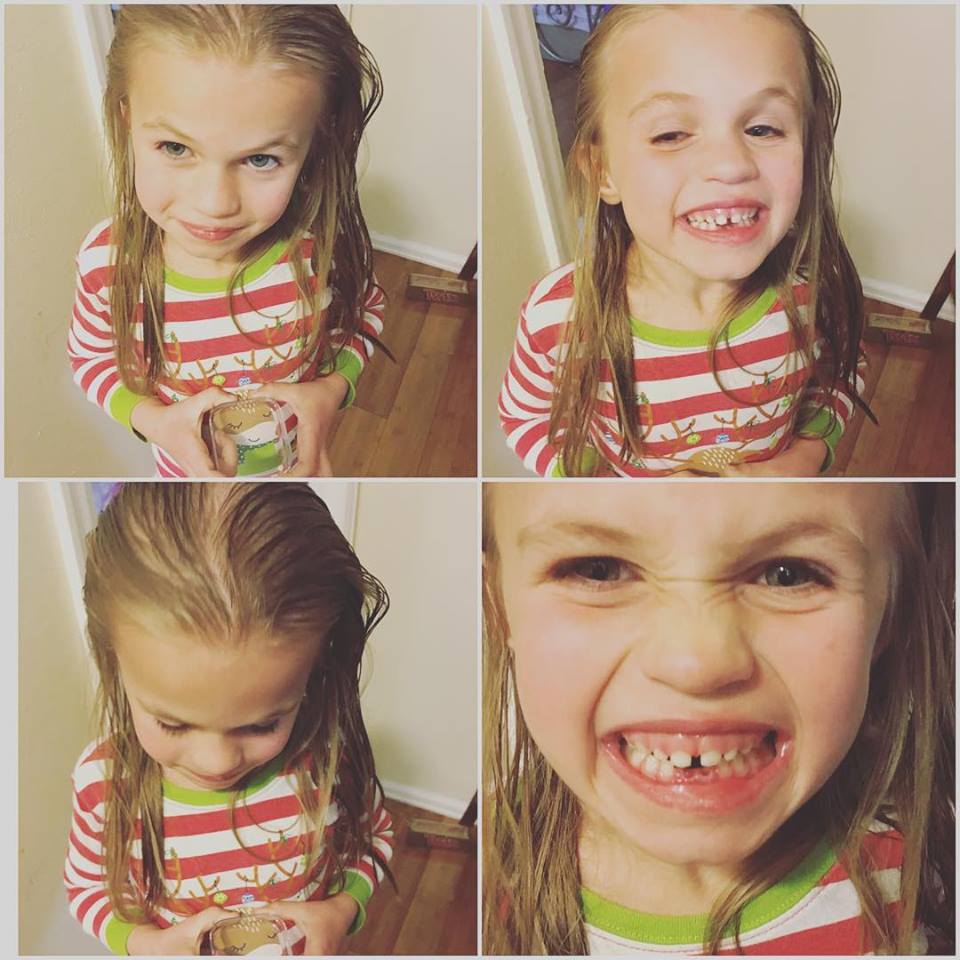
    I came home tonight to this:

    12805675_10206930833921930_3211585399080345387_n

    She lost her first tooth, or should I say “teeth.”  Both bottom front teeth came out tonight.  She was scared, then happy, then nervous for the “tooth fairy.”  She told me, “Tell the tooth fairy to not scare me, okay mommy?”  She also said, “maybe I will get five dollars.”  My husband who was in the room next door spit out his drink and said, “where did she get 5 dollars??”

    I smiled.  I don’t know.  She came up with it all on her own though.

    I kissed her goodnight, and I vowed to make it my mission everyone see her for HER.  She’s not an apraxic kid.  She’s not that special kid.  She’s not that IC kid.

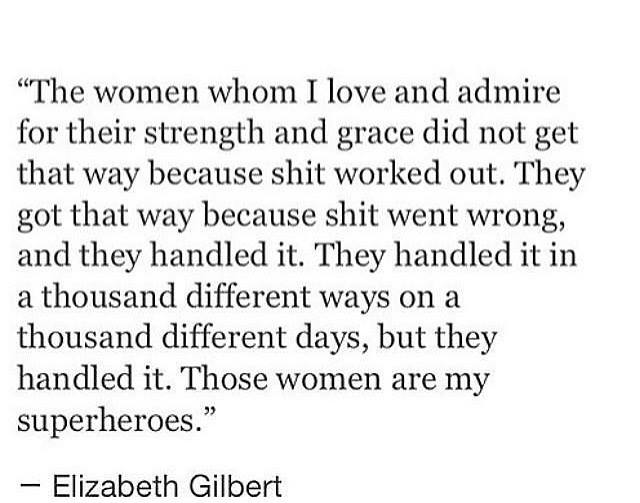
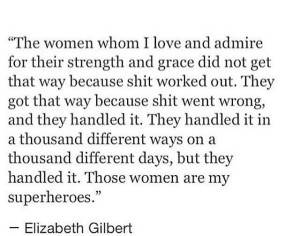
    Her name is Ashlynn.  She was born to move mountains, to kick ass, or to be whoever the hell she wants to be. Today is International Women’s Day, and I love this quote:
    12799461_978905362191579_851408342886117926_n


    Ashlynn not only handles all the shit that has been handed to her, but she handles it with grace and a smile.  I know that will only continue to serve her well.

    So today, I have officially sealed my opinion, that person first language IS important because Ashlynn is Ashlynn above any, and EVERYTHING else.
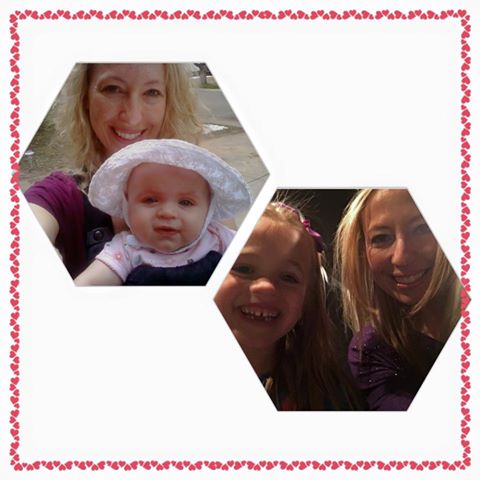
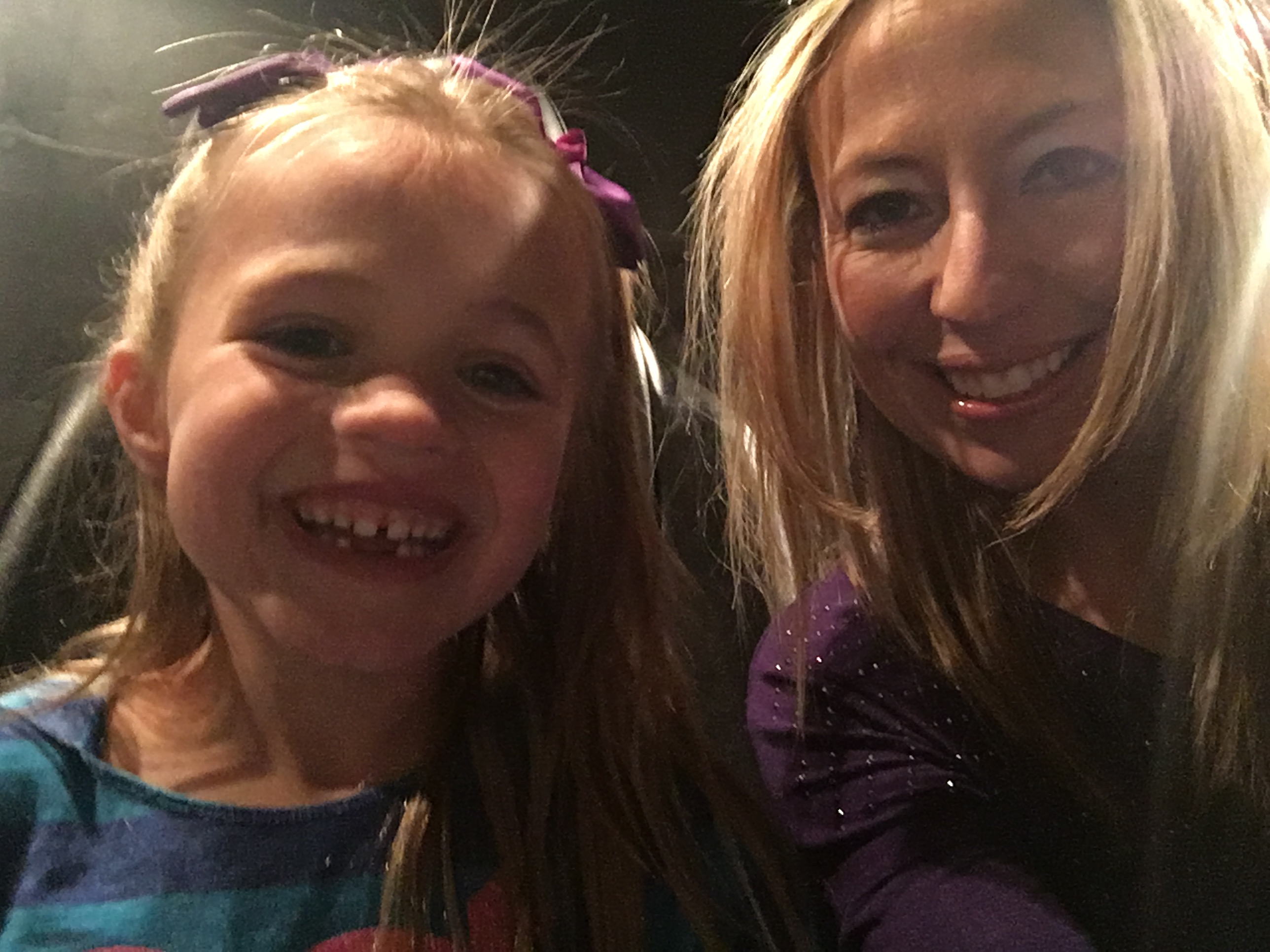
  • Finding all the wrong words or no words at all.

    Finding all the wrong words or no words at all.

    I think one thing, well actually I KNOW one thing I never knew about CAS before Ashlynn, was the significant difficulty kids with CAS tend to have with word finding.

    Ashlynn and all of my clients struggle with this to varying degrees.  Sometimes, Ashlynn’s seem innocent.  She’ll call me grandma after she’s been with her grandma all day.  She’ll say “today” when she really meant “tomorrow,” or say “tomorrow” when she really meant “today.”

    Sometimes though, despite being able to speak, “finding her voice” as we like to say, that doesn’t always mean she can find her words.  This is especially true when she is sick, tired, or both.

    I received a text from a friend a couple weeks ago.  Her son is a year older than Ashlynn, still in speech, but talks non-stop now.

    “I debated calling in today and letting G stay home.  He was just not himself this morning.  He said, ‘No school. I can’t.’  He walked down the hallway with drooping shoulders.”

    I asked her why.  She didn’t know.  That’s all he said.  “No school.  I can’t.”

    My response?

    “Stupid apraxia.  Even when they can talk, they can’t verbalize everything they are thinking/feeling.”

    A few hours later she texted me that G was sent home from school because he was sick.

    My daughter used to become overheated in her carseat.  It would cause her to throw up, but she would only tell me, “my neck hurts.”  I became really good at diving to a shoulder when Ashylnn’s “neck hurt!”

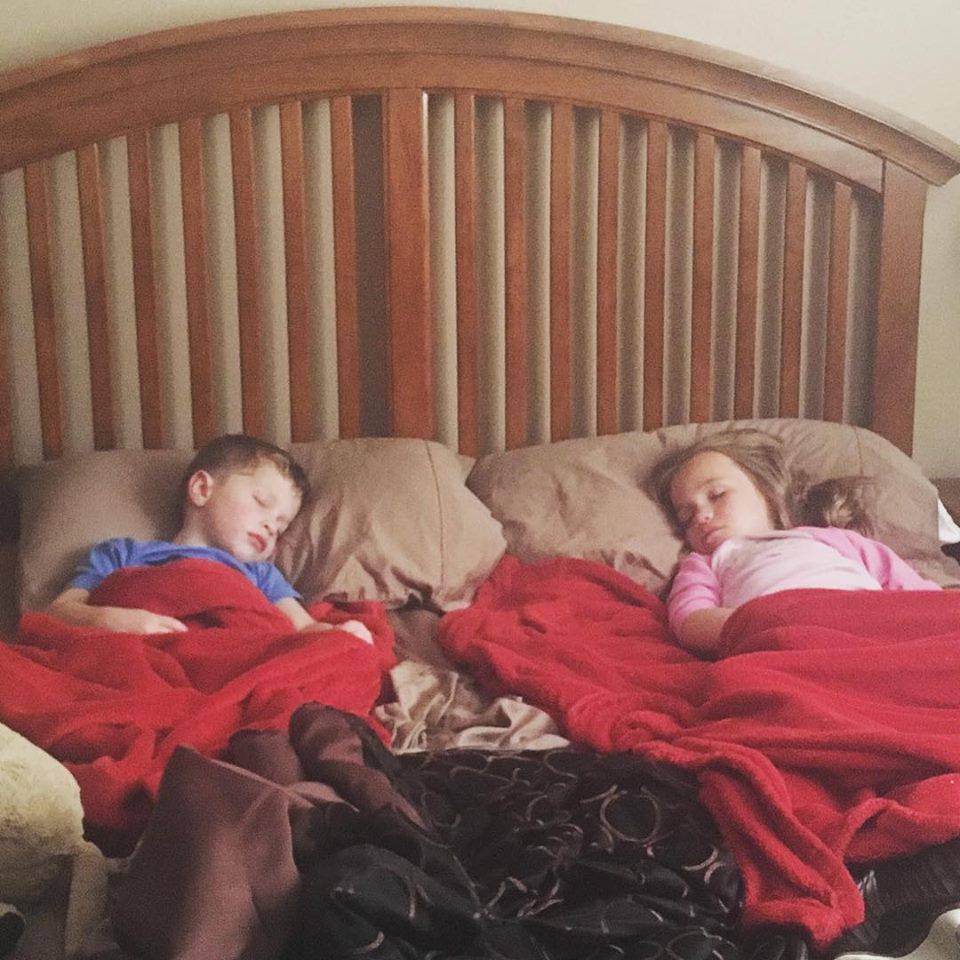
    Today I had the day off with both of my kids.  It was great!  We played, relaxed, and even took a nap.  Aren’t they cute?

    12813978_10206896459142582_2658989607059906506_n


    Ashlynn NEVER takes naps anymore, so I should have known something was up then.  She went to her private swim lesson tonight, and then we all went out to dinner.  I spent most of the dinner in the bathroom with her.  She kept thinking she had to go “potty.”  We walked around, we jumped, we danced, nothing.  She started saying she was tired.  She NEVER says this. I asked her if she felt sick.  She said no.

    We drove home, gave her a bath, and she went straight to bed.  I rubbed her back and asked her again if she felt sick. Did she feel like she was going to throw up?  Did her tummy hurt?  She just shook her head no.

    I went out to the living room, and not 5 minutes later I hear coughing and she is throwing up.

    Sigh.

    Not that it matters I guess whether she had told me she felt sick or not.  It’s not like the outcome would have changed; but it is a glaring reminder of how speaking intelligibly and finding her voice, did not fix everything like I thought it would.  She will still struggle to find her words.

    I remember listening to a Ronda Rousey interview, and she was saying that when she received a bronze medal in the Olympics she was a young girl in her teens and people wanted to interview her.  She would beg her mom not to make her do it.  Her mom made her do it anyway, but her older sister would sit behind her chair, and when Ronda couldn’t find her words, her sister whispered some to her.  Ronda doesn’t do interviews anymore with her sister behind a chair, and that gives me hope.

    For now though, I’ll file away this event in case I need it later.  Just like I did when Ashlynn’s neck hurt.  I always say a mother is an expert on her child, and this is why.  Only I know these signs.  Only I was there through all of these situations and experiences.  ALL of them.

    Next time, I will know she needs to throw up and I’ll be prepared.

    I’ll give her the words when she can’t, or is just too tired to find them herself.  I will know because I have always listened and I will always listen to way than her words, and I always will.

    12687891_10206775282433240_6331308953531011615_n


  • Why are SLP’s still using “mouth exercises” for CAS??

    Why are SLP’s still using “mouth exercises” for CAS??

    I realized in the entirety of my blog, I have never even once addressed oral motor exercises, aka mouth exercises, or now being touted as oral placement therapy; in the treatment of Childhood Apraxia of Speech.  The “why” is actually very simple.  Massive amounts of research consistently demonstrate they are ineffective in the treatment of speech sound disorders.  In graduate school I had to do a paper on their ineffectiveness and I have an entire binder of research papers showing they are not supported; so yeah, I literally never even considered it.

    At one point, Ashlynn’s school therapist felt it was very important she round her lips to make the /w/ sound and had her using horns, but this was squashed pretty quickly.

    Ashlynn is now 6 1/2, and is intelligible at least 90% of the time in unknown contexts with unfamiliar communication partners.  The apraxic component to her speech is resolved and has been for at least a year.

    “She must have been mild,” you might say.  Wrong.  Though she wasn’t profound, she was severe.  She has additional co-morbidities of: oral apraxia, dyspraxia (limb apraxia), SPD (sensory processing disorder), and suspected dysarthria that make prognosis more guarded.  Even with all of those additional factors, I STILL never had her do oral motor exercises.

    What could it hurt?

    Technically, nothing, except wasting precious time; and let me tell you what was the most important thing to me after getting a CAS dx:

    TIME.

    I instantly started thinking about Kindergarten and she wasn’t yet 3.  Will she have an extra year?  Will she be talking by then?  Will she be intelligible by then?  If she’s not intelligible, how is that going to negatively impact her phonemic awareness skills?  If she has poor phonemic awareness skills, how will that impact her reading? Will I need to hold her back?

    I’m not alone.  Every parent I meet frets about this….so TIME.  Yes TIME is of the essence.  I needed Ashlynn to get remediated as quickly as possible, and quite frankly, though NSOME’s wouldn’t hurt her, the research is very clear they don’t help either.  To me,

    NSOME’s = a waste of time.

    Dr. Ruth Stoeckel, an apraxia expert out of the Mayo Clinic, created a user friendly handout for parents based on information gathered and collected by Dr. Gregory Lof.   It includes the most common questions parents may have, and then research based responses for why NSOME’S should not be used.  You can access that here:

    NSOME parent adaptation

    Some SLP’s swear by them. Some SLP’s do genuinely and honestly feel NSOME’s help children with motor planning disorders.  My response to them is that they are probably not giving themselves enough credit on their clinical speech therapy skills, because the research is very clear that to improve speech, one needs to work on speech.  Not use tools that mimic speech movements either, but actually work on speech.

    I’m not going to go through the handout line for line.  I really encourage you if you are a parent or SLP to read it yourself though.

    If the research can’t persuade you, please let my personal experience with Ashlynn be of some influence.  She had excessive drooling, jaw instability, slurring, and inaccurate target placement…all ASIDE from the motor planning. She entered into therapy based on motor learning principles right before age 3, and a little after her 5th birthday I wrote the post:

    Wait….is she the….R word? 

    I’m not saying every kid’s apraxic component is going to be resolved that quickly.  Many, many, MANY factors play a part including a child’s personality.  Ashlynn always tries and never gets frustrated.  How, I have no idea, but I can only assume that has contributed to her quicker progress, especially in the face of so many negative indicators. Hopefully, me being an SLP as her mom also helped. However, we never once used any NSOME’s.  What is the harm?  The harm is you are wasting time, and that’s not just an opinion, it’s based on research.

    You will not find apraxia experts using them.  Edythe Strand, Ruth Stoeckel, Tom Cambell, David Hammer, Gregory Lof…NONE of these people use NSOME’s.  The Childhood Apraxia of Speech Association of North America (CASANA) will not endorse them.  In fact, I did a search on apraxia-kids.org and came up with this page full of articles refuting their use.  Keep in mind, the executive director and director of education at CASANA both have young adult children with resolved CAS, and THEIR children NEVER had NSOME’S either, and they are resolved.

    Finally, the organization that certifies SLP’s, ASHA, has also refuted the use of oral motor exercises in the technical report on CAS.

    That’s why I never even wrote a blog post about it.  It should seriously not even be an issue. I have been shocked now to discover how many SLP’s are still using them!  They are a complete waste of time in the treatment of CAS, and as I said before, TIME was the most important thing to me when Ashlynn was dx.  Is it to you?

    no-sign-1872071


  • That moment someone cried because they know “what she’s going through.”

    That moment someone cried because they know “what she’s going through.”

    When Ashlynn was in preschool, there was a sweet girl in her class I’ll call J. Her mom and I hit it off right away.  Her mom is currently a stay at home mom, but she was a teacher before that.  We have similar ideas on parenting, discipline, and just raising kids in general.  We had a few play dates and the girls got along great.  Her daughter is typical developing, but she was very shy in preschool, and well, Ashlynn couldn’t talk, so they got a long great too!

    12107219_10206016300659170_5006257240511031123_n
    Ashlynn, J, and Jace at Fall Fest

    This year they are in the same Kindergarten class.  They are good friends playing on the playground at recess, holding hands, and sitting next to each other.  J is a big reason I never worry about Ashlynn having friends anymore.

    About two months ago, J’s mom caught me in the hallway and told me I should have Ashlynn join Girl Scouts.  With Speech, OT, and swimming, Ashlynn’s schedule is jammed; but J’s mom also caught Ashlynn’s Grandma one day, and Grandma said she was more than willing to take Ashlynn over to Girl Scouts.  I work on those nights, so it was really up to my husband and he agreed, so now Ashlynn is a Daisy Girl Scout.

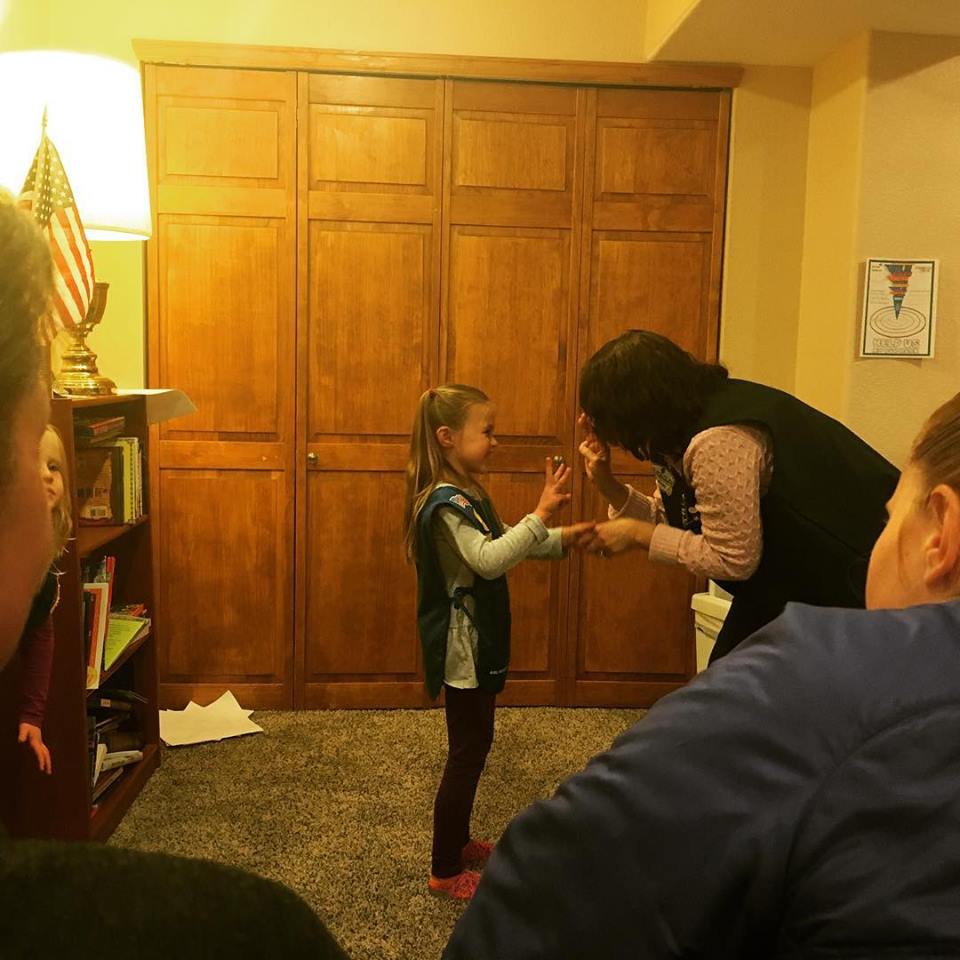
    Since we registered late, the girl scout troop leader offered to have Ashlynn over on a Saturday to catch her up on things.  I was surprised she had googled apraxia and was very interested in making sure this was a positive experience for Ashlynn.   I later found out she has had a hearing impairment from birth, and likely went through many of the expressive and receptive language delays Ashlynn currently experiences.

    Every time I see her she tells me how much she loves having Ashlynn in her group.  When I went to the induction ceremony, she looked so proud when Ashlynn said her line (even if Ashlynn was holding her letter upside down and not showing!).  I had a feeling Ashlynn must have worked her way into this woman’s heart, but I wasn’t sure….until today.

    1935476_10206631067467956_3977387838183729297_n
    Ashlynn and her Girl Scout Troop leader at the induction ceremony

    I went to drop off some money we have collected.  The girlscout leader was once again telling me how wonderful Ashlynn is.  I was agreeing politely when she turned around and I saw tears in her eyes.

    I probably looked puzzled, and she quickly explained, “I get so misty eyed because you know, I know what she’s going through.  I know how hard it is and yet she comes every time with a big smile on her face ready to try.”

    I studied her face.  It was so genuine.  This woman did not have apraxia, but she had a language disorder when she was younger and she saw herself, she sees herself in Ashlynn.  I was sure of that now.

    I never thought about it that way.  That line,

    “I know what she’s going through.”

    It hit me.  Ashlynn is “going through” a lot.  She’s not dumb.  She knows her challenges.  I think I’ve done a good job to normalize apraxia for her and she knows her challenges are because of apraxia…..but they are STILL challenges.

    “I know what she’s going through.”

    I can’t get that out of my mind.  I think I know what she is going through.  I have degrees and certifications that prove I know.  I also am her mom, which makes me a pretty good expert on her…..but I will NEVER know the way this woman knows, what my little girl is “going through.”

    I sent a text to two SLP mommy friends the night I met the leader.  My exact words were, “I know it’s not a coincidence.  I wonder why we met.”

    I think I am finding out.