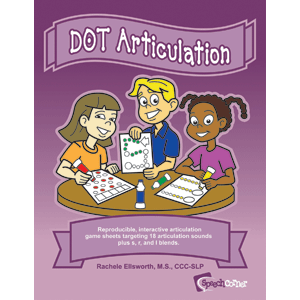
Keeping up with our giveaways, next up is Dot Articulation from Speech Corner. I use this book all the time with a variety of different speech disorders.
It’s a great way to get multiple productions in a fun and motivating format. It has reproducible worksheets targeting 19 frequently articulated sounds, including blends. For my kids with apraxia, there are blank sheets in the book for you write in your own and then play with dot markers.
Enter to win below and the winners will be notified on Apraxia Awareness Day on May 14th!
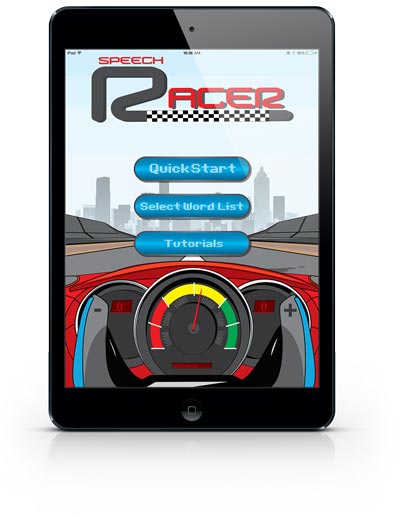
Speech Racer is a relatively new app from Complete Speech. I first tried this app at the ASHA convention in December. I was amazed at how it utilized visual feedback based on the quality of a /r/ sound within various positions of words. It can be used for both iPhone and iPad.
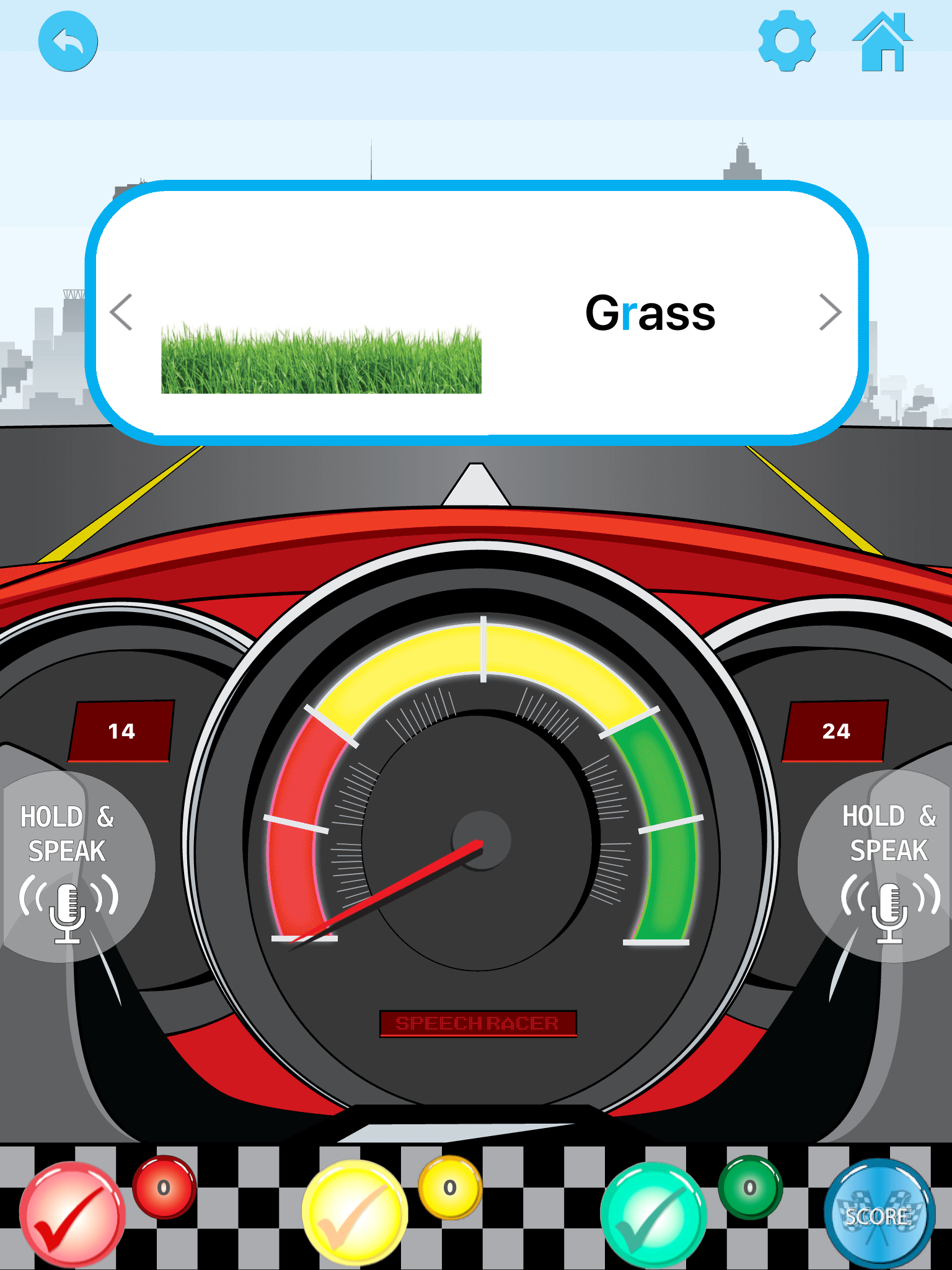
You can choose between four different meters that provide visual feedback on the accuracy of the /r/ sound. I like this feature because after so many times with one meter, it’s like a new activity when we switch to another meter with the kids.
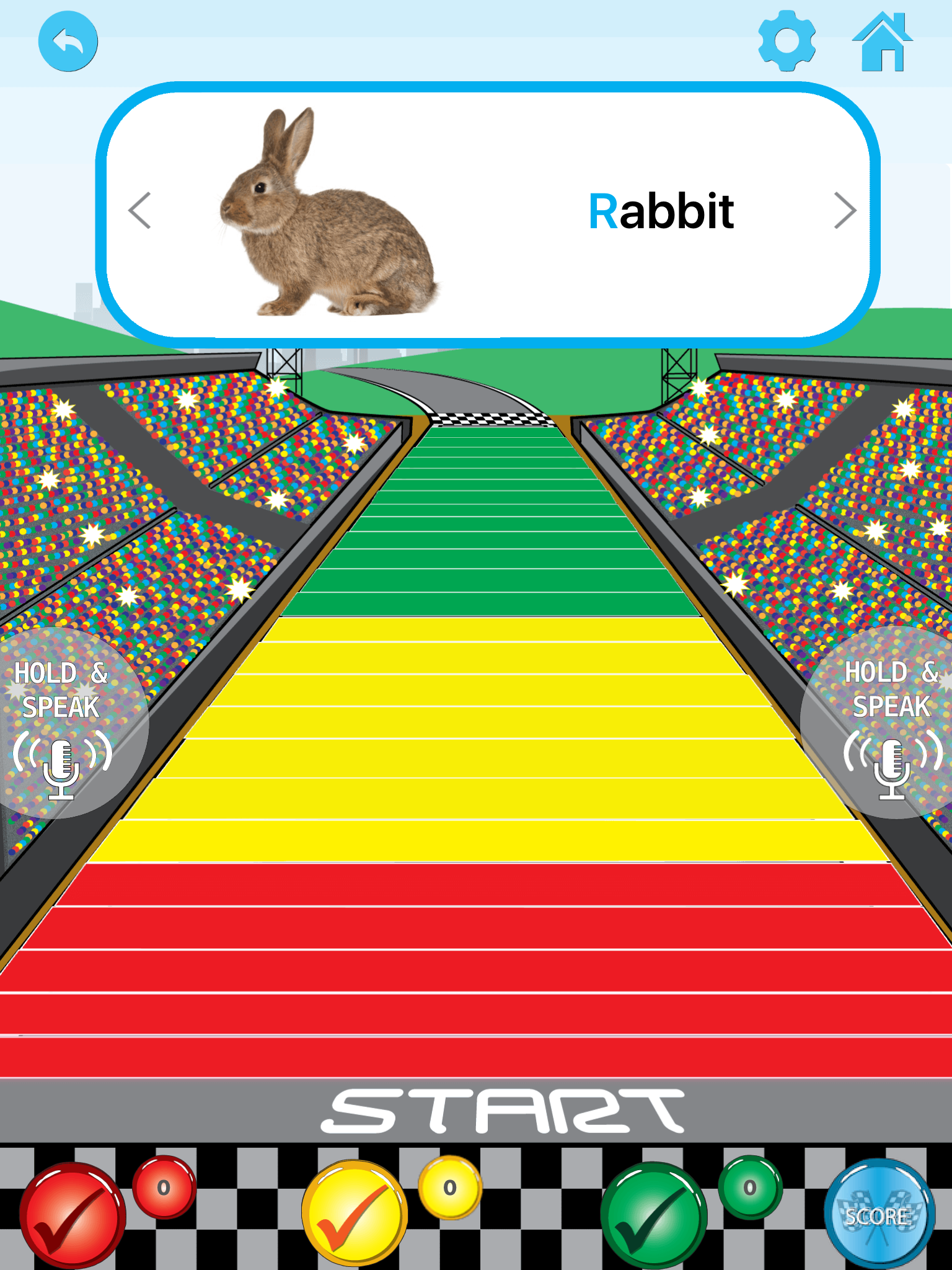
This one is the race track. Kids hold their thumbs down on the sides until they complete the word and the app analyzes the production of the /r/ sound. In settings, flashcards at the top have the choice to choose from various /r/ targets in all positions of words. If you would prefer not to have flashcards, there is an option to turn it off.
The visual feedback is awesome! In this picture, an /r/ was produced correctly and so the race track is lit up all the way to the finish line. An engine rev noise is produced if the child scores all the way to the top. We all know those kids who have an /r/ that isn’t totally wrong, but it’s not totally right either. For those kids, the track would only light up in the yellow range. Red, of course, means the child said the wrong sound.
As you can see, their are scores at the bottom that track progress for data collection.
I bought this app at the convention, and actually asked THEM if I could do a review because I truly like this app that much. It’s not always perfect depending on the child, but that is what I am there for! The children I have used this with so far, really respond well to it! They are motivated to keep trying the word over and over again moving their tongue in a different spot each time to really get that engine to rev to the finish line. If they aren’t getting it, I provide some instruction or we just move on.
I would recommend this app to SLP’s, but also to parents who have children practicing the /r/ sound at home. It’s easy to use, and if you have a question, the staff at complete speech are very good to respond, problem solve, and answer questions via email. Two codes will be given away for this app on apraxia awareness day, May 14th 2016, so make sure enter the giveaway below!
May is Better Speech and Hearing Month, and The fourth Annual Apraxia Awareness Day is May 14th. I’m offering giveaways on my blog that will be given away on May 14th! First up is an app I literally use every week called Speech Stickers.
Speech Stickers is the first app that I downloaded for Ashlynn (my daughter with apraxia) when she had first turned three. I chose it because it was cheap, and said it was developed for children with apraxia. The app is simple in design with not a lot of bells and whistles; however, my daughter loved practicing her speech with this app.
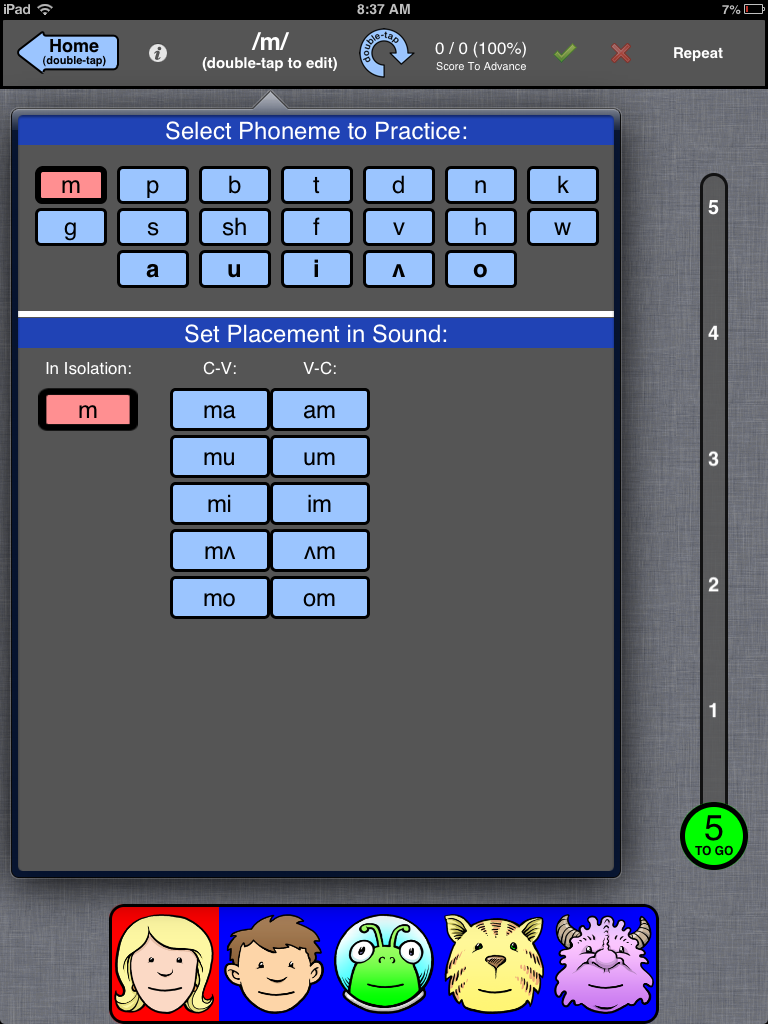
The app is set up for kids in the very early stage of apraxia therapy. The child can practice sounds in isolation and in CV(consonant-vowel) and VC(vowel-consonant) combos. The app is based around blocked practice with a lot of repetition that is necessary for apraxia therapy.
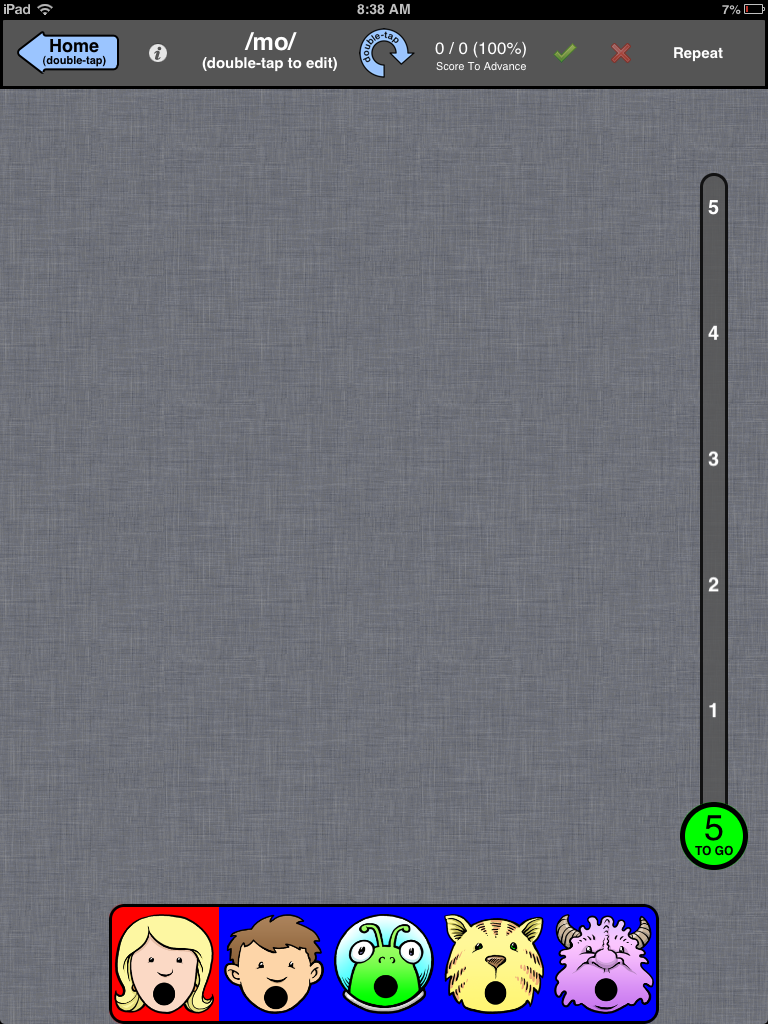
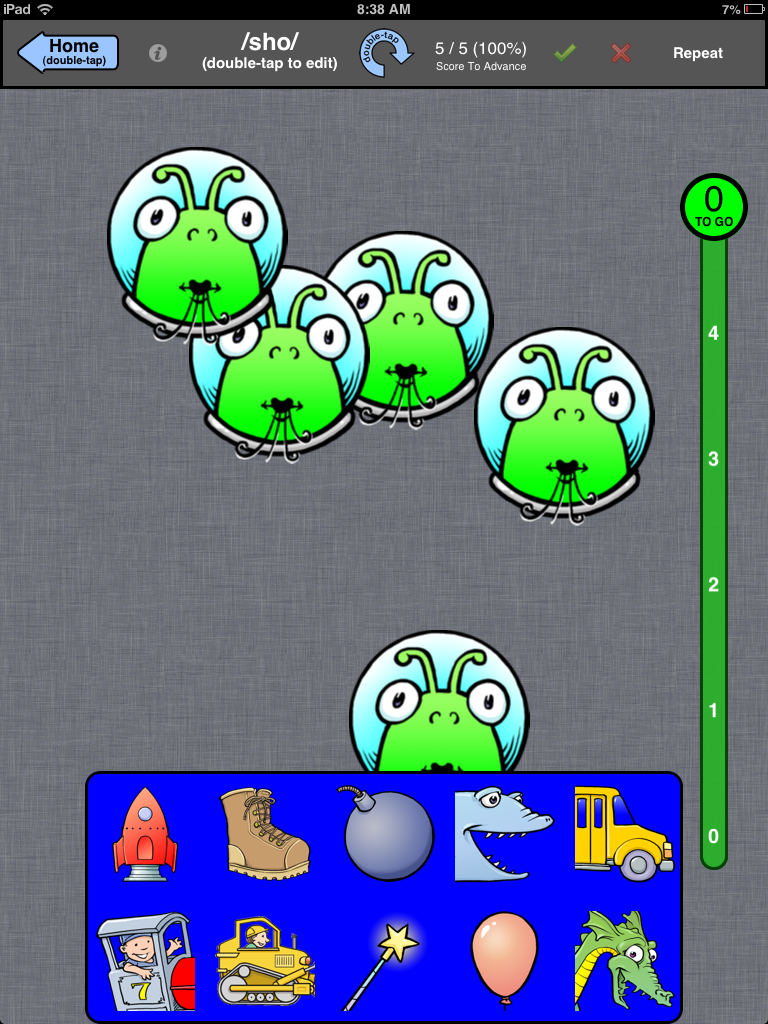
After you pick your sound or sound combo, you can then decide how many times times the child has to say it before they get a “sticker” or a little animation as a reward. Then, the child chooses between five characters on the bottom, all of which have a different pitch to their voice. This is a bonus too, because children with apraxia have difficulty with “prosody” or the melody of speech. The characters’ mouths model the correct placement. The above picture is showing ‘m.’ Below the characters are modeling ‘mo.’ This is also great because it gives the kids a visual cue for the correct mouth posture.
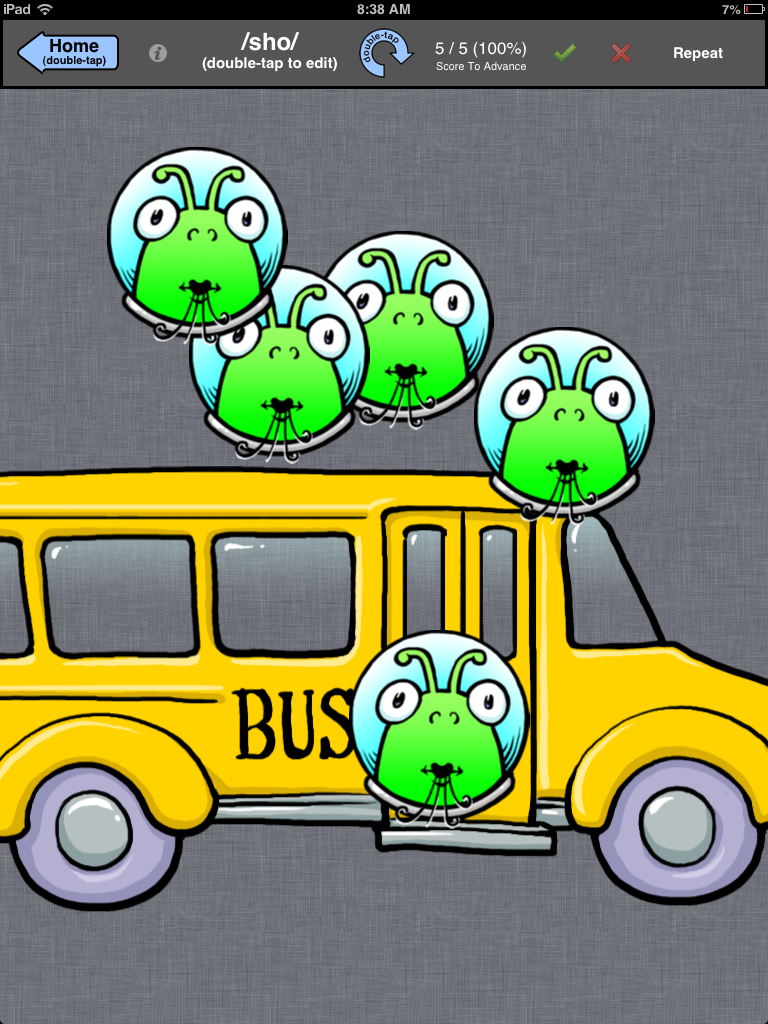
A scoring bar at the top help score and keep track of data. You must press the green check or the red x to move onto the next practice sound. The app is designed so that the bar can also turn upside down so that the therapist can discreetly score; however, my daughter picked up on this in a heartbeat and would push the buttons haphazardly just so she could move on! Once you reach the set number you earn a “sticker” or reward. You can choose from eight stickers seen below:
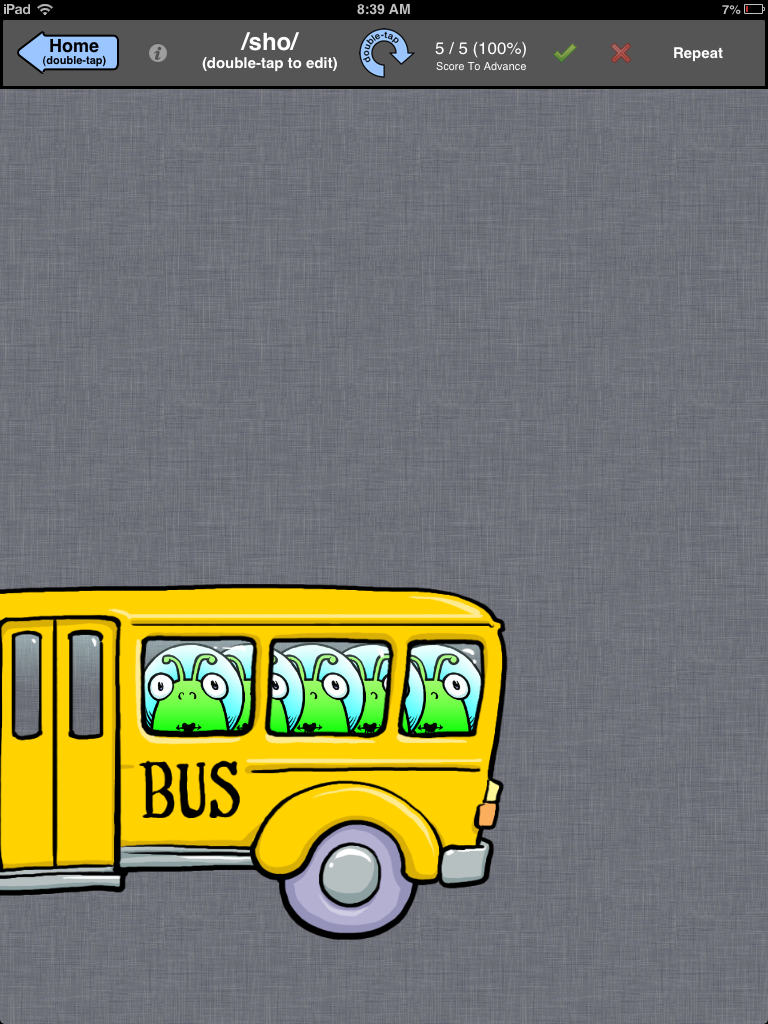
They are so simple, but my daughter loved them. I chose the bus just so you can get an idea of the animation.
It has been almost three years since I have used this app for Ashlynn, but the app lives on with all of my clients! Kids of all ages and disabilities LOVE this app.
I have a 5th grade boy with Down Syndrome who laughs every time he earns a sticker and watches the animation.
I have a 3 year old who loves picking the alien because it reminds him of a popular TV show right now “The Octonauts!”
I could go on! Really, I can’t say enough about this app, and when I reached out to the creator Carol Fast MSPA, CCC-SLP I realized why this app is soo good. Here are some comments from her:
“It’s truly been a labor of love for me and I’m always gratified to find that other SLPs appreciate what we do. I’m glad that you found Speech Stickers to be helpful for your daughter and other students. I work mostly with preschoolers and have found a special interest and passion in my little nonverbal CAS kids. I really love helping find their true voice. This is probably the most rewarding work I’ve done in over 30 years as an SLP.”
Thank you Carol! Thank you for your passion for working with kids who have CAS and for a great app that allows us to get a lot of repetitions of targeted syllable shapes in a fun and engaging way for the kids.
To Enter: Use the rafflecopter widget below to enter. Good luck!
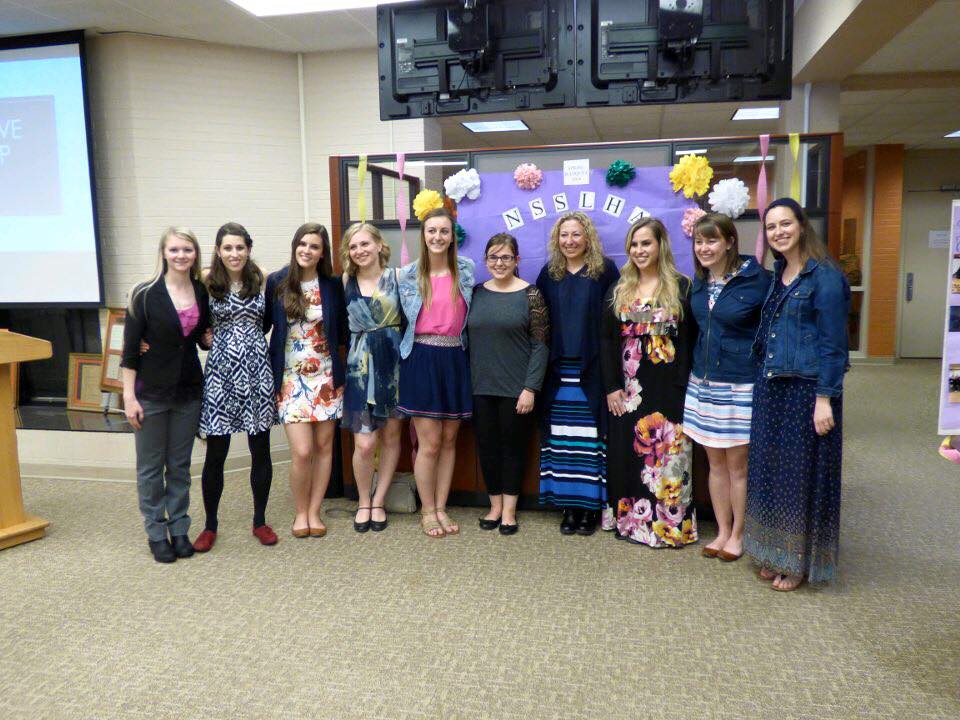
I just gave a talk at Bowling Green University this past week.
The NSSLHA crew at Bowling Green State University!
Since the talk was to undergrads, I talked about my serendipitous journey to becoming an SLP, and why I am a firm believer in listening to “coincidences.” The talk then culminated with my story about meeting Ronda Rousey.
For my final slide, my takeaways were to believe in serendipity and to listen to coincidences. Life is more eerily connected than people think. Another perfect example happened tonight, but before I talk about tonight, it’s important to take you back to 2005.
Serendipity and coincidence found me in an SLPA (speech/language pathology assistant) position under the tutelage of an SLP named Deborah Comfort.
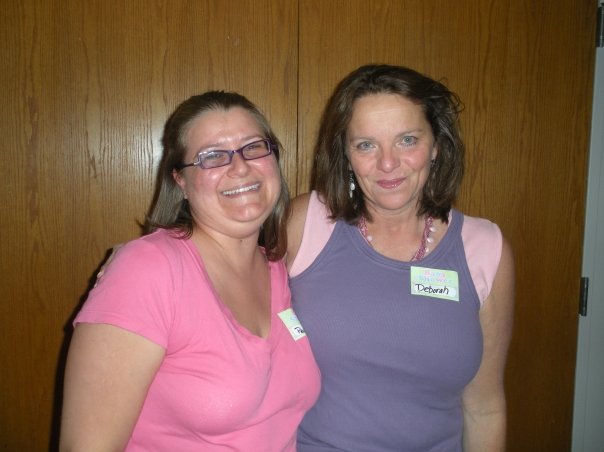
Deborah is on the right with a good friend and SLPA Pearl on the left
In 2005, I was starting my first year of graduate school thanks to her unrelenting push and unwavering belief that I should become an SLP; something I never planned on doing. That year, a 1st grade boy with apraxia showed up on her caseload and she wanted to refresh her knowledge. Knowing that kids with apraxia need more frequent therapy, she put the child on 3x a week, and I was partly assigned to her so I could provide the 3rd day of therapy, since she was only in the building 2x per week. She asked the principal to pay for an apraxia workshop coming to Denver and also requested I go as well since I would also be seeing the child. That workshop was given by Ruth Stoeckel out of the Mayo Clinic in Minnesota.
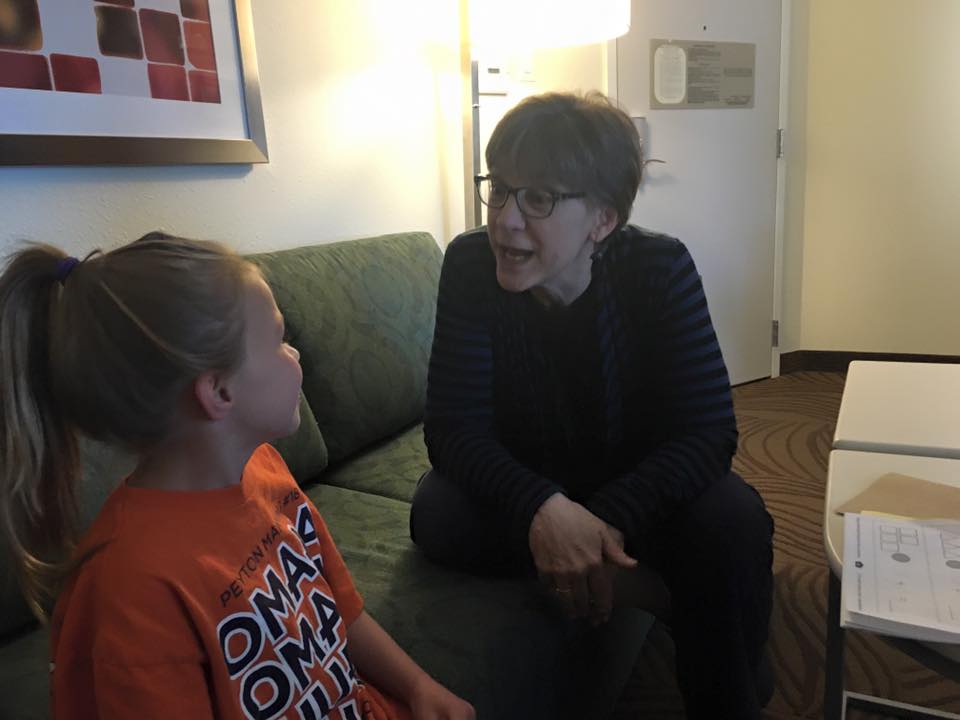
Fast forward to today, April 24th, 2016. A little over 10 years later. I have now have a daughter with apraxia and Deborah Comfort is her private SLP. Ruth was back out in Denver today because she is giving a talk to Children’s Hospital tomorrow, and I found myself at her hotel with my daughter Ashlynn.
How bazaar is that?
Pretty bazaar if you don’t believe in serendipity or listen to coincidences.
I met Ruth again when she was in Denver in 2013 for the Apraxia National Conference. I remember going up to her, stammering about how much I appreciated her and all of her work. She was having wine with friends and smiled politely at me before saying thank you and returning to her conversation.
Embarrassing!
That wasn’t the last I would see of Ruth though. I learned about CASANA’s apraxia intensive training institute while I was there, and (coincidentally) was accepted. Guess who was my mentor? Yup. Ruth.
Since that time she has entertained all my emails I have sent her that have had videos of Ashlynn accompanied by a paragraph of symptoms related to another neurological disorder called dysarthria. Ruth is not only an apraxia expert, but working at Mayo she is an expert in motor speech disorders, of which apraxia and dysarthria are both. I have always thought Ashlynn had dysarthria, but I have only known one child with it and he didn’t have apraxia. Ruth would know for sure. Ever the expert though, she would refrain from giving any sort of diagnosis over video.
A few months ago, after I sent her yet another question, she told me she would be coming to Denver again in April and would be willing to see Ashlynn while she was here.
The verdict?
Ashlynn has oral and verbal apraxia haha. Yes, I just laughed. Four years ago, I cried at that diagnosis.
What a difference those four years made.
She has expressive language disorder (yep) and word finding difficulties (double yep).
Ashlynn also has mild dysarthria. I nodded my head. I knew it all along. I just needed it confirmed by an expert who had actually seen it before in a child with apraxia.
Dysarthria is a tricky disorder. It can manifest in many different ways and in many different speech subsystems. In Ashlynn though, it is the cause for her messy eating, difficulty with managing her saliva, especially when she’s talking and it pools at the corner of her mouth, and some overall imprecision in her speech. Those are HER symptoms. However, that doesn’t mean every child who presents like that has dysarthria. (just my qualifying statement. Don’t dx over the internet!).
The treatment approach really isn’t that different at this point. Although, I did get GREAT tips for her residual errors. Ruth recommended to work on her residual artic errors now (even though language is a concern and seems to be the priority), because kids like Ashlynn are only getting these plans further ingrained in their system. That means I need to start working on the lisp now.
All that aside though, think about this for a minute. Humor me, if you will. More than ten years ago, I met a woman who would become my future daughter’s SLP. My future daughter, would have apraxia, the same disorder I was helping her future SLP treat in a young child, which brought us to a workshop given by Ruth Stoeckel, who is now seeing my child and is determining if she also has dysarthria.
Maybe it’s just me, but that seriously blows my mind.
What would I have said to 24 year old Laura? Childless Laura. Not yet an SLP Laura. Had I visited her from the future, could she have ever believed me if I told her she WOULD go to grad school some day. She would have a child, a child who would have apraxia. A child who, some ten years later, would be seen by the very expert giving a talk in the room she was in where she hearing about apraxia for the first time. A child who would be seeing the SLP sitting next to her on a weekly basis. That SLP, the sole person responsible for getting her (Laura) to college to get a degree in speech/pathology when she had NO intent of getting that degree.
I’ll say it again. That seriously blows my mind. I’ll quote Albert Einstein again,
Yes. Life is more eerily connected than we think.
If you follow my blog, you know now even more why I don’t believe in a coincidence, and why I went and met Ronda Rousey that fateful day.
I leave you with what I left the undergrads at Bowling Green:
Believe in serendipity
Listen to coincidences…and
“When it comes to challenges, I honestly believe that things happen for a reason,” Rousey said. “At the time, yes, it’s hard on a personal [and] emotional level, and it’s hard to look past what’s happening to the future; but you have to believe in yourself – because down the line in two, five, ten years’ time, you’ll look back and think that was actually the best thing that ever happened to me.”
Being both an SLP AND a mother to a child with a severe speech disorder, I have this unique and sometimes bizarre perspective; that perspective, of course, being that I now intimately understand both sides. That being said, I think parents/my clients, typically feel more comfortable telling me things parent to parent vs. parent to SLP.
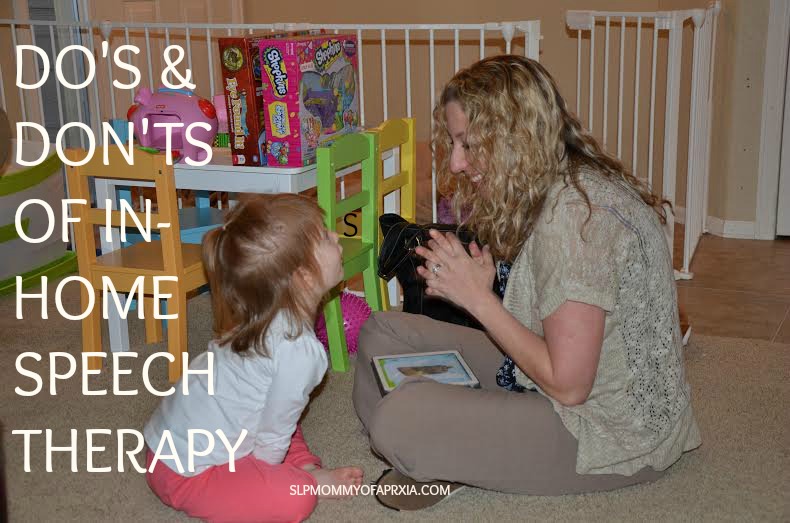
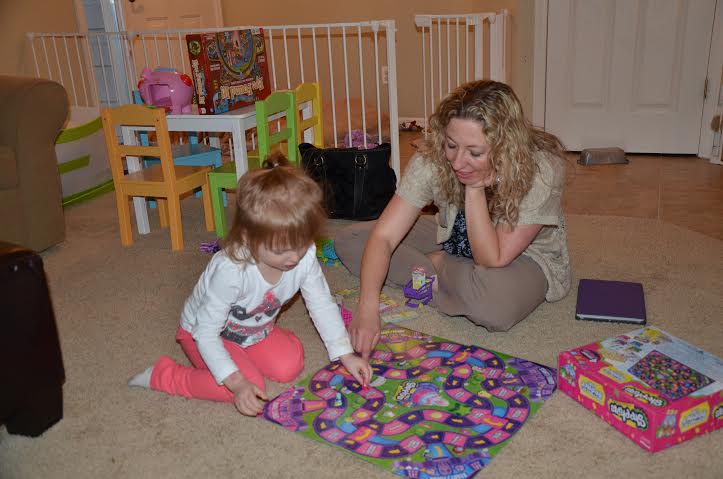
As a mother now to a child with apraxia, I have a new appreciation for the “other” side. This post is targeted for all the amazing and well-meaning SLP’s out there, who may not understand some things because they haven’t been on the parent side. Here are my top five Do’s and Dont’s for in-home therapy.
Don’t spend therapy time talking about your wedding, the death of your dog, or your friend’s miscarriage. Do spend the therapy session focusing on the child and reserve personal conversations for a time outside the therapy session.
Many times, our client’s mothers may have a lot in common with us. However, literally every minute of therapy is as important to a parent as it is to the child. I remember watching the digital clock in the first speech room Ashlynn was in. If the SLP had to use the bathroom before seeing Ashlynn, I would of course understand; but honestly, I was staring at the clock hoping she didn’t waste too much of Ashlynn’s time. I currently have a client who put those minutes into dollars. For a 30 minute session at $50, a person is paying almost $2.00 per minute! We pay because we know they are valuable, but please, make sure all the minutes count.
Many parents have told me that at times, they have been at fault for wasting minutes talking because they were with kids all day and craving another adult interaction; however, regardless of whose fault it is, always try to stay professional and keep the focus on the child.
Don’t blurt out suspicions, concerns, or think out loud. However, do make sure you make referrals and not withhold information if you feel there are additional concerns that need to be addressed.
Parents have reported that therapists have flippantly mentioned apraxia and turned their world upside-down unnecessarily, only to find out later it was in fact, NOT apraxia. In a different scenario, I have had parents upset that an SLP never even mentioned apraxia, and now they were just finding out years later, distraught, worried, and feeling guilty they had not done something sooner; and in yet another scenario, a parent has told me her SLP casually mentioned a serious diagnosis like apraxia frequently without ever moving forward with a different treatment plan.
As an SLP, you have a responsibility to relay a suspected dx in a responsible manner; and if you don’t know what to do, it’s your job to figure it out or make a referral. There are so many more resources available now including apraxia-kids.org or ASHA’s practice portal. We are counting on you!!
Don’t start planning your lesson when you enter the house. Do have a plan heading into therapy.
Look, as an SLP I get it. Planning time isn’t exactly built into our pay. Also, it can get overwhelming to carry a bunch of materials from house to house. Shouldn’t we be teaching the parent how to use toys in their house? Yes, that’s great, but you should STILL have a plan whether it’s using a child’s toys or your own. Nothing looks more unprofessional than spending five minutes letting the child decide what toy or game to play. Remember my previous comment? The parent just paid you almost $10.00 now just to plan the lesson and get started.
If you are in early intervention, some of your time might be for planning and writing notes. If so, please explain that to a parent before-hand so they aren’t thinking you are deliberately short-changing a session.
Don’t continually cancel or run late. Do respect people’s time and schedule, and refer out if you are unable to be a consistent provider.
Okay, first of all, if you are consistently late or cancel a lot, you make the profession look bad. However, even more important is that you are not helping the child the way you should when you do this. Be conscientious, and if you are frequently late and/or cancelling, refer out.
A parent also told me that a quick apology is nice, but an entire explanation is not necessary. Parents do understand if you are late sometimes.
Don’t assume parents aren’t worried, involved, invested, or not working with their child. Do provide resources, assume the parents are doing the best they can with the knowledge and tools they have, and that they are worried and just want the best for their child.
I had a post last year entitled Nature Versus Nurture. In it, I beg SLP’s not to assume nurture played more of a piece in a child’s language delay. This is especially true for apraxia of speech. I’m an SLP. A pediatric SLP. My daughter has a great language rich environment, and not only that, I DID work with her almost every night on speech. Guess what? She STILL had apraxia and continues to have a persistent receptive/expressive language delay.
Parents are human too, and might not have the background we have in child language development. Please do not assume though, that they don’t care. Even parents who seem like they don’t care, care….trust me. If you are there, it’s because they care. They had to make the phone call after all.
The best thing you can do is not only to provide therapy, but provide them with resources. Some parents may not use the resources, but I think it’s our job to provide them. Give them articles, handouts, point them to online resources, support groups, walks, conferences, etc.
Most of all, DO realize you are appreciated and valued more than you may ever realize. Helping a child get their voice is one of the most amazing things I think we do as SLP’s.
Thank you to all the parents who added their feedback to this article.
LAURA SMITH M.A. CCC-SLP IS A SPEECH/LANGUAGE PATHOLOGIST IN THE DENVER METRO AREA SPECIALIZING IN CHILDHOOD APRAXIA OF SPEECH. CASANA RECOGNIZED FOR ADVANCED TRAINING AND EXPERTISE IN CHILDHOOD APRAXIA OF SPEECH, SHE SPLITS HER TIME BETWEEN THE PUBLIC SCHOOLS AND THE PRIVATE SECTOR. SHE IS DEDICATED TO SPREADING CAS AWARENESS. HER PASSION IS FUELED BY ALL OF HER CLIENTS, BUT ESPECIALLY HER OWN DAUGHTER WHO WAS DIAGNOSED WITH CHILDHOOD APRAXIA OF SPEECH. FOR MORE INFORMATION VISIT SLPMOMMYOFAPRAXIA.COM
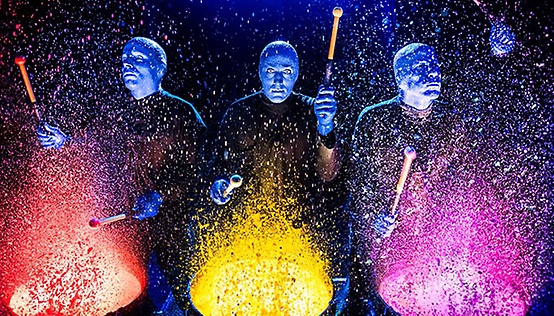
We went to Vegas for Spring Break, and we took the the kids to see the Blue Man Group. I had heard great things about the show in my parent support groups, so I thought it would be the perfect show for my kids.
Ashlynn has a formal dx of SPD, and my son, well, he definitely has sensory issues. Not sure if they fit a formal dx or not, but they’re there.
Many kids with SPD become overstimulated to the point of total meltdown. Stimuli, whether it be visual, auditory, tactile, or any combination of the above can completely overwhelm a child with SPD. To make it all the more complicated, each child is unique in their sensory profile. For example, many kids ( like Jace), are extremely sensitive to tactile (touch) stimuli. They are the kids who complain about a tag, or rip off clothing because it hurts. I’m not an occupational therapist, but from my understanding, this is considered over-responsive. Ashlynn is actually the opposite in the tactile department, and I’ve found many kids with global apraxia tend to have her presentation. She is actually “under-responsive.” Ashlynn is THE toughest chick I know. She looks sweet right? She is, but I have seen this kid get goose eggs, have blood literally running down her leg, or even get a turniquet accidentally from a hair wrapped around her toe, and she has NEVER cried. Heck, she didn’t even whimper.. This has gotten better as she has matured, but let’s just say if Ashlynn is in pain, I come RUNNING, because it must be bad.
The opposite though, is true regarding visual and auditory stimuli. She is definitely over-responsive. Any visual or auditory stimuli completely distracts her. This is ESPECIALLY true if it’s stimuli with which she has not yet experienced. Two of her SLP’s have told me “she needs to take everything in.” Unfortunately, this severely impacts her attention, so that is why I have her on a low dose of attention medication. I hate it because it’s not ADD…but sensory or ADD…it’s all neurological and meds have really, REALLY helped her.
Despite this, she’s never been so overwhelmed to the point of total meltdown. SPD is a common co-moribidity with autism, and children with autism tend to get so overwhelmed they have complete behavioral meltdowns. Ashlynn has meltdowns, but they aren’t to the extreme.
So what does all this have to do with The Blue Man Group? Well, I had just seen literally this week that they were going to create a show that was autism friendly. When I did a google search, I read this:
“We’ve heard from many families affected by autism that their children responded to the Blue Man character in a very moving way. We don’t know the exact reason. We can only speculate that it has to do with the Blue Men communicating in their own unique way — non-verbally, through visuals, touch and sound. Their message often resonates on a deeper, more sincere level,” says Phil Stanton, Blue Man Group Co-Founder, “Once we knew that we could be helpful or provide an outlet for those affected by autism, we felt it was important to do more. With our sensory-friendly shows, we want to create a safe and welcoming environment for individuals and families affected by this disorder, in the hopes that they can have an entertaining and joyful experience together.”
So, long story short, I figured this show was a win-win. I was surprised though when Ashlynn started asking me if it was time to go back to the hotel. She looked distressed each time she asked. The show switches activities a lot. She would acclimate to one activity and be okay, but when it switched she would be back to distressed mode. I did something I nor she have ever done. I covered her ears with my hands. She instantly relaxed in my arms, so I held them there. It had only been about 5 minutes and Cody was handing me a pack of ear plugs looking confused. He said he was told to just pass them down.
I smiled and put them in Ashlynn’s ears. They were perfect. She went on to enjoy the rest of the show without incident. I literally wanted to kiss whoever gave those to her. However, I did not know if it was a parent who had noticed, or the staff until after the show. I asked Cody and he verified it was a staff member who asked everyone to pass them down our way. I almost teared up on the spot. Who noticed that?? Who took action?? Are they always prepared for that? Is this why that have a great reputation for special needs kids? I had so many unanswered questions.
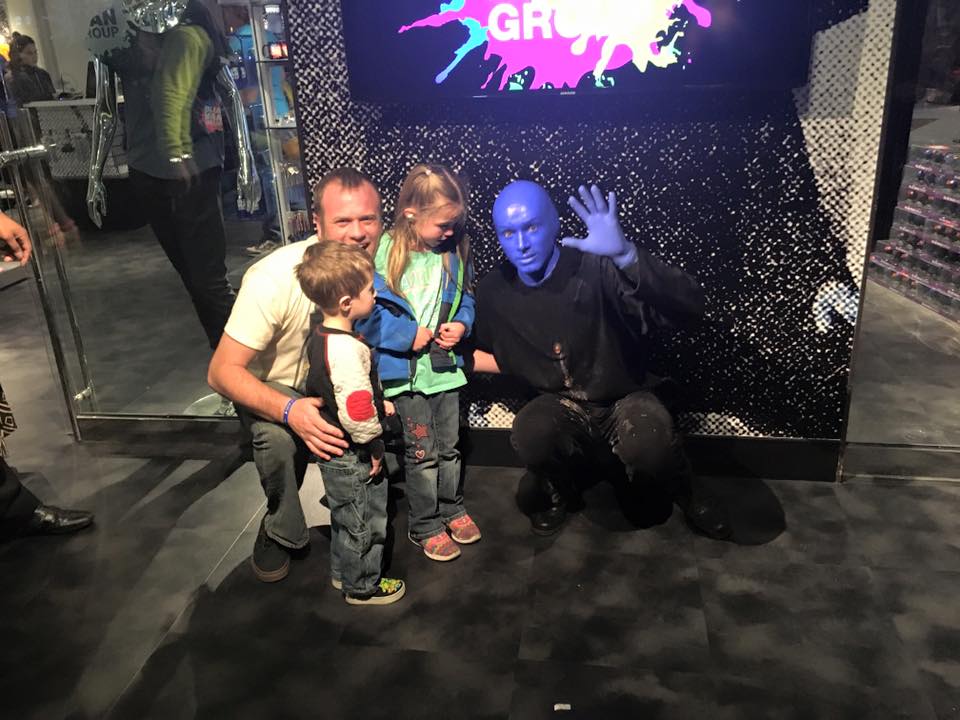
At the end of the show, we had a chance to take pictures. The Blue Men don’t talk, even after the show. There is something extremely relatable to a child with Apraxia as there is to a child with Autism. I’m sure he saw the earplugs in her ears, and even though he had been standing with all the other kids, he immediately knelt down when he saw Ashlynn, and he stayed there. I was trying to get a good picture…but as her SLP’s would say, “she was taking it all in.” She kept staring at him and never looked at me or my camera. He let her. He was kind and patient. Others wanted their photo op, but he never hurried us along. He wanted her to feel safe. He wanted her to understand. He wanted her to take it all in and not feel pressured. He seemed to know how important it was for me to get a good picture, and no one else seemed to matter during the time he was with her. Because of his kindness, I didn’t even care anymore that she didn’t look at the camera. It was just a beautiful moment, and that’s what I wanted to capture.
My son on the other hand was ALL about the over-stimulation. In fact, after my daughter told me those “ear things” made me feel better, because it was too loud” my son announced he likes it LOUD. He is a VERY loud kid, so we kinda knew that. Either way….two kids with completely different sensory issues left that show happy and excited. They are my new favorite. I truly can’t say enough.