Category: Apraxia

  • To tell or not to tell……..your child they have apraxia of speech?

    To tell or not to tell……..your child they have apraxia of speech?

    I see a question that gets asked a lot.  In fact, I asked it myself.  It usually goes something along the lines of,

    “Did you tell your child they had apraxia?  If you did, how did you say it? What did you say?”

    I remember thinking when I first saw this question that I wouldn’t tell Ashlynn until way later….and then…maybe if she still seemed apraxic, I would tell her.  I didn’t want her to feel different.  I wanted her to know I believed in her and I wanted her to believe in herself.  I wanted her to know that she can do anything anyone else can do.

    Yep.  That was my stance…..

    Until,

    Sharon Gretz, the executive director of CASANA answered someone’s question.  She made so much sense, I couldn’t help but immediately question my own decision.  She told this parent that it’s important kids know from an early age what their problem is, so they have a name for the difficulties they are facing. Providing a name empowers the child because they realize their struggles are due to something that is real.  In this way, they have a name for the struggles they are experiencing, and don’t develop their own schemas about it.  These schemas anyway, are usually negative and may include: I’m stupid, I’m dumb, or, I’m different.

    Aren’t we as parents the first to tell anyone who questions our child’s abilities that they are smart??  Aren’t we the first people to defend their honor?  What do we use an excuse?  Well, we explain apraxia don’t we?  We defend our children’s honor by labeling them.  Right?

    So, why wouldn’t you offer that SAME defense to your child?  You’re the first one to say your child is smart. I’m the FIRST one to say my child is capable.  If I, if you, truly believe this; can you really think your child doesn’t know they are different?  Do you really think that, or are you just hoping they don’t know?

    I have a feeling it’s the latter.  I have this feeling, because I have hoped the same thing.

    Truth is, Ashlynn has always known.  I remember when she had JUST turned three and was put in preschool as a nonverbal child, the teachers reported she would just laugh when they asked her to do something.  I could see it in their eyes:

    Low cognition
    Poor comprehension

    However, I knew….I KNEW as her mother, that Ashlynn laughed as a coping mechanism because she couldn’t do what was being asked.  It didn’t matter if it was speech or otherwise.  Ashlynn has GLOBAL APRAXIA, meaning overall motor planning difficulties. It didn’t matter what they asked her to do, she couldn’t do it…so…she laughed.

    Every heard of emotional intelligence?  My daughter has it in spades.  If you haven’t, it’s because we live in a society who only values academic intelligence, completely ignoring the fact that a genius who can’t relate to people or get along with people can’t be successful in life.

    No.

    I’m ever so thankful I read that post and the response from Sharon.  Before I was even sure my daughter knew what I was saying, I told her she had apraxia.  Whenever she even remotely paused and looked upset, I would tell her “oh dangit.  That darn apraxia!”

    If you have read my blog for awhile, I talk about apraxia being the new stuttering.  Back in the day, no one wanted to tell a child they stuttered.  Surely they didn’t notice, so you didn’t want to draw attention to it.  Years of research later, low and behold children who stuttered DID know they were different, and instead of understanding their disability, they developed shame.

    Shame is a bitch.  Shame develops when you feel as though you have done something wrong.  If we don’t talk to our kids about apraxia, we risk them feeling ashamed of it.  Apraxia is NOTHING to be ashamed of.

    That leads me to my final thought.

    The walks for apraxia taking place around the country.

    I recently learned so many people think the walk is about awareness.

    I mean, I guess.  I can see that.  Certainly a part of the walks is about awareness.  Publicity leading up to the walk and various news stories all bring awareness and awareness is very good.

    However, it may surprise you to know, especially from me, that the walk itself has very, very little to do with awareness in my eyes.

    The walk, in particular, the medal ceremony, has EVERYTHING to do with honoring our children.

    No shame.

    We HONOR them for their struggle.  We HONOR them for differences.  We HONOR them for their perseverance and hard work..

    We HONOR them.  We RECOGNIZE them.  Their family and friends HONOR them.  Their therapists HONOR them.  We all honor them, because despite the odds, they persist and achieve.  We recognize their achievement in spite of apraxia, and they can feel pride, not shame.

    Even if your child is considered “resolved,” I would urge you to rethink your stance on not telling them. People………..they KNOW.  They may not know what apraxia means, but they know they aren’t like other kids. They know they are different.

    On final thought.  A label should never be used an excuse and trust me, our sweet babes are smart enough to use a label to their advantage.  I’ve definitely heard a story or two about, “oh I can’t do that because I have _____.”

    On the contrary, it’s a teachable moment to say, “It makes it more difficult for you, but YOU are capable and I believe in you.”

    If you don’t believe me, ask my daughter some day!  We are obviously an atypical family because I specialize in apraxia so I see kids all day with apraxia and of course Ashlynn has it; however, my youngest son asked me why he DIDN’T have apraxia.  lol.

    No shame in this house.  Only knowledge…and knowledge is power.
    14067711_10208822639500870_2427710843928303952_n
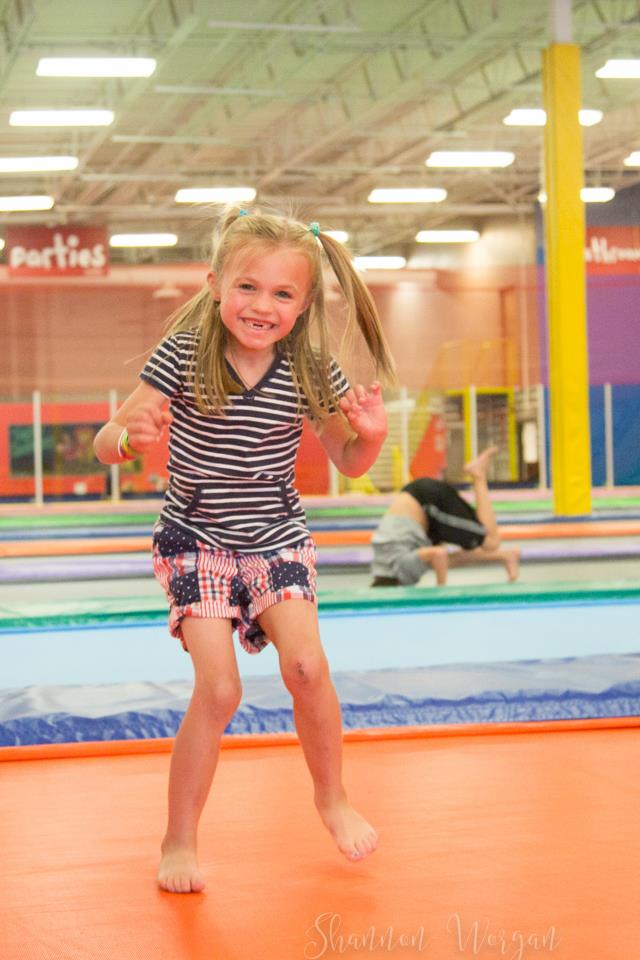
    Jumping her heart out at a fundraiser for the Apraxia Walk


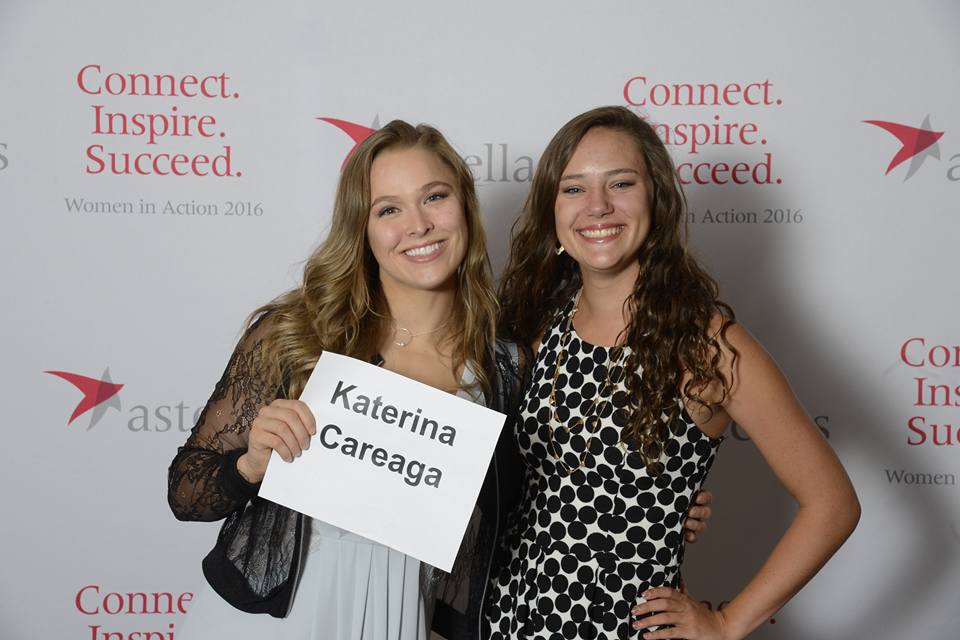
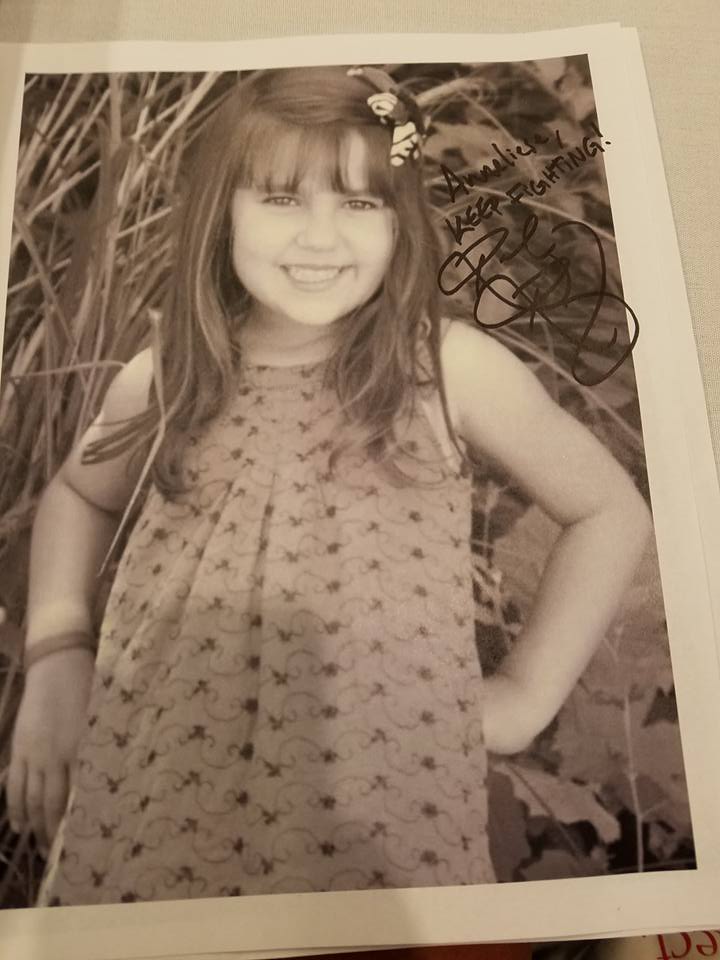
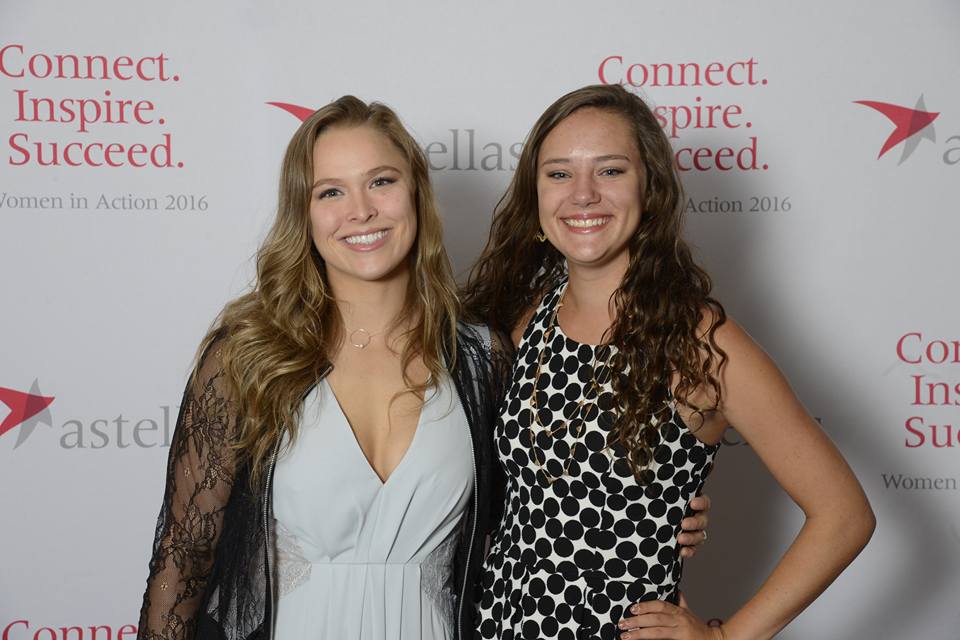
  • The day I met Ronda Rousey, and she told my sister to “keep fighting” for her words!

    The day I met Ronda Rousey, and she told my sister to “keep fighting” for her words!

    Hi Katerina!

    I’m so excited to have you here today.  I saw in the Ronda Rousey #knockoutparaxia your mom posted a video of you attending a Women’s Leadership Conference in Chicago where you were able to ask Ronda a question about apraxia and meet her in person.  Can you explain to my readers why you wanted to go to this?

    Back in May, I was sitting at my school’s awards assembly when I got a text from my mom, telling me that I had been invited to the Astellas Women in Action conference in Chicago by a family friend who works for Astellas. My first reaction was “OMG, yeah!” I couldn’t tell my mom though, because I wasn’t even allowed to have my phone! (oops.) My mom was so anxious for an answer she came to my assembly and found me in the bleachers! It was a huge opportunity that a girl like me doesn’t get very often, so I said yes right away!

    Before the conference, the company launched an app that connected everyone attending. It was a smart idea, because there were people flying in all around the world for this conference. And in the app, you could compete in little “competitions” with everyone. There was an “Ask Robin” and “Ask Ronda” competition, as well as a selfie contest. The “Ask Ronda” contest was the only one I competed in, and I only entered one question. “My sister has been diagnosed with apraxia, a disability you once had. From your experience, what can I do to help her succeed?” And that was the beginning of this amazing experience.

    I think it’s so amazing that as a sibling you have so much concern for your younger sister you were prompted to go to this.  In the video you took, I heard you holding back tears.  We don’t often think about how apraxia can affect the siblings.  Can you tell us why you were so emotional?

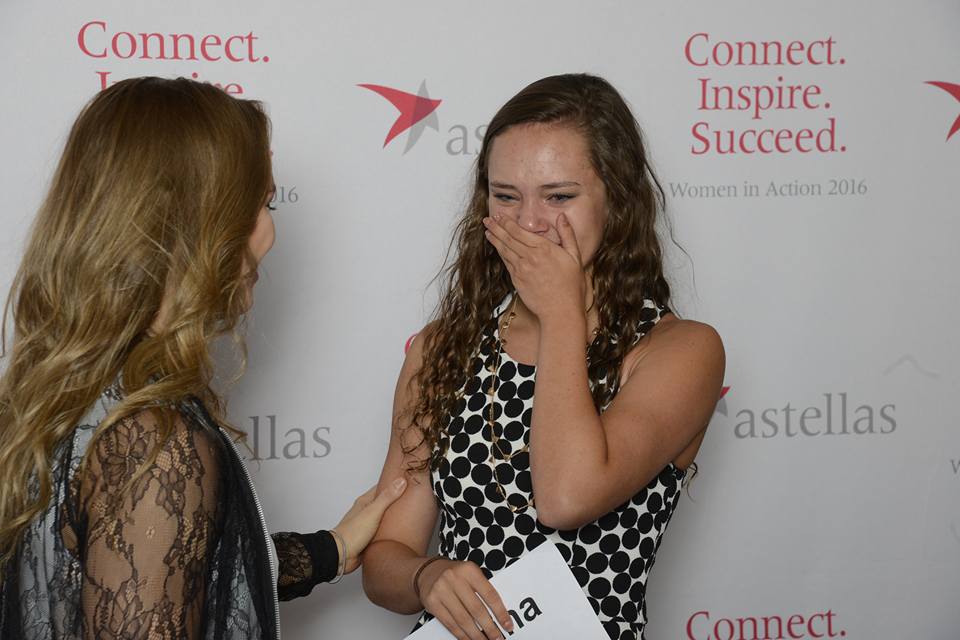
    Well, I had a bit of a rocky start at the conference. My flight had been canceled, my mom and I drove to Chicago instead, and I was very tired. I had a whirlwind of emotions all weekend, and when Robin Roberts announced her name, I immediately started crying! And that was even before the interview! I had no idea that the one question I submitted would be chosen out of hundreds, and the way Ronda answered it answered a lot of personal questions I had. I knew how to help my sister when she was younger, but I have no idea how to help her now and in the future. My little sister is in first grade, and other kids are already asking one of my brothers (grade 4) why his little sister is stupid. And it hurts because I had no idea how to help her succeed. But thanks to Ronda, I know how, and just the thought of that makes me very happy and emotional.

    You were able to go back and meet Ronda! What was that experience like?  What was Ronda like?

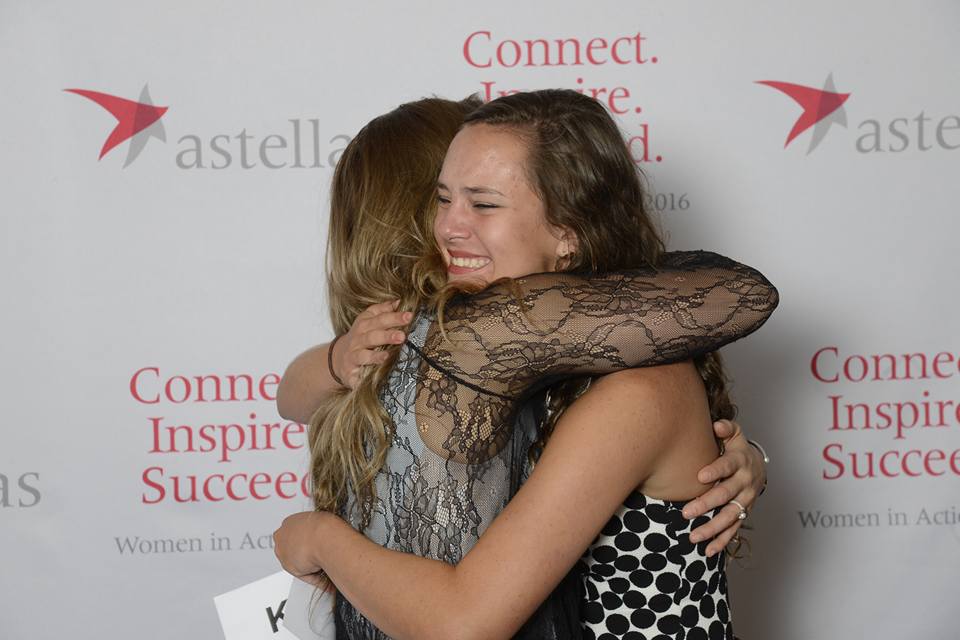
    The whole experience was just amazing. When I walked into the room for the photo opportunities, I immediately started crying again. I made a security guard tear up a little bit too! Actually, I don’t think I stopped crying until that afternoon because the whole experience was so surreal. Ronda was so sweet the entire time and kept hugging me, and telling me I was an amazing older sister for asking my question.

    What did you learn (if anything) from this experience?

    I had no idea my little 2 minute video would affect so many people, and it puts into perspective how many families have loved ones with apraxia, and are going through the same things my family is. I’m so glad I could help others with my own experiences!

    13770264_10209187233773060_6637643273288338583_n
    Autographed picture by Ronda Rousey encouraging Katerina’s sister to “keep fighting!.”

    You experience resonated with so many parents and families!  For me, I can so appreciate your description of Ronda.  She was the same with me and my daughter; sweet, kind, and genuine!  Thank you for telling your story.  You are obviously an AMAZING young woman, and your sister is so lucky to have you in her corner!

    13769600_10209215987651889_6720564369997804624_n13775429_10209215987851894_3052223350579417984_n13726615_10209215988491910_4431537346054282392_n 13770369_10209215988051899_2918489909754762781_n


  • Overgeneralization: a caution for clients with CAS

    Overgeneralization: a caution for clients with CAS

    overgeneralization


    Before I knew my daughter Ashlynn had CAS, and before I spent countless hours researching, taking trainings, and becoming an expert in CAS; I was an elementary school SLP.  Like any new SLP, I was relatively inexperienced with CAS.  One year, I transferred schools and a 3rd grade boy with a dx of CAS popped up on my caseload.  Most people, including his mother, still found him very hard to understand.  In her defense, it didn’t help that her first language was Spanish, and this boy only spoke English (apraxic English, you can say).11wwpm

    Anyway, I could understand him most of the time, but his errors were bizarre.  He had an /l/ substitution EVERYWHERE, but mostly for sounds he had not yet acquired including /r/ and /th/.  Some examples: (blown/brown, muller/mother, bruller/brother).

    This was my first experience with “over-generalization” and it’s potential to have a negative  lasting impact on kids with CAS.

    It was not my first experience though with over-generalization.  In kids with phonological disorder, this will happen occasionally.  For example, we might be focused on a pattern, let’s say, /s/ blends.  A child with a phono disorder will usually omit the /s/ in an /s/ consonant cluster.  One of my mentors used this example:

    “I see a star in the sky” would be “I tee a tar in the tye.”  There are a few phono processes going on here, but suffice it to say, the child is still omitting the /s/ which would be considered a consonant cluster reduction.

    When we start targeting /s/ blends, the child will usually (temporarily), start adding an /s/ before every sound. Soon after they learn the pattern without any real long term consequence to existing speech patterns.  This is generally regarded a positive sign with phonological disorder, because the child is showing they are making system-wide changes that are generalizing.

    This is NOT necessarily true if a child has a dx of CAS.  Over-generalization can cause havoc on an already faulty motoric system.  There is a limited research I found regarding this phenomenon; however, there is some in the adult literature regarding acquired apraxia of speech (AOS).   Wambaugh et.al. (1999) found that in adults with apraxia,  sound production training did yield system-wide positive changes in the acquisition of a sound; however, overall maintenance effects exhibited declines in sound production accuracy (intelligibility).  The authors concluded this decline was directly attributed to over-generalization of the taught target sound.  They recommended using multiple sound targets to increase variability and stabilization during training.

    I have searched for more research articles on the subject but have come up empty.  This is NOT to say; however, that it is not a common occurrence.  Research in the field of communication disorders isn’t exactly robust like it is in the medical field.  Even the research we have on apraxia, though more than it was, rarely meets the criteria for the highest level of evidence to be proven effective.  Many times we have to go on our clinical experience, and in treating kids with CAS, I have now seen plenty of cases of over-generalization directly caused by the current therapeutic approach.  Of course, questions like these usually lead to one pursuing a doctorate and doing a research study….but……that is for another time.  lol

    I do feel though I need to write on the topic.  So here it is.

    Therapy for apraxia needs to include many target sounds, sound placements, and syllable shapes.  This is very different from many (most) treatment approaches for other speech sound disorders.  Let me give you some examples.

    In articulation approaches, therapy focuses on one sound.  They work to get accuracy and generalization for that particular sound in many different places of words: initial, medial, and final.  Therapy then progresses from word, to phrase, to sentence, to conversation.

    In phonologic approaches, therapy focuses on patterns of errors.  For example, in a popular Cycles approach, kids consistently may delete final consonants (ca/cat, do/dog) or leave off consonant clusters (tar/star, no/snow), to name a few.  Therapy would then focus on including final consonants, or consonant clusters.

    These are common approaches to most speech sound disorders.  These are what most SLP’s will have experience with.  They will have seen these in their internships.  It’s no surprise then when we fall back on these therapies.

    However, this WILL not do for apraxia.  Let me give you many personal examples I have now seen in my experience.

    For my first example, let’s go back to my 3rd grade boy with crazy /l/ substitutions.  Recall he had a history of apraxia and when I met him he was substituting /l/ for sounds he had not yet acquired (r, th).  If you are an SLP, you will know this is a pretty unusual error.  It was also an error that, at the time, before I knew motor learning principles, I had an INCREDIBLE difficult time extinguishing.  I can’t help but wonder (actually I’m really sure now), that the child had fairly good apraxia therapy, and probably was working on /l/.  At younger ages, we typically don’t work on later developing sounds such as /th/ and /r/.  However, he overgeneralized ALL of his errors to mean he needed to produce an /l/ and there I met him in 3rd grade, and what I saw was a child now saying /l/ for every sound he still had in error.

    My second example is a child who has a TON of language, but who is severely apraxic.  Unlike my daughter, he can tell stories for hours, but the sounds are completely muddled, jumbled, and in no sensible order.  At the word level he would remember to include final consonants, but at the conversational level all of his final consonants were omitted.  I am working with his school SLP who is amazing, and she noticed this pattern (phonological disorders and apraxia CAN co-exist), and decided to remediate it.  She remediated it SO well, he was adding final consonant sounds to syllables and/or words he had previously mastered that DID NOT have a final consonant.  One phone call revealed the error, and we both worked feverishly to rid him of this overgeneralization pattern.  We were able to do it, but only after using principles of motor learning.  Had she not been so open, there is not doubt in my mind he would still be adding these final consonants to every word. Much like my first example, established motor plans in a child with apraxia is VERY hard to extinguish.

    My third example includes a child I started seeing in the very early stages.  Though she was able to say many early developing sounds in isolation, she had extreme difficulty sequencing them correctly at the word level.  I was seeing her along with another private SLP and school SLP.   Early on, she made incredible progress.  The other SLP’s  were using Kaufman cards, and the first set of Kaufman cards account for all the variables I mentioned above: varying sounds, sound positions, and syllable shapes.  When you are dealing with a motor planning disorder, a “sequencing” disorder, these three things are very important. In fact, Nancy Kaufman herself describes her method on her website as:

    This is performed through using cues, fading cues, using powerful and strategic reinforcement (motor learning principles), errorless teaching (cueing before failure), gaining many responses within a session, and mixing in varying tasks to avoid over generalization.

    Only problem with example number 3 is that she progressed beyond the level 1 cards and so the SLP defaulted on what she knows.  This client wasn’t producing any fricatives (s, f, sh) so she started with the fricative (/f/) and starting hitting it hard.  The result?  My shared client is now using this taught phoneme for all other current fricatives and errored phonemes, and getting her to eliminate this now very strong motor plan is taking longer than expected.  What SHOULD have happened is that we target all fricatives now (a variety of sounds) in all word positions and stimulable syllable shapes, STILL using the principles of motor learning theory.

    Overgeneralization.  It’s a PROBLEM in CAS.  If you are an SLP and you start seeing this, you need to look at what you need to change.  It’s not a positive indicator like it is for phonological disorder.  You are literally carving incorrect motor plans. Remember, we cannot focus on a single sound.   We cannot focus on a single pattern.  We cannot focus on a single word position.  We cannot focus on a single syllable shape.  We have to choose targets that are variating ALL of the above that are including sounds within a child’s repertoire.  If we don’t, we are going to have a kid with apraxia overgeneralize what we have taught them, and it’s going to cause havoc on their motor system, and potentially make them even less intelligible.

    In addition, you will always hear me talk about wasting TIME.  Time is so, SO precious to a parent with apraxia, more specifically, getting a child to improve as quickly as possible.

    This is ALSO why it’s SO important that even after a child has resolved, a dx of CAS always be included in the case history, because principles of motor learning theory are still the most effective in driving treatment.  This is true even when you have moved on to grammar or additional language targets.  Apraxia is a different monster.  Educate yourself.  Learn more. Vist apraxia-kids.org.

    30022940f


    Resources:
    Wambaugh, J. L., Martinez, A. L., McNeil, M. R., & Rogers, M. A. (1999). Sound production treatment for apraxia of speech: Overgeneralization and maintenance effects. Aphasiology, 13(9-11), 821-837.


  • Apraxia is for the BEST?

    Apraxia is for the BEST?

    The 2016 National Conference on Childhood Apraxia of Speech has come to an end. As I sit in the plane, I look at the burnt orange, red, and brown sunset setting over wispy clouds and the windy city. Since I live in Denver, we are flying west, and it feels like we are literally flying into the setting sunset sky.

    I get to reflect on my time here in Chicago, and honestly, the first and foremost emotion that I feel is gratitude. It is almost unbelievable to think that just a few three years ago, this conference came to Denver and though it seems like a long time ago, if I close my eyes, I can still remember the emotional whirlwind that was that time.

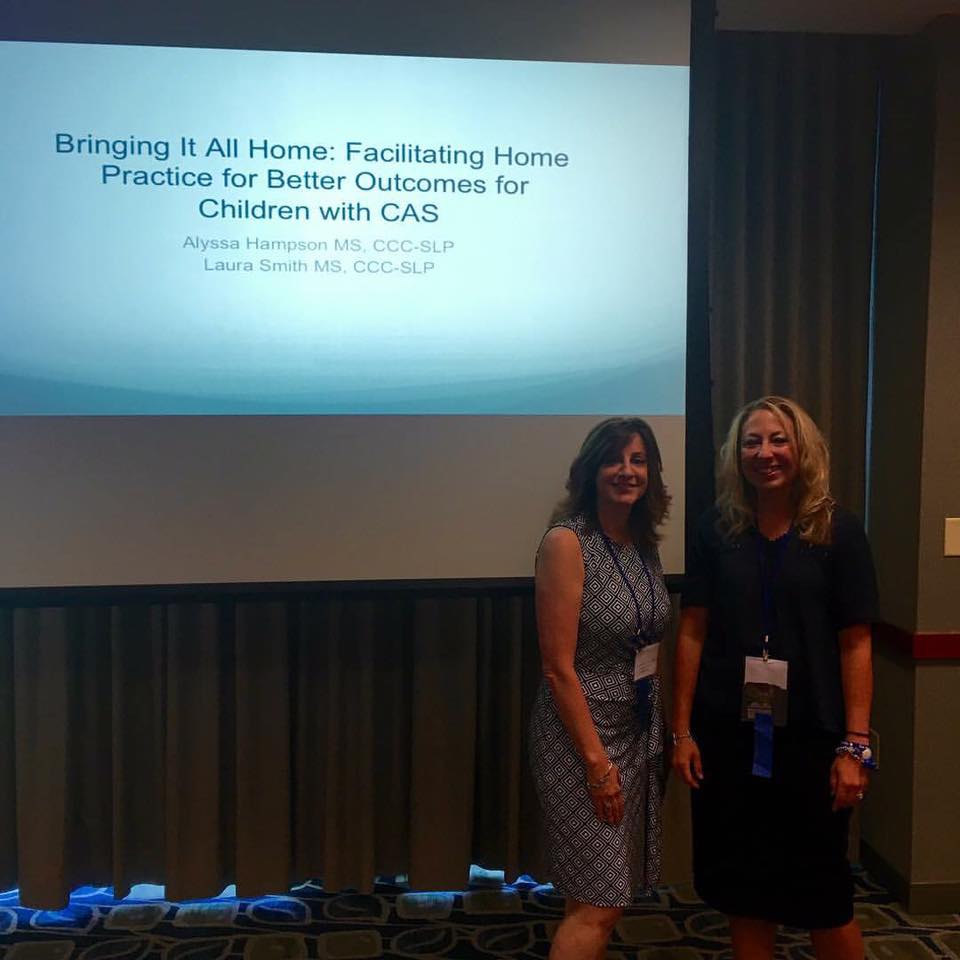
    I was honored to give a talk with a fellow SLP, Alyssa, who specializes in Apraxia of Speech out in Las Vegas. It was Alyssa who had initially pitched the idea to me, and speaking with her felt as natural as breathing the air. We seemed to find a perfect rhythm despite living miles away and not seeing each other in person in the last two years.

    13627156_10207897380324986_662369900232990243_n

    Alyssa is inspiring to me, because I guess as a mom and SLP, I feel like my passion for kids with CAS is expected and natural. I do after-all, have a personal buy in. However, Alyssa’s passion comes strictly from knowing, finding, and heeding her calling. Treating kids with apraxia is truly what she was meant to do and I believe that is conveyed in her words, her actions, and her energy!

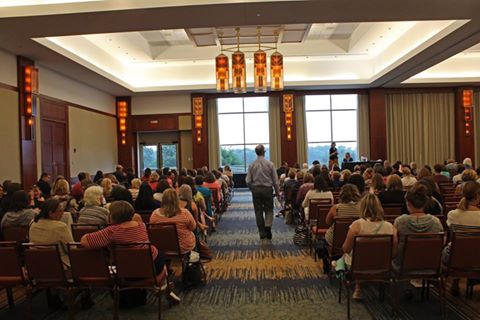
    When we started our talk, Alyssa polled the audience to see how many people were parents. The Apraxia conference is unique in that is a place for BOTH professionals and parents to come and learn about CAS. Our audience was comprised of mostly parents, as we expected; but what caught me by surprise was the amount of many first time parents.

    As they raised their hands, I was transported back in time. I remember being a first time parent attending the conference. I was anxious and overwhelmed, hoping I would learn things to help my daughter. This year though, I was the speaker, and I was looking out onto the sea of parents, and as I scanned their faces, I was emotional remembering my very self sitting in their seats. Alyssa said it best when she quoted a professor who was speaking at her daughter’s college orientation:

    “You will succeed because you are HERE.”

    All of these parents had shown their sacrifice and their commitment merely by coming to this conference, and she was absolutely right. I remember Sharon Gretz telling me once when I was lamenting over all of my daughter’s negative prognostic indicators, “Laura, never underestimate the influence of one kick-ass family.”

    Oh, and that leads me to Sharon. As I said in my previous post, I did exactly what I set out to do, and hugged her and thanked her for everything she has done not only for me and Ashlynn, but to now the clients I have that benefit from CASANA. Ever humble, she blows me off, but I do hope on the days she is receiving criticism or feels low, she remembers all those she helped. This year as I shared my story of how Sharon helped me with many participants, I was surprised (not really) to hear how all these other people had also found hope because of CASANA and because of Sharon. People literally tearing up describing how Sharon had so graciously taken her time to listen to them and help them as well when they needed it the most. People who now were willing to volunteer everything they could to give back because of one person’s act of kindness.

    13592426_10207897379884975_300745818694905117_n
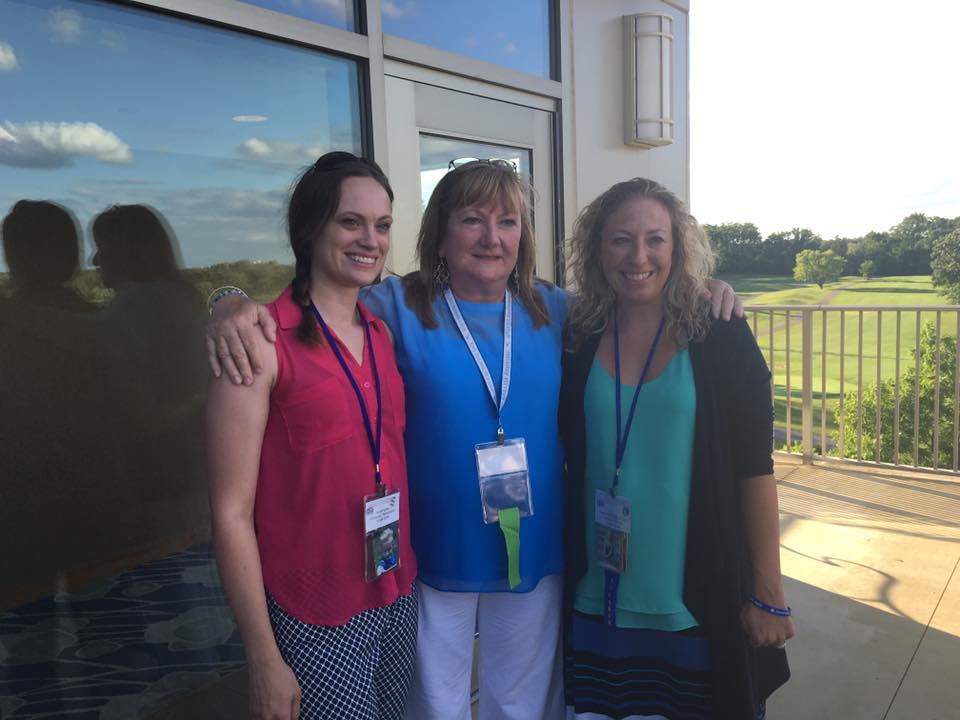
    Me with Sharon Gretz and another SLP apraxia mommy Nicole

    This conference truly is unique. There are world renowned apraxia experts just as gracious, patient, and willing to speak to parents and give them free advice just as Sharon is, and I can’t help but to believe that is fostered from the top. If you are part of CASANA, you want to be as of much help to others not because you are expected to, but because you genuinely want to. In my case, I want to pay it forward. I can never repay Sharon, but I can help others and give them what she gave to me, or at least I hope I can.

    13627068_10153898518534107_8525754908644963770_n
    International Apraxia Expert David Hammer walking toward the stage. At the conference, he is as accessible to talk to as any attendee.

    This year, three years later, it’s hard to believe what a different place I am in. I wasn’t even anxious to give my talk. I was excited, because I finally felt I could give back, and that is a great feeling after feeling like all I was doing was taking from CASANA. That doesn’t mean the pain I felt during those years ever truly goes away. Much like Sharon when she teared up hearing my story, those emotions will forever be tattoed onto my soul. I showed a video of Ashlynn after she was first dx. Smiling, happy, and engaging, her speech was so poor but her energy was the same as it is today. I teared up watching it despite being well past those times, partly from remembering my sadness, and partly out of pride.   I suspect now from observing Sharon and Kathy, another CASANA staff member with now grown kids who had apraxia, that pain will never be forgotten. I find peace in it now though.

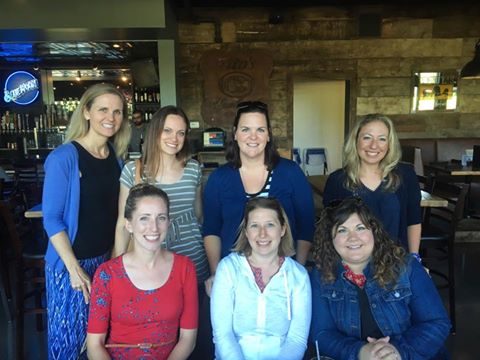
    Three years ago I knew not one other SLP mommy of Apraxia, and this year I have a picture with seven others. Ghandi said to be the change you want to see in the world. I put it out there, and it came back! I needed to meet others like me, and boy did I find them! Talking to them is like talking to an old friend. No background is required, they all just understand and “get” me.

    slp moms
    SLP Apraxia Moms all in one place!

    I was able to meet fellow walk coordinators and past bootcamp graduates. Sometimes, I would be sitting alone and hear a neighboring conversation. I would smile as people would relay their “it’s a small world” conversations and muse at coincidences. I would turn away and smile, wondering how people honestly believe in coincidences, because as you know, I believe a coincidence is nothing short of God telling you this is where you were meant to be.

    13619808_10207897379444964_1486856345685306702_n
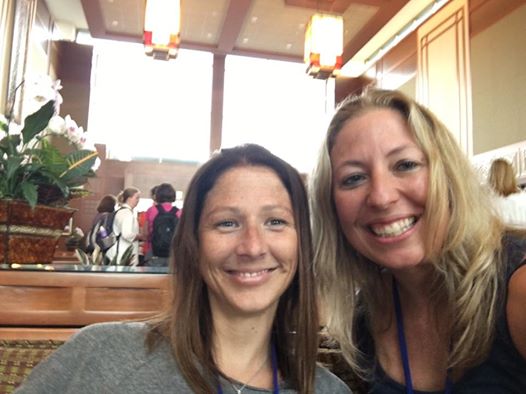
    Apraxia mom, Apraxia Advocate, and Apraxia Walk Coordinator Michelle who I have become friends with. I have a feeling Michelle is going to be part of a HUGE apraxia awareness movement this year.

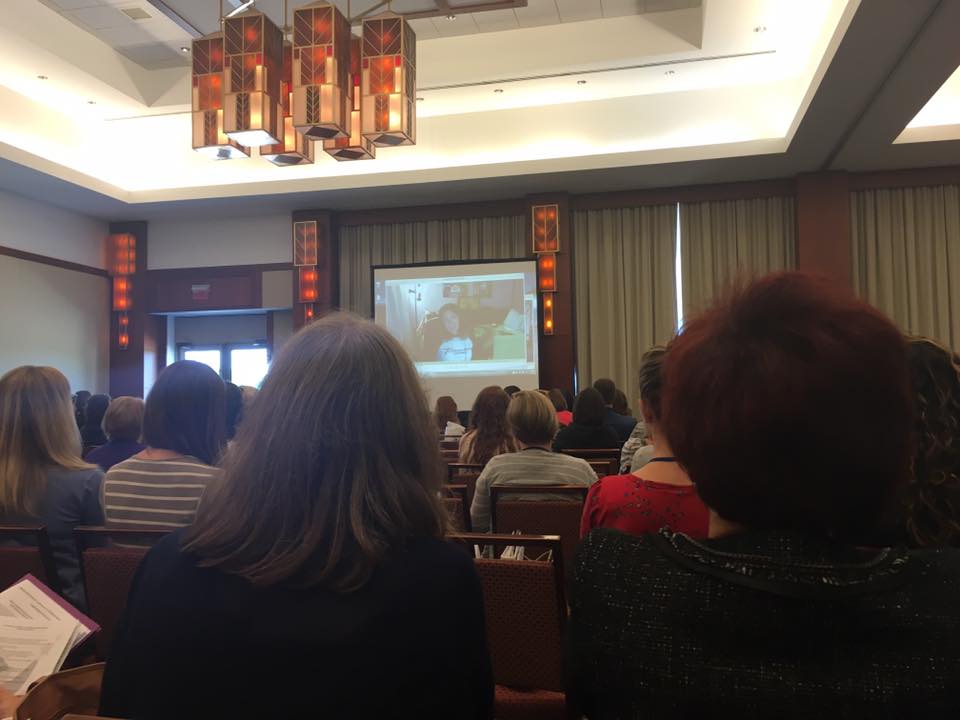
    Perhaps the icing on the cake for me, was sitting in the main ballroom during the closing ceremony. Ronda Rousey’s mom, AnnaMaria De Mars made a video specifically for this crowd and for this conference. It happened simply because I emailed and asked. You could have heard a pin drop while she was talking. People gasped when Sharon announced they had a video from her to us, they laughed when she told jokes, and they nodded as she talked.

    13600279_10207897381605018_1947252796030087615_n

    In that moment, my apraxia mom friend leaned over and said, “you done good.” I smiled, because I finally feel as though I have paid it forward. After years of just taking because I was so desperate to help my daughter, I hope I have made a dent in helping others the way I feel I was helped.

    13606623_10207897379244959_6549606885663623900_n
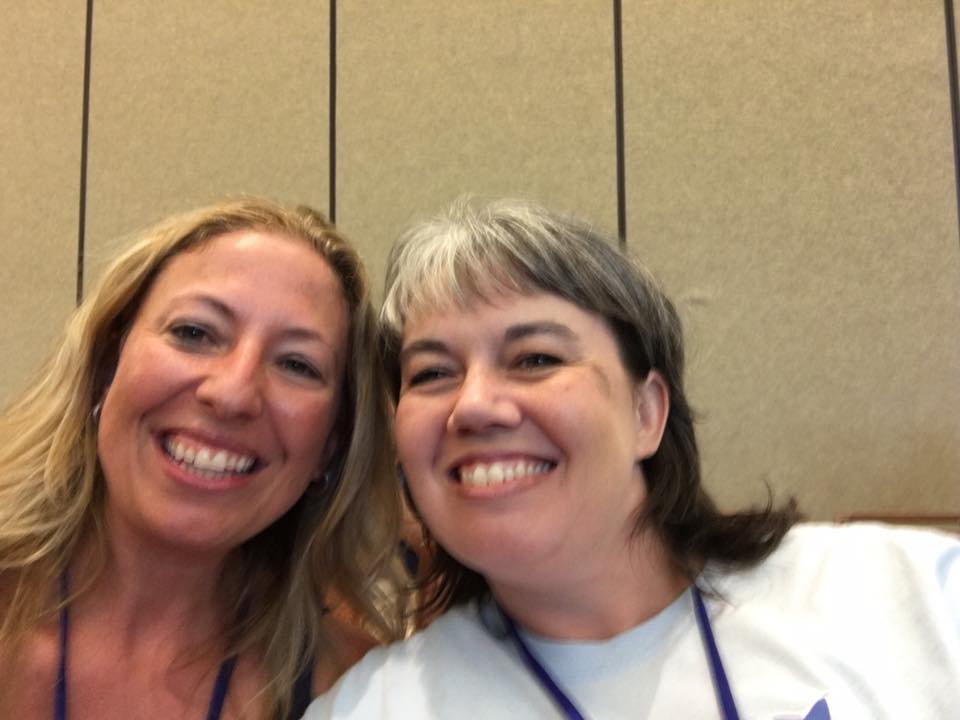
    Ms. Shelley Kelley, my kindred apraxia soul sister. No words required.

    The closing speaker, Jennifer Keefe, who has a child with apraxia Danny Keefe who has been featured on numerous national news outlets said it best when she said,

    “There is more good than there is bad in this world,” and Ronda’s mom in that video told us to think that “Maybe, it’s for the best.”

    The theme this year of the conference was “Standing Strong, Facing Challenges.”  It’s fitting because, without our trials and tribulations, we may never be as motivated to succeed and we may never be as motivated to defeat the odds, just like Ronda did, just like Jennifer Keefe’s son did, and just like Ashlynn will.


  • Apraxia National Conference: A candle in the window

    Apraxia National Conference: A candle in the window

    It’s been three years since I last attended the national conference on apraxia. At that time, my daughter had been diagnosed with apraxia for just under a year, and I was still scared and sad about what the future held for my sweet Ashlynn.

    I re-read my blog post I wrote after that conference, and it didn’t begin to capture all the emotions I had at that time, or what those three days actually meant to me.

    It might have been because I was in the thick of it then, scared and sad on the inside, but all game face on the outside just trying to learn as much as I could to help Ashlynn.

    I mentioned meeting Sharon Gretz, the founder of CASANA, and said merely that I felt an immediate kinship with her and we swapped stories. That is all true I suppose, but that meeting was soooo much more.

    I remember she told people in the fb group to come and introduce yourselves if you were attending the conference. My husband went with me, and I remember telling him I felt like I was about to meet Julia Roberts. I was nervous, anxious, and sweating profusely. When I walked up to her and introduced myself, she was immediately kind and greeted me with a sincere smile. I wanted to act smart and professional, but as I started talking about Ashlynn I choked up and had tears in my eyes. Embarrassed I looked down and finished my story, and as I slowly looked back up, I saw she had tears in her eyes as well. For once in those lonely 9 months where I felt like the shittiest SLP on the planet for having a kid I couldn’t help talk, I felt I had met someone who understood and who was going to help me. Sharon’s not an SLP, but she had completed all the coursework to be one minus the clinicals, and she was the closest person I had to understanding how I felt and how to help without judgement.

    That’s the real story. Maya Angelou said people will forget what you said, but they will never forget how you made them feel, and that’s true. I felt heard, I felt understood, and I felt hopeful.

    I also mentioned learning about a bootcamp, and I non-chalantly talk about how I will apply.

    Hahahaha

    I’m laughing because the process of getting to bootcamp was anything but non-chalant and easy. It was like applying and trying to get into graduate school all over again!! Oh how naive I was!!

    In a short three years since that conference, my life completely changed. I’m trying to find a word that fully describes it. Metamorphosis? Maybe that’s it. At that time I was a caterpillar inside my crysillus who couldn’t even imagine the new world I would see and the new possibilities that would be available once I had my wings.

    CASANA gave me my wings. Is it no wonder then why I volunteer my time as a walk coordinator, try to spread awareness, and mention them wherever I go? How can you ever repay someone who literally pulled you out of a dark place, gave you hope, and changed your life and more importantly your CHILD’s life for the better?

    I really and truly don’t know where Ashlynn would be right now without the knowledge I gained from CASANA. I know for sure she wouldn’t be talking as intelligibly as she is. No way. She’s severely impacted and without proper treatment, kids with apraxia do NOT just get better on their own.

    She’s mostly resolved of her apraxia at this point, so now conference is about learning how to help her with all the residual problems, like reading, writing, and word finding just to name a few.

    It’s also about learning new things and gaining new ideas to help my current clients.

    It’s about going back and shaking the hand and hugging the people who made all of this possible and saying thank you for being my candle in a window on a cold, dark winter’s night (Thank you REO Speedwagon for those lyrics).

    It’s about going from the only SLP on the planet who had a kid with this rare speech disorder to meeting in person all the others I have found just like me through social media.

    Its about seeing all the other SLP’s nationwide who have decided to commit themselves to helping kids with CAS and being in awe and humbled by their commitment and love for our kids.

    Most importantly though it’s about this girl right here. imageShe was sad to see me go, and for the first time in her almost seven years, she told me,
    “I will miss ya mommy.”

    She also asked me if one day she can go with me to the conference. I smiled and told her yes, because I can’t think of anyone who deserves to go to the conference more than her. I hugged her and told her,

    “One day baby. One day, and you’ll be the star of the show.”

  • She is a fighter, not of guts and glory, but one of understated grace.

    She is a fighter, not of guts and glory, but one of understated grace.

    Well, Ashlynn completed Kindergarten.  It was pretty anti-climactic to be honest.  For some reason, her school doesn’t believe in Kindergarten graduations.  Okay, it’s not for “some reason,” it’s because the philosophy of the school is that graduations signify an end and Kindergarten is just a beginning.

    I get it…kind of.  Actually no, I don’t get it at all.  If that were the case, we wouldn’t celebrate any graduation because technically every end starts a beginning.  I don’t think that’s too philosophical.  Whatever though.

    It’s an odd thing.  When I was younger, people flunked.  I literally never hear that term anymore.  Now that I’m in education, kids are “held back” or kids are “retained” or kids are “not retained” because they are in “special ed” and you don’t “retain” if a child is in “special ed.”

    I received Ashlynn’s report card.  When I was little, I LOVED that little manilla envelope.  It was a little pocket that guaranteed me lots of praise from my parents….maybe even a trip to Dairy Queen.

    I looked at it now in her backpack with dread.  What would it possibly say? I know it didn’t say she flunked.  She’s in special education and she won’t be retained.  However, I know it didn’t say she was on grade level either.  If that were the case, she wouldn’t be in special education.

    Sigh

    I debated not opening it.  What does it matter?

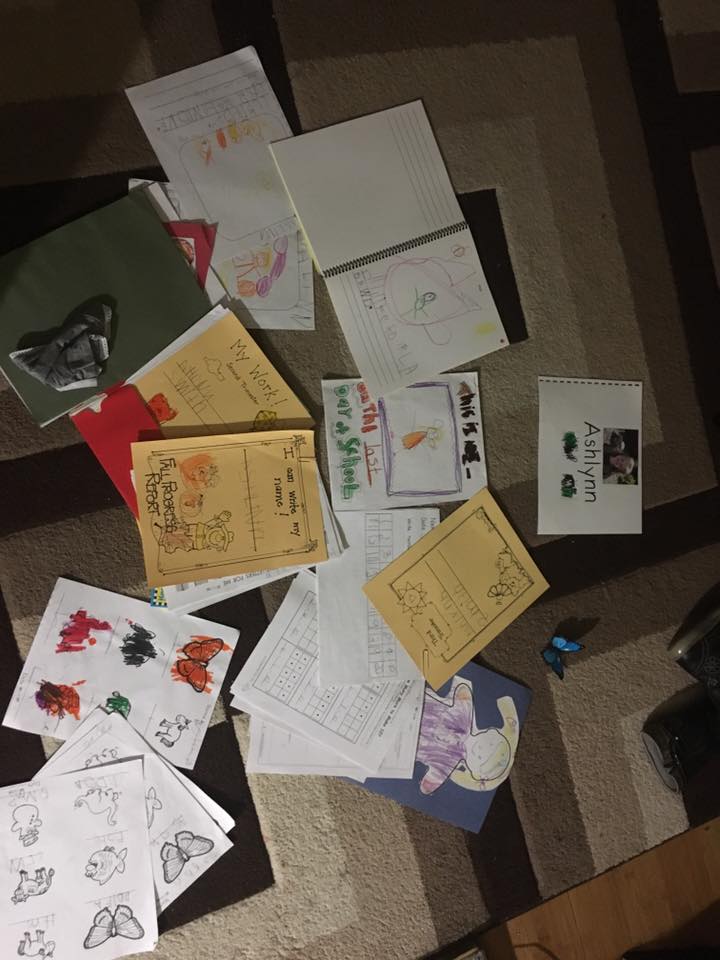
    I let it sit for awhile.  I pulled it out, but didn’t open it.  Instead I looked at the pages and pages of work sent home in her backpack that she had done from the Fall to the Spring.  Progress.  Amazing progress.  Pages and pages of hard work rested under my fingers.

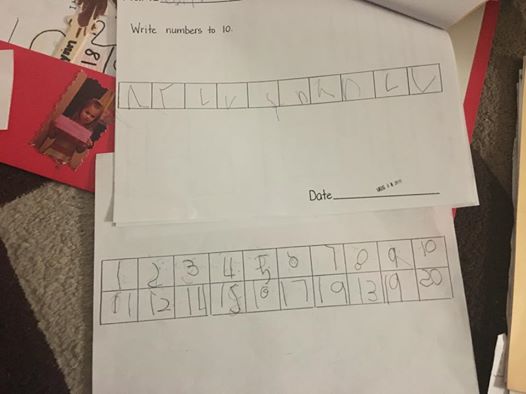
    Math:

    13256476_10207568654947057_3590974633361874637_n

    Really though, writing these numbers is not just math…it’s an occupational therapy success.  Ashlynn has just as much difficulty learning to write because of motor planning difficulties, as she did to speak.  Despite knowing how to write an S for awhile now because it’s in her name, she frequently writes a number 2.  That’s just one example of many.

    13413595_10207656395900526_6755431699833683032_n
    Everything else!


    Drawing and writing:

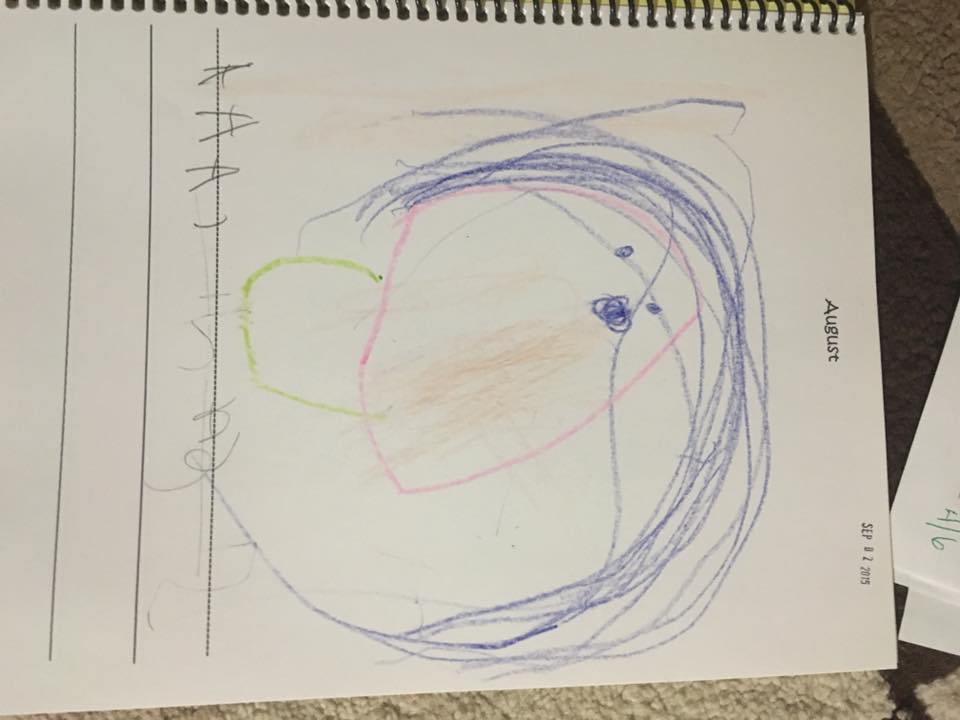
    13315720_10207656395860525_6765699865653698191_n (1)
    Fall 2015
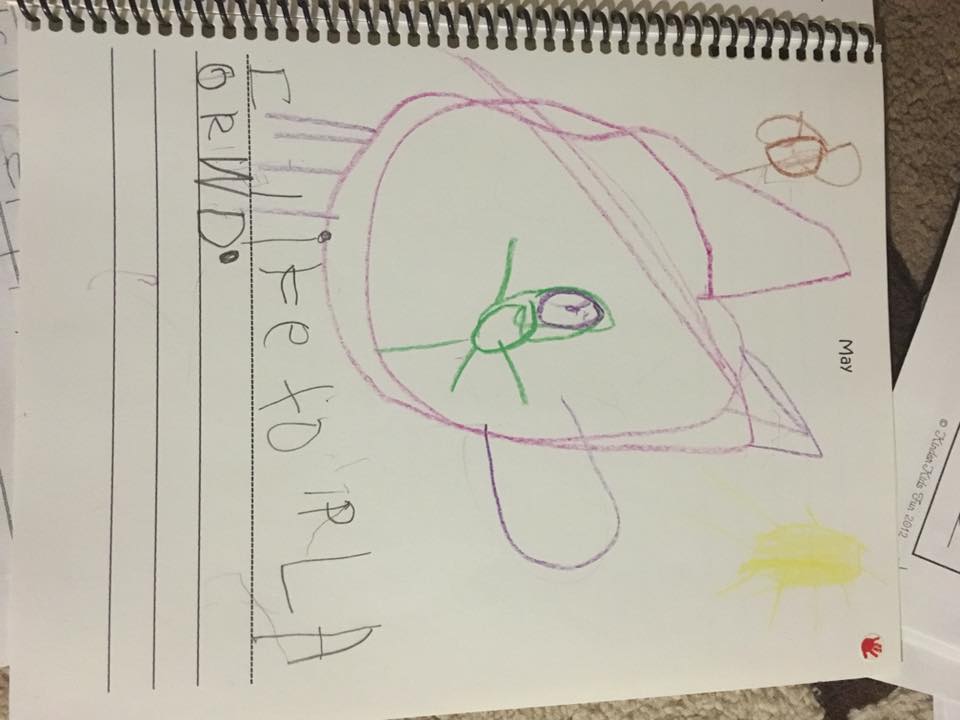
    13336000_10207656396100531_6933608185256392869_n
    Spring 2016

    As much as these pictures make me burst with pride…there is an underlining sadness….guardedness.

    When I first started as an SLPA ( Speech/Language Pathologist Assistant), one of my supervising SLP’s showed me a book.  The book described how children’s drawings correlate to IQ.

    The above pictures show Ashlynn’s progression.  Before I had Ashlynn, I didn’t realize picture drawing could be a measure of disordered motor planning  and NOT IQ…as in her case.  That last picture is after intense intervention.

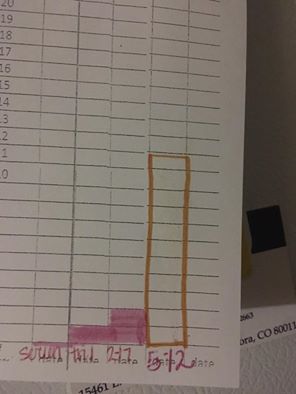
    13413616_10207656230136382_4466918719341185819_n

    This last graph looks impressive right?  It IS impressive.  However, it represents the “sight words” Ashlynn learned throughout the year.  When she started, we were still working on identifying uppercase letters, so she made progress on that…but yeah…sight words are going to take a back seat.   She is still abysmally behind where she should be….but if one considers where she has come, it is impressive.

    Ashlynn wasn’t even talking three years ago, so of course, everything else is going to take some time.  The point is though…the most important aspect is that….

    Ashlynn ALWAYS grows.  She ALWAYS progresses.  She was born behind the eight ball.  SIGNIFICANTLY behind the eight ball, but that girl doesn’t give a shit about analogies…or about pool for that matter.  All she does is: WORK

    She WORKS

    Her report card wasn’t terrible.  I really appreciated how throughout the report card they noted Ashlynn works hard and that she made great progress.  So, that’s where we are at.

    One day, when (if) Ashlynn ever reads all I have wrote, I hope she remembers this:

    You are a fighter, but not one of guts and glory, but one of understated grace.  Despite any challenge, you have never wavered from achieving your goals.  I watch you day after day and see how badly you want to read, write, draw, dance and skip.  I don’t know these things because you tell me with loud words and fists banging on the table.  I know these things because I watch  your tireless and humble pursuit of them.

    When you have earned prizes for behavior, you choose books, cards, sticky notes and journals.  You spend your time cutting and writing at your craft table, even though much of what you write is still not legible.  It never deters you.  It never distracts you from your goal.

    At night, you always have cards, papers, or books in your hand.  I come in before bed and place them on your nightstand so you have a place to sleep.  You “read” your stories to your stuffed animals that you call “friends” while your finger tracks words you still can’t read.

    While other children rejoice for the break that is summer, you ask daily when you will go back to school, to first grade, to be exact.  You cheer when I announced we would do homework every morning before we go out and play, and you diligently trace and write your name and letters, making numerous errors despite years of OT now.  I watch you smile and laugh away your mistakes, so forgiving of yourself as you smile and say “oops, I messed up. Let’s try that again.”

    So Ashlynn, if you remember anything in this life, remember where you have come and where you are now.  Remember that where you began, or even where you are at when you read this someday, is NO indication of where you will end up.  Remember that though you are small and sweet, your heart beats the beat of a true fighter.  You are courageous, strong, and brave in the most beautiful of ways.  Humble, kind, and forgiving, even of yourself…..something most adults have yet to master.

    e8a647537621d7096b7e64fa572729c2 (1)b0689e2beab31de00a70983fe49f72c1

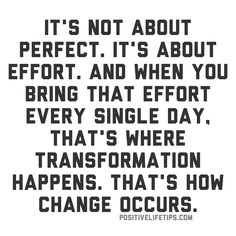
    I used to care about failing before I had you.  I was a perfectionist and never wanted to take risks.  You make me realize though, that if we don’t take risks, we never succeed either.  We merely exist.  My life is more amazing now that I take risks.  I don’t fear failure because like you, I can always try again.  Watching you go to battle everyday leaves me with sorry excuses if I don’t do the same.  

    6d6c633c476a7c44f0e5a881d701bf9d

    13238905_10207532072872528_6020557741367204394_n

    Your report card means little to me.  I’m not sure if I’m finally starting to accept the numbers or I’m just having a good night, but it didn’t ruin me like it used to.  Maybe that’s because I see you and I know you will succeed, and Ashlynn, I will do everything in my power to help you.


    db5a3e11243d5a55684eb3e41909f7fcc104cd9bb7d9b9cb431665cb4b8b511d