Category: Apraxia

  • and then…there were words!!

    and then…there were words!!

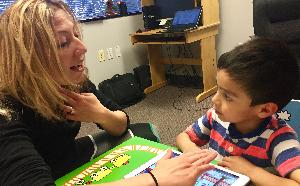
    Almost 1 year ago today, I met a three year old who walked into my office with his mother.  He had been receiving speech therapy since he was in early intervention. He had also been receiving private speech therapy from another office. Despite having no other co-morbid issues, he only had four words: Mama, O, Daddy, More.

    This child was probably one of the best and most adept mimes I have ever met! He had a ton of nonverbal sounds, a lot of jargon, and the most complex gesture system I have ever seen.  He was obviously very smart with no receptive language concerns whatsoever.  I diagnosed him with Childhood Apraxia of Speech that day and we started on a new path for this special little boy.

    Mom or Dad attended each session, and mom kept a target word list in her phone.  Grandma, a caretaker for this boy, came to one session to also learn and observe.

    Almost 7 months of intense therapy, this boy reached a point of therapy where I usually start to see carryover into spontaneous speech.  I waited for a month, but he still refused to try without a model or cues from me first. He largely remained nonverbal.

    I started to get worried. He has NO other problems aside from verbal apraxia.  Why wasn’t he transferring what he could do??  Maybe I should refer him on.  I’m not sure I’m helping him.

    I waited another month.  This was in December and I remember because I told mom I was sure we would start to see carryover soon, and I remember her saying it would be “the best Christmas gift ever.”

    Christmas came and went.  He still wouldn’t talk outside my room.  My heart was sad. I wasn’t helping him.

    I waited another month.  He could imitate everything I said. Actually, he could independently say most of his target words.  Yet he wasn’t. I was so sad I didn’t make good on her Christmas wish. Why wasn’t he doing it anywhere else??  Another month came and went.

    I decided to give him some real “counseling” sessions.  I was talking to a 3, almost 4 year old, and it’s hard to gauge what they understand, especially if they are nonverbal; but I decided to try.

    “Alex.  You have to take a risk.  Do you know what that means?  It means you have to try even though it’s scary.  Even though you think you’re going to get it wrong, you have to try….and Alex, if you JUST try, I promise, I promise,  I will be here to help you if you say it wrong. Okay buddy?  Listen, I can’t  be with you all day and help you talk.  I can only do it here.  The rest is up to you.  You have to be brave.  You have to go out there and try to talk and you might mess up, but that’s okay, okay?  Sometimes we mess up.  It’s okay to mess up, but I need you to try!”

    I said something like this, or the equivalent to this for three sessions straight.  It seemed to be going nowhere…..

    Until…..

    One day…. it did!

    His mom came in with new words he had said on his own that she had saved on her phone.

    “He was at his brother’s soccer game and said, Go Matthew!”

    I smiled so big.  Oh man.  In my profession, it doesn’t get ANY better than that.  He FINALLY took a risk.  He finally transferred all the blood, sweat, and tears he had been practicing with me.

    I shook him. I praised him.  I probably even danced a rain dance.

    “Alex!!!  You TOOK a risk!! You tried to talk without me and LOOK!  You did it!  I KNEW you could do it.  You’re so brave.  I’m so proud of you.”

    The words have kept pouring in after that.  Every session now is something new.  New words and phrases on mom’s phone.  Reports of

    “He’s imitating more”

    “He’s trying to say everything we say”

    “He argued with his brother for the first time ever”

    I live for that moment.  I live for those reports.  One week there were no words, and then one week, all the therapy paid off!

    That doesn’t mean he’s exited from speech.  He isn’t.  There are more sound and sound sequences left to go, but it’s different now.  He and I both know he will achieve them now, and he goes out and tries to say them all without me.  He won’t earn an award for this achievement. Everyone will just see a boy who is talking.  What’s the big deal?

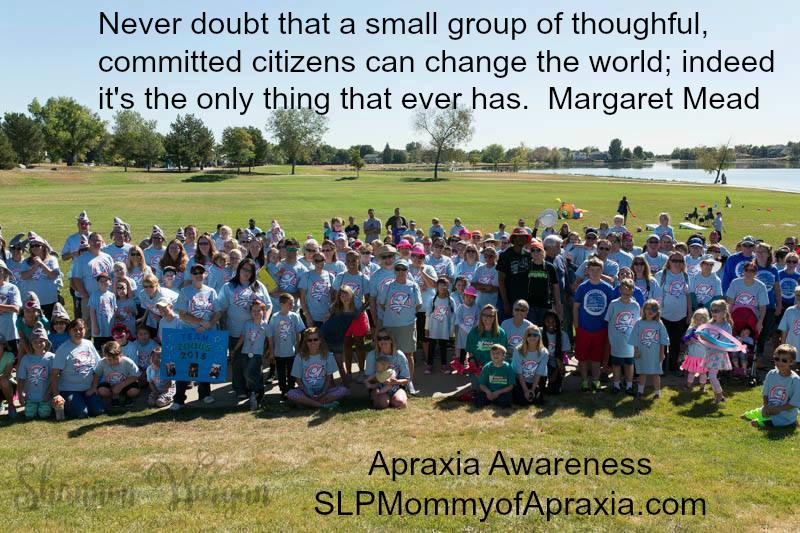
    I’m lucky because I’m also the walk coordinator and I will be able to call his name and put that medal around his neck and award him for all of his hard work.  I will be able to personally tell him I SEE him,  I RESPECT him, and I’m PROUD of him for doing the one thing everyone takes for granted:

    SPEAKING

    Every Child Deserves a Voice


  • It’s rare, so no one cares?  Prevalence of CAS

    It’s rare, so no one cares? Prevalence of CAS

    What’s that?

    If you have a child with CAS (Childhood Apraxia of Speech), you have heard this question once, twice, many, numerous, too many times to count in the course of their life.  We all have developed our standard answer since we are prepared for the fact that no one knows what apraxia is.  This sadly does not just include the general public.  We run into this with doctors, teachers, professionals, and yes, some parents have even reported getting this question from Speech/Language Pathologists!

    I am a self-declared Apraxia Advocate and the reason I’m so passionate about awareness is because with awareness comes proper diagnosis, and only after a proper diagnosis can the child get proper treatment.  Only with proper diagnosis will we understand additional learning difficulties that may arise from this disorder; which means we will be better equipped to understand how they learn differently and tailor their educational programming better to fit their needs.

    We say that CAS is a rare and severe speech disorder.  We convince ourselves people don’t know about apraxia because it’s so rare, and sometimes, I think we all start to accept nothing will change.  Afterall, it only affects 1-2 children in every 1000.

    I certainly have my down moments where I have thought this, but it actually has never deterred me or stopped me from my efforts.  I’m preparing for a presentation in July for the CASANA conference, and something made me look up prevalence rates of other disorders.

    Have you ever heard of Down Syndrome?  Are you reading this thinking what a silly question? I’m willing to bet 99% of you have heard of it.  It’s covered well in graduate school for speech, and usually every school setting has at least one child with DS in the building.  At the very least, most teachers, educators, professionals, and most of all therapists have heard of Down Syndrome.

    Would it surprise you then if I told you the prevalence rates for Down Syndrome are 1-2 children in every 1000 births.  Sound familiar?  Maybe that’s just because I just wrote that figure for CAS.

    I actually started to get worked up.  Wait a minute.  What is wrong with this picture?  That can’t actually be right can it?  I thought to my own personal experiences.  At one school building I have two kids with DS and in a second, I have one.  At one school building I have two kids with apraxia, and at another I have two as well.

    Wait, so how is it EVERYONE it seems has heard of Down Syndrome, but no one ever seems to know what apraxia is?  Oh friends, this bit of data has now only strengthened my resolve.  At one point, somewhere, I’m sure Down Syndrome was a rare disorder too that no one had heard of.  Oh friends, we need to step up our game.  We need to stop accepting that no one will ever know or care about apraxia (oh fess up!  I know we’ve all been there at some point). The it’s rare so no one cares attitude is not acceptable anymore.

    We have to continue on!  I saw this the other day and absolutely loved it.  I can tell you I know many apraxia walk coordinators nationwide now and we all have this in common.  Every person counts.  Even one more person who knows what apraxia is, is a victory.

    Let’s stop thinking rare=unknown, because it’s not true.  We only need to look at the Down Syndrome Community to prove that point.

    It’s time to make our collective voices louder.  Join your local walk, educate the community around your child; remember, every person counts.  CAS was only accepted as a real and distinct disorder in 2007, which really wasn’t that long ago….but the point to remember is that it IS a real and distinct disorder and our children DESERVE to have professionals in their life who are as familiar with apraxia as they are with Down Syndrome, don’t you think?

  • She speaks for herself this 5th Apraxia Awareness Day.

    She speaks for herself this 5th Apraxia Awareness Day.

    I remember being in 1st or 2nd grade, the age Ashlynn is now.  I was always struggling to fit in.

    There was a girl in our class who had special needs.  I remember she wore this heavy, pink, furry coat and she talked with slurred speech.  She would sit outside, even on the hottest of days in that coat.  Usually, she was by herself.  I don’t remember how it came out, but my mom told me one day I should spend one recess a week with her as she must feel so lonely because she didn’t have anyone to play with.  I looked at her like she MUST be kidding.

    “Mom!!  I can’t sit with her!!!” I remember saying imploringly.  I knew she might be sad, but that would kill my chances in the “fit in” department.

    “Well, Laura” my mom would say, “I hope one day when you are lonely, the same kindness you showed will be given to you.”

    Ugghhhhhh

    There it was, the Catholic guilt, and can I just say it’s a thing and it works?

    So, there I went….every Thursday I think, and I sat under this tree she liked to sit under and we played jacks.  I remember her laughing and smiling, more than I had ever seen her; and instead of feeling good I was being kind to someone and making their whole day if not whole week, I was so consumed with worrying how I would be perceived and if the kids would thrust me to the position of outcast because I was playing with one.

    How awful is that?  I would like to remind everyone I was 7 or 8.  It’s not a memory I am  proud of, trust me.

    I think of that girl a lot since I’ve had Ashlynn.  Ashlynn ( I don’t think) has ever been an outcast.  That girl makes friends everywhere.  She has not come home crying because her feelings have been hurt.  Even when she had few words, she was one of the most social people in the classroom.

    Ashlynn though cannot stand for others to be alone.  She just simply will not have it.  She thinks nothing of needing to fit in, or worrying about how she will be perceived.  If someone is alone, it simply must not be.

    I relayed a couple months ago about the boy with autism who started her school two months ago.  I just happened to be in the lunchroom when he was sitting by himself and the girl with apraxia of speech yelled (literally) across the lunchroom and told him to come sit by her.  I just met his parents this weekend at the school carnival and they said this boy comes home daily and tells them Ashlynn is his best friend.

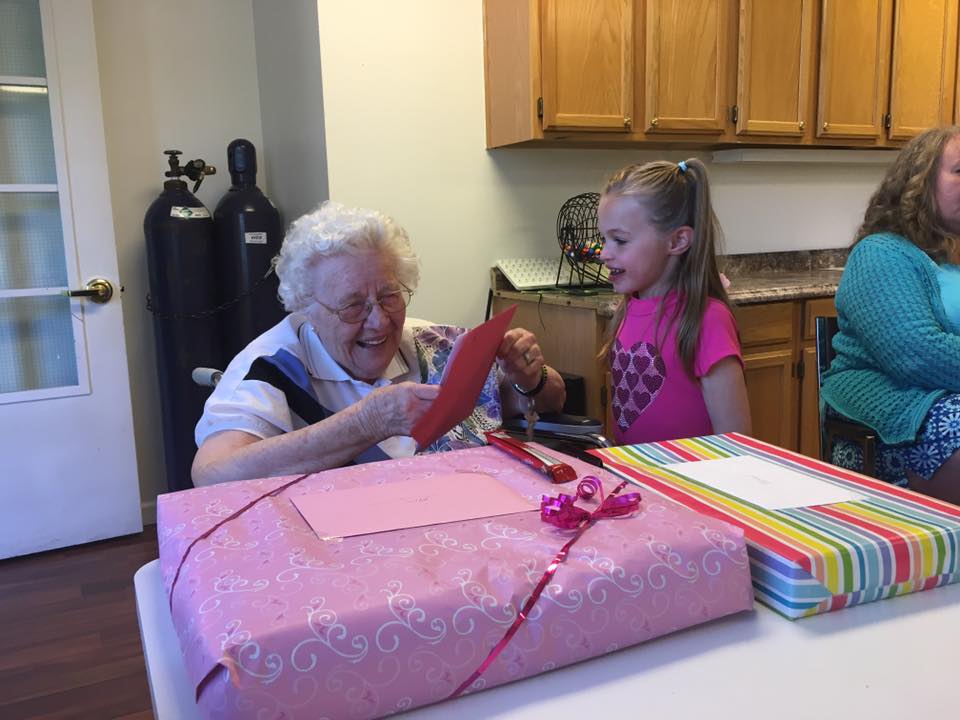
    Ashlynn with my Grandma Louis (her Great Grandma Louis)

    This weekend we went for Mother’s Day to visit my grandma, (Ashlynn’s Great-Grandma) in the nursing home.  A resident named Mary sat outside the activity room smiling, and literally looking longingly from the outside in.  Before I knew it, Ashlynn was out in the hallway talking to her.  My sister calls it “spreading her sunshine wherever she goes.”

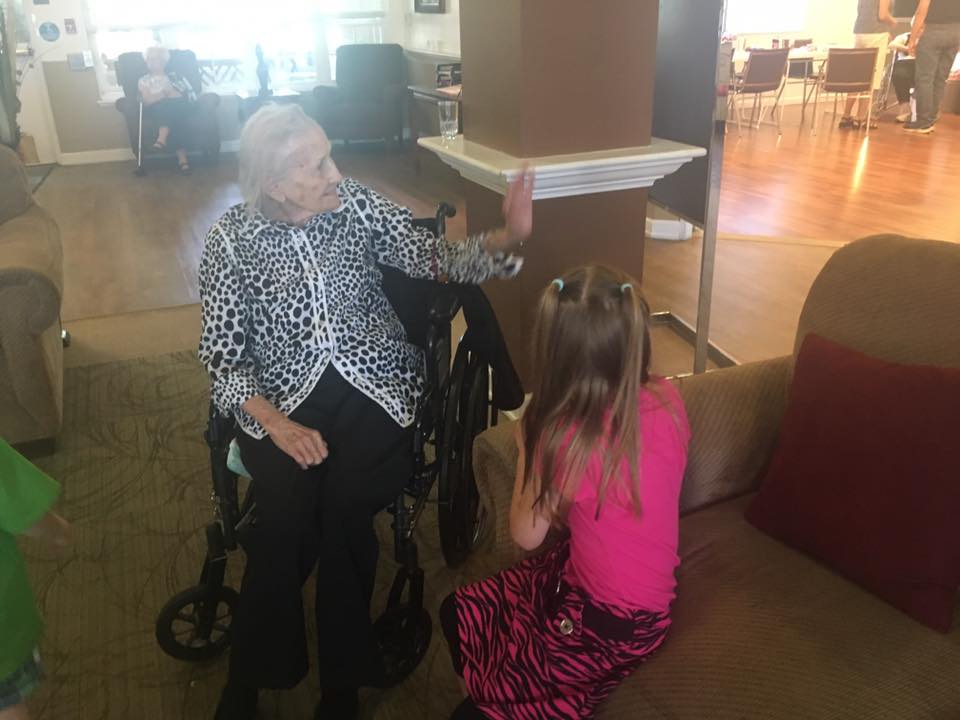
    She had the woman smiling and laughing.  They read a poster together, and then Ashlynn did some OT with her and had her putting her hands in the air and out to the side.

    Ashlynn playing “OT” with the resident.

    At one point I just stared out into the hallway.  I was thinking of how when I went out of my way to be kind and offer company to a person who was lonely, I only did it because I was told to and I wanted someone to be nice to me if Karma ever bit me in the butt….and I’m looking at my own child, who I have never instructed to play with the lonely, and she seeks them out and brings them joy not because she has to or because she was told to….but because she genuinely WANTS to.  You can see, it feeds her soul.

    I will get comments that I am raising her right, but honestly, she teaches me more than I think I teach her.  I was feeling rather uninspired this #apraxiaawarenessday until I saw her at the assisted living facility and I realized….

    Though Ashlynn can now communicate with words, they are still not easy to come. I’m not sure if it is because she has apraxia, but Ashlynn speaks the language of emotion, love, and nonverbal communication.  She is most certainly a healer, seeking out the broken.  She will never make honor roll for this amazing human quality and talent, but it is most certainly a skill most people (like me) would benefit from learning, and she has it naturally.

    I used to use Apraxia Awareness Day to prove how my amazing daughter was because she couldn’t speak for herself.   This 5th Apraxia Awareness Day, I don’t need to prove who Ashlynn is to anyone.  She is quite capable of doing that now all on her own and she still doesn’t need words.  I feel blessed and often unworthy of being her mother.

    As night falls on this 5th Apraxia Awareness Day, which also happens to fall on Mother’s Day, I want the world to simply know Ashlynn is so much more than her apraxia, and I don’t have to prove it anymore.  If you are around her for 5 minutes and are really looking, you will see for yourself.  Before I knew about apraxia I quoted on facebook lyrics from Martina McBride’s song “In My Daughter’s Eyes.”   I had a different frame of reference before apraxia entered my life, but now I realize, apraxia changed nothing.  It’s all still as relevant and true as it was then as it is now.

    As I put Ashlynn and my son Jace to bed tonight I told each of them individually on this Mother’s Day, “Thank you for making me a mom.”

    Happy Mother’s Day AND Apraxia Awareness Day

    In my daughter’s eyes,
    I am a hero,
    I am strong and wise,
    And I know no fear,
    But the truth is plain to see,
    She was sent to rescue me,
    I see who I want to be,
    In my daughter’s eyes
    In my daughter’s eyes,
    Everyone is equal,
    Darkness turns to light,
    And the world is at peace,
    This miracle God gave to me,
    Gives me strength when I am weak,
    I find reason to believe,
    In my daughter’s eyes
    Everyone wore blue for Ashlynn (but Ashlynn).  She did have mismatched socks (pure Ashlynn), and one of them was blue 🙂   Thanks to all of her supporters.
    o   
  • A Gift of Speech Printables Giveaway!

    A Gift of Speech Printables Giveaway!

    Today I’m featuring A Gift of Speech’s Shannon Archer!  Included in this bundle will be THREE separate activities you can print out and start using!

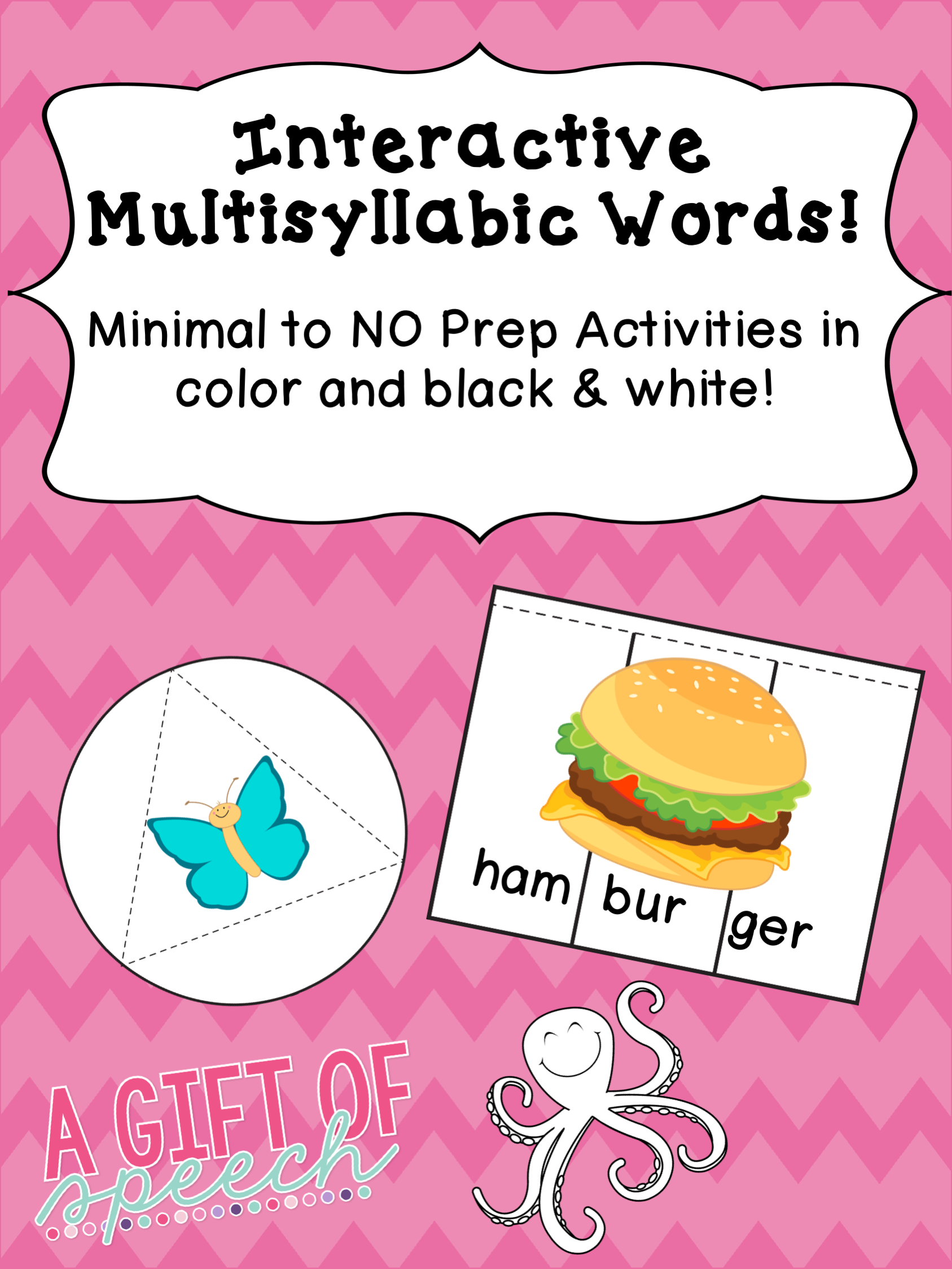
    Interactive Multisyllabic Words! Minimal to No Prep Activities in color and black & white! Practice multisyllabic words with multi-modalities: visual, auditory, tactile, verbal, and FUN!

    Activity include 23 pages of interactive activities to practice multi-syllabic words!

    This activity was created to help work on multisyllabic words in an interactive way. There are 3 and 4 syllable words included in this practice. This activity includes:

    1. 20 interactive pages 10 in color and 10 in black & white. There are 24 different multisyllabic words in these pages (3 and 4 syllables). The activity was designed to use backward chaining or syllable build up. Thus the syllable divisions might look different. This is to account for the coarticulation in the words.
    2. 2 color pages with images and syllable support dot with the words.
    3. 2 different crowns to cut, color, and practice with.
    4. Circle interactive cut, color, and fold pages (which includes 6 multi-syllabic words).

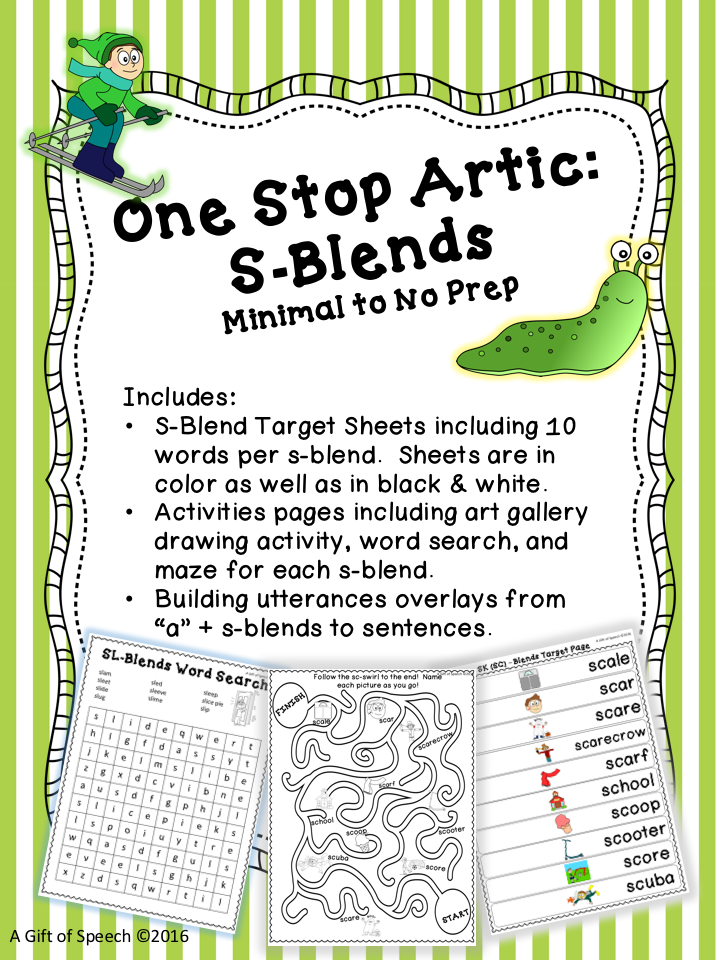
    The One Stop Articulation activity for s-blends includes activities for practicing s-blends. We start with a target page including 10 words for each blend sound (sk, sl, sm, sn, sp, st, sw). Then there are 3 activity pages for each blend. There is an overlay to support movement from the s to the following consonant blend sound as well as coarticulation and increasing the length of utterance. This activity include no-prep and minimal prep activities for articulation practice.


    Expanding Utterances was created to help with building utterances (MLU). This is perfect for working with individuals with CAS, articulation disorders, or expressive language disorders. This activity combines a subject, verb, article/preposition, and object to create phrases and sentences. You can start with “bunny”, “a bunny”, “see a bunny”, “I see a bunny”, and then to “The girls saw the bunny”.

    The subjects include pronouns and basic subjects. The verbs include 8 basic verbs in present, present progressive, past, and future tenses (look for more verbs coming soon). There is a set of 3 articles and 12 alternative words (prepositions and some prepositions with articles). The Keep Talking 1 comes with 23 cvcv words, 40 multisyllabic words (CVCVCV and CVCVCVCV), 38 plural multisyllabic words, and 16 trochee words. The parts of speech are color coded (modified Fitzgerald key) for additional cueing. Also included are blank color coded cards so that you can make your own words. I use this system with the created object cards as well as mas produced articulation card sets. There are full color and find and color activities to add some fun.


    a Rafflecopter giveaway

  • Anything but Silent book review

    Anything but Silent book review


    17895894

    I’m continuing on with giveaways leading up to Apraxia Awareness Day on May 14th! Today I am reviewing the book ANYTHING BUT SILENT by Kathy and Kate Hennessy.  Kathy Hennessy is the mother to Kate who has pure CAS and another son Andy who has global apraxia and SPD.  Kathy is also the educational director at CASANA!

    The book rotates chapters from Kathy’s point of view to Kate’s point of view.  First of all, I just have one piece of advice: if you are a parent or professional

    READ THIS BOOK.

    READ THIS BOOK!

    Yes, people.  It’s that good.  I read it in one night!  I couldn’t put it down.  I laughed, I cried, but mostly I related.

    It starts with the diagnosis:

    “I decided that day I could beat myself up about the unfairness of life or I could educate myself and help my daughter move her own mountains.”

    I could not have said it better.  This is EXACTLY how I felt.  How I feel! Kathy wasn’t kidding either.  She’s now the education director at CASANA (apraxia-kids.org).

    It captures the need for others who are going through the same thing:

    “What I needed at this point in my life, more than anything, was another parent, and that was the one thing I couldn’t find.”

    I can’t even imagine.  My fellow women I have met through facebook are my saviors.  Seriously, I don’t know what I would do without them.

    They capture the fears at simple holiday traditions:

    “When you have someone in your family with childhood apraxia of speech, things that are everyday occurrences for other families are moments for you that aren’t very normal at all.”

    She’s referring to the tradition of seeing Santa.  Kathy would fret and worry that Santa wouldn’t understand them, among other things.  Let me tell you, EVERY mommy of apraxia has been there.

    From fighting insurance companies, to therapy sessions as a lifestyle, these two amazing women tell their incredible story and as Kathy puts it, “Today both kids are doing great and I’m still standing.”

    This story was inspiring beyond my wildest imagination.  I can’t believe I waited this long to read it!  Read it people!!  That’s my review.  You won’t be disappointed!

    *This post contains affiliate links*

  • Speech Stickers App review and Giveaway!

    Speech Stickers App review and Giveaway!

    Next up in the May Giveaways to celebrate Apraxia Awareness Day May 14th is an app I literally use every week called Speech Stickers.  Carol Fast, the creator, is awesome, and she’s always updating this app with more sounds and combinations.

    Speech Stickers is the first app that I downloaded for Ashlynn (my daughter with apraxia) when she had first turned three.  I chose it because it was cheap, and said it was developed for children with apraxia.  The app is simple in design with not a lot of bells and whistles; however, my daughter loved practicing her speech with this app.

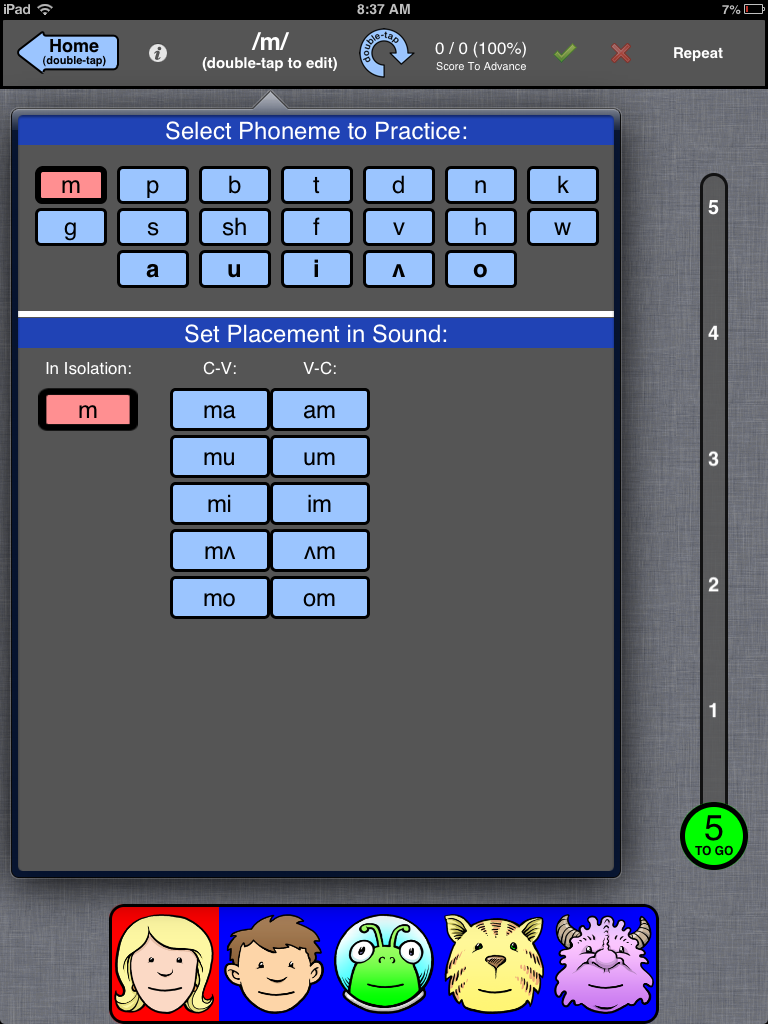
    The app is set up for kids in the very early stage of apraxia therapy.  The child can practice sounds in isolation and in CV(consonant-vowel) and VC(vowel-consonant) combos. The app is based around blocked practice with a lot of repetition that is necessary for apraxia therapy.

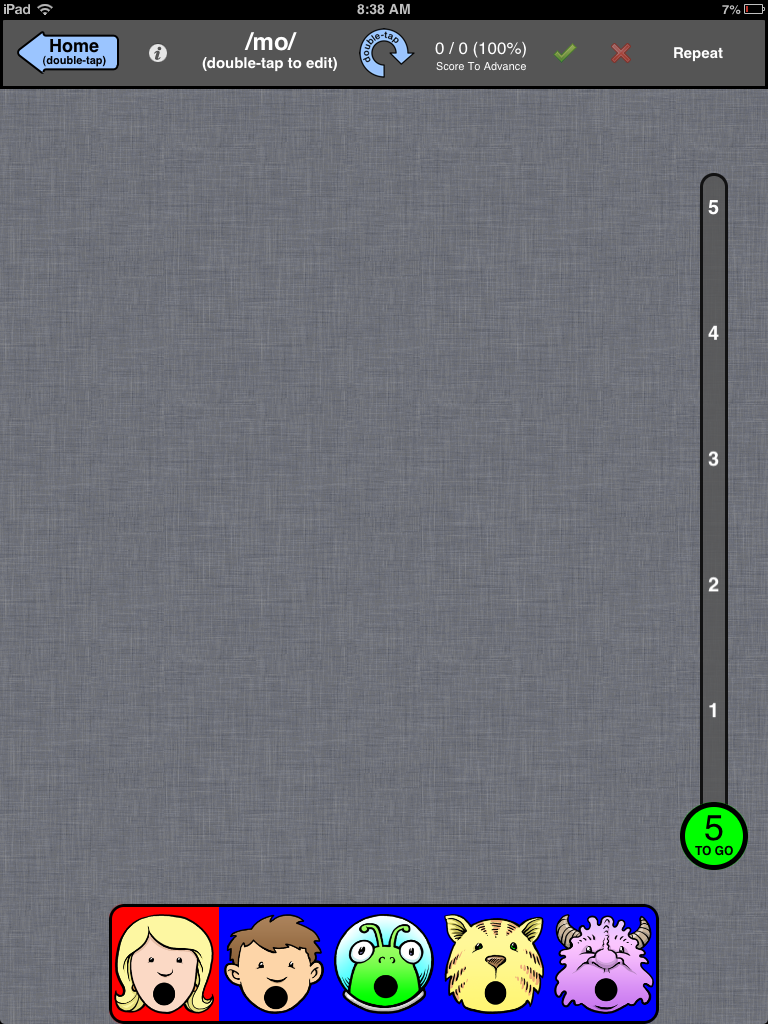
    After you pick your sound or sound combo, you can then decide how many times times the child has to say it before they get a “sticker” or a little animation as a reward.  Then, the child chooses between five characters on the bottom, all of which have a different pitch to their voice.  This is a bonus too, because children with apraxia have difficulty with “prosody” or the melody of speech.  The characters’ mouths model the correct placement.  The above picture is showing ‘m.’  Below the characters are modeling ‘mo.’ This is also great because it gives the kids a visual cue for the correct mouth posture.

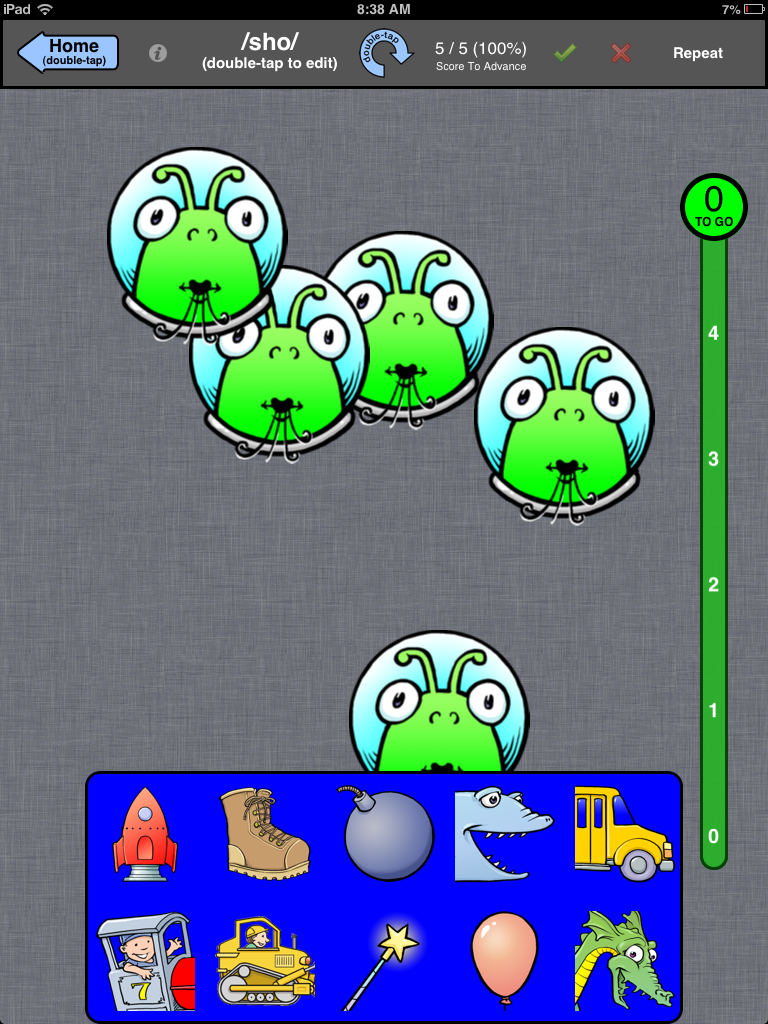
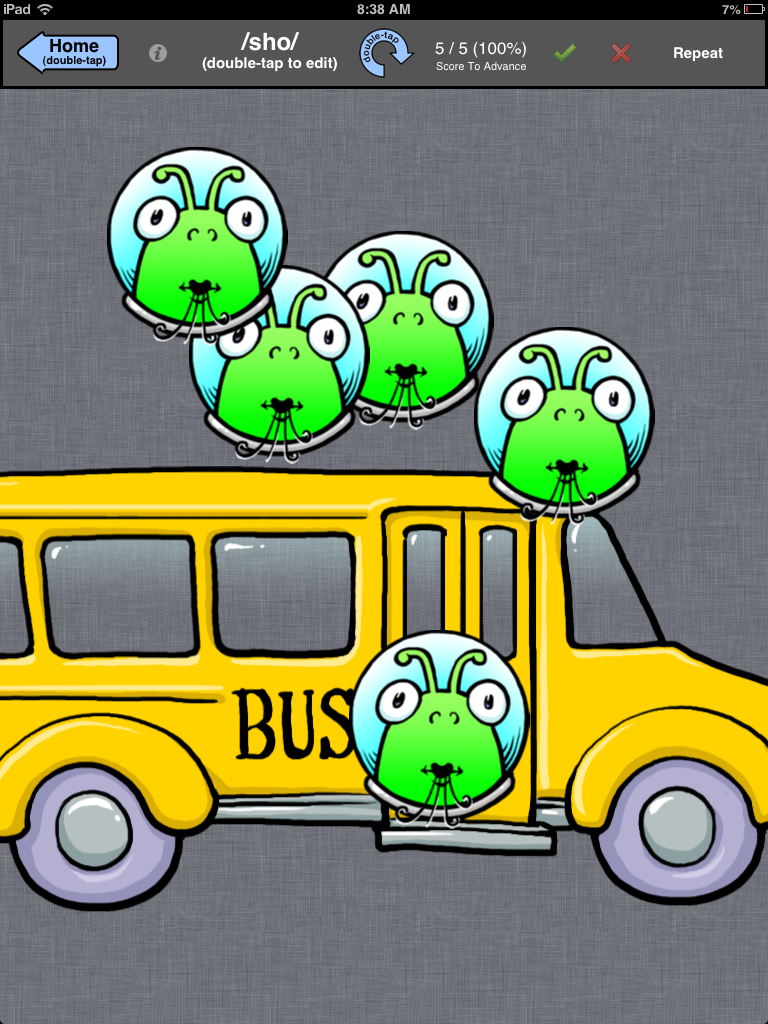
    A scoring bar at the top help score and keep track of data. You must press the green check or the red x to move onto the next practice sound.  The app is designed so that the bar can also turn upside down so that the therapist can discreetly score; however, my daughter picked up on this in a heartbeat and would push the buttons haphazardly just so she could move on!    Once you reach the set number you earn a “sticker” or reward.  You can choose from eight stickers seen below:

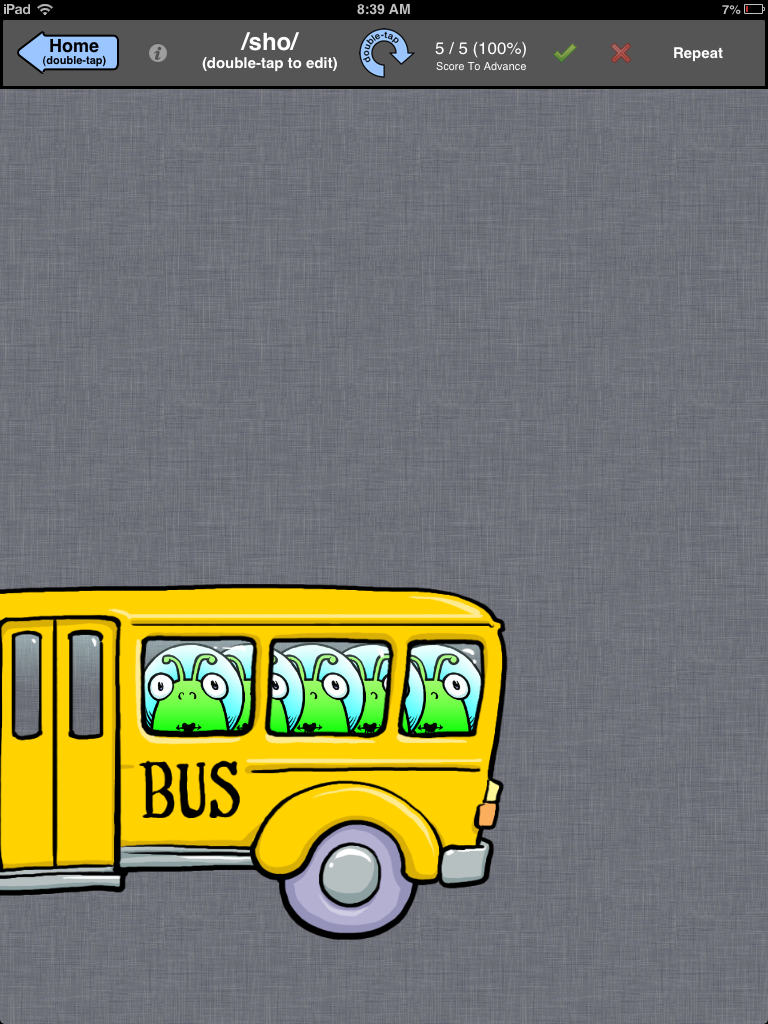
    They are so simple, but my daughter loved them.  I chose the bus just so you can get an idea of the animation.

    It has been almost three years since I have used this app for Ashlynn, but the app lives on with all of my clients!  Kids of all ages and disabilities LOVE this app.

    I have a 5th grade boy with Down Syndrome who laughs every time he earns a sticker and watches the animation.

    I have a 3 year old who loves picking the alien because it reminds him of a popular TV show right now “The Octonauts!”

    I could go on!  Really, I can’t say enough about this app, and when I reached out to the creator Carol Fast MSPA, CCC-SLP I realized why this app is soo good.  Here are some comments from her:

    “It’s truly been a labor of love for me and I’m always gratified to find that other SLPs appreciate what we do. I’m glad that you found Speech Stickers to be helpful for your daughter and other students.  I work mostly with preschoolers and have found a special interest and passion in my little nonverbal CAS kids. I really love helping find their true voice. This is probably the most rewarding work I’ve done in over 30 years as an SLP.”

    Thank you Carol!  Thank you for your passion for working with kids who have CAS and for a great app that allows us to get a lot of repetitions of targeted syllable shapes in a fun and engaging way for the kids.

    To Enter: Use the rafflecopter widget below to enter.  Good luck!

    a Rafflecopter giveaway