Category: apraxia walk

  • Why would anyone CHOOSE to coordinate a walk.

    Why would anyone CHOOSE to coordinate a walk.

    I am the current walk coordinator for the Denver Walk for Apraxia of Speech, benefiting the Childhood Apraxia of Speech Association of North America.

    Before I was walk coordinator, I was merely a first year participant who had signed my family up to walk for my daughter Ashlynn.  I remember signing up at the very last minute right before the T-shirt deadline.  I did this, despite knowing about it for months before; because I wanted to make sure nothing else more important came up.    It didn’t, so in 2014, we attended the Denver Walk for Apraxia.  I had no idea what to expect.  I just figured it would be some boring walk around the lake, but it would benefit CASANA, and that would be a good thing for awareness.

    I do remember receiving emphatic emails from the current coordinator about raising money, everyone donating even just five more dollars etc etc, for us to meet our goal.  She had a goal of 30k and I’m pretty sure they met it that year.  I never asked for donations or solicited anyone outside our immediate circle despite this.  I honestly figured, what could my meager attempts do? Leave it to the big wigs and people with connections to bring in the money.

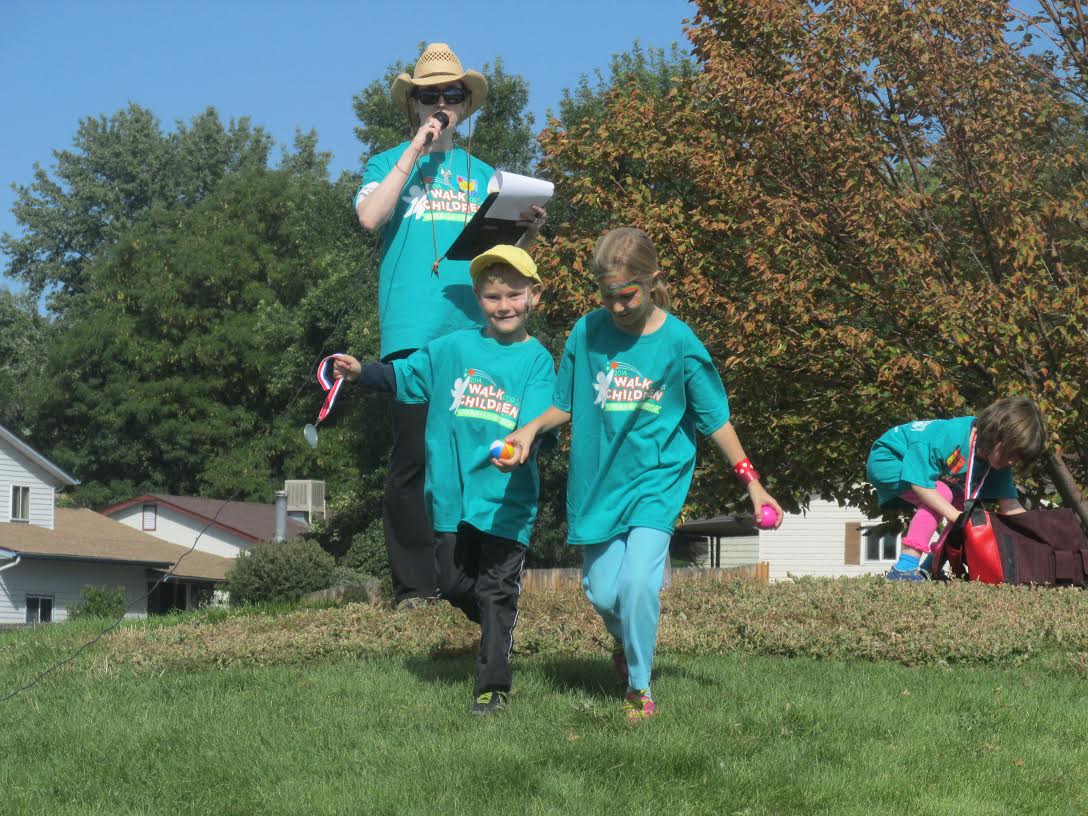
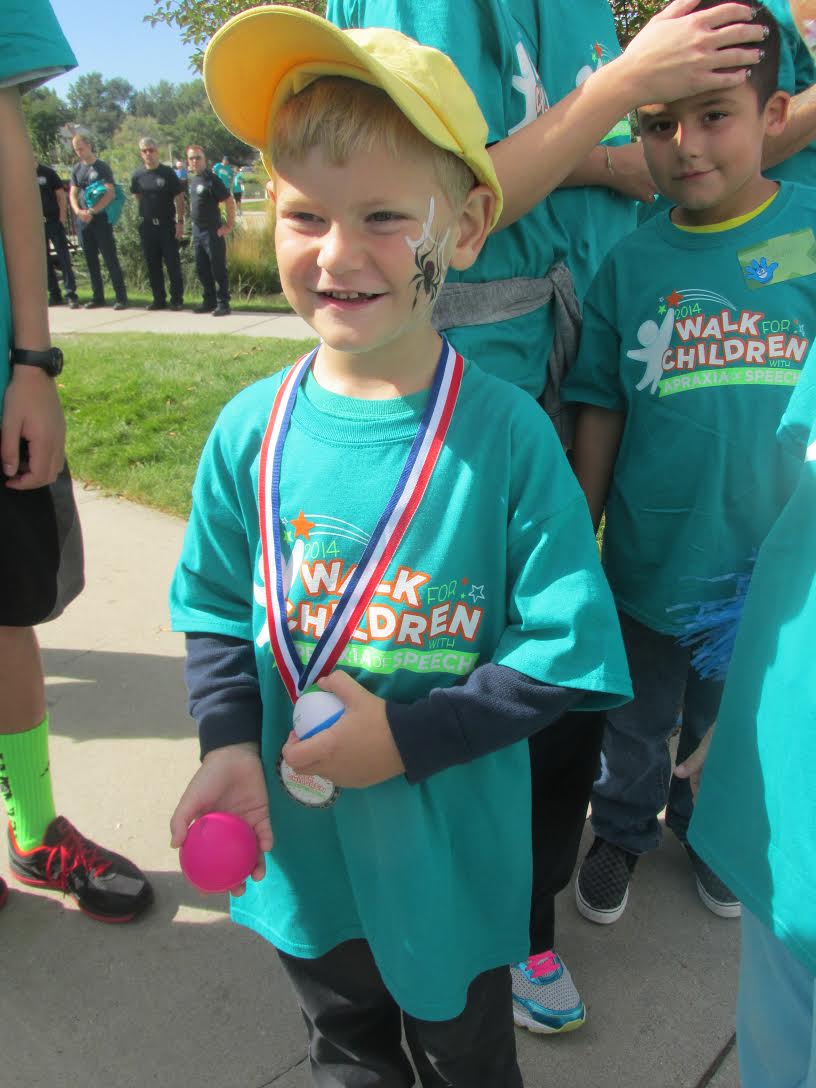
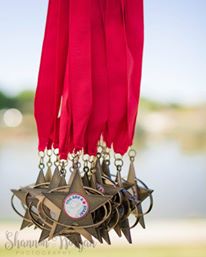
    The walk was AMAZING.  I had NO idea Ashlynn would receive a medal in a medal ceremony, or that there would be activities beforehand that would be fun.  I WAS on the email lists telling me this stuff, but for some reason, I must have missed them.

    After that walk though, I couldn’t imagine Ashlynn not having another.  The previous walk coordinators were stepping down after 7 years or so, and they were asking for new volunteers.  I did actually read these emails, but I just assumed someone else would take the place.  I seriously had no buy in, and no culpability.

    Come February or so of 2015, I was talking to Sharon Gretz, the executive director of CASANA, and through the course of the conversation I realized there wasn’t going to be a Denver walk that year.

    What???? I inquired.

    Well, the previous coordinators stepped down, and there is no one to run it, was the answer.  If someone doesn’t step up soon, there can’t be a walk this year since planning needs to start months in advance.

    Shit.  In that moment I KNEW I had to do it.  The experience had been SO amazing for Ashlynn and our family that I couldn’t imagine her not having that again.

    I’m already stretched super thin.  I have this desire to be as involved a mom as possible while being an SLP.  I’m working at my children’s school during the day, and then working nights and weekends so my children can be with their father when I am not there.  How on EARTH would I plan a walk?  Screw it.  Minor details that don’t matter because apparently if I don’t, the walk won’t happen this year.

    I pitched it to my husband.  The answer was pretty much…

    NO

    Without going into detail, his reasons were valid.  He knows me and he knows I would devote all this time and energy I already don’t have into this.  Long story short and many compromises later…I ended up being the Denver Walk Coordinator last year.  I originally began not feeling any particular commitment to it, other than making sure Ashlynn was honored as she was the year before.  I hate to admit my husband was right, but the Type A in me started whispering to me that I can’t have my name attached to an event and not have it be the best I could do.

    To make a walk happen is fairly easy.  Set the date, secure the place, tell your immediate people about it, sort the walk day materials for the small gathering, and you’re set.

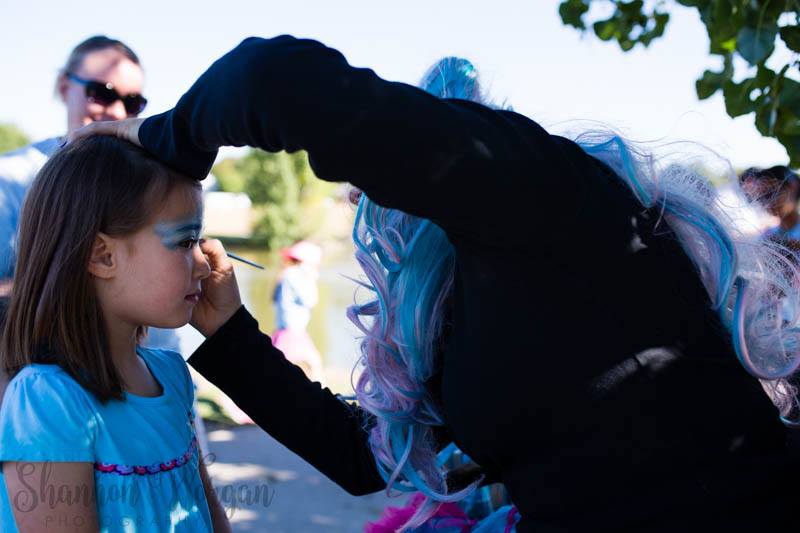
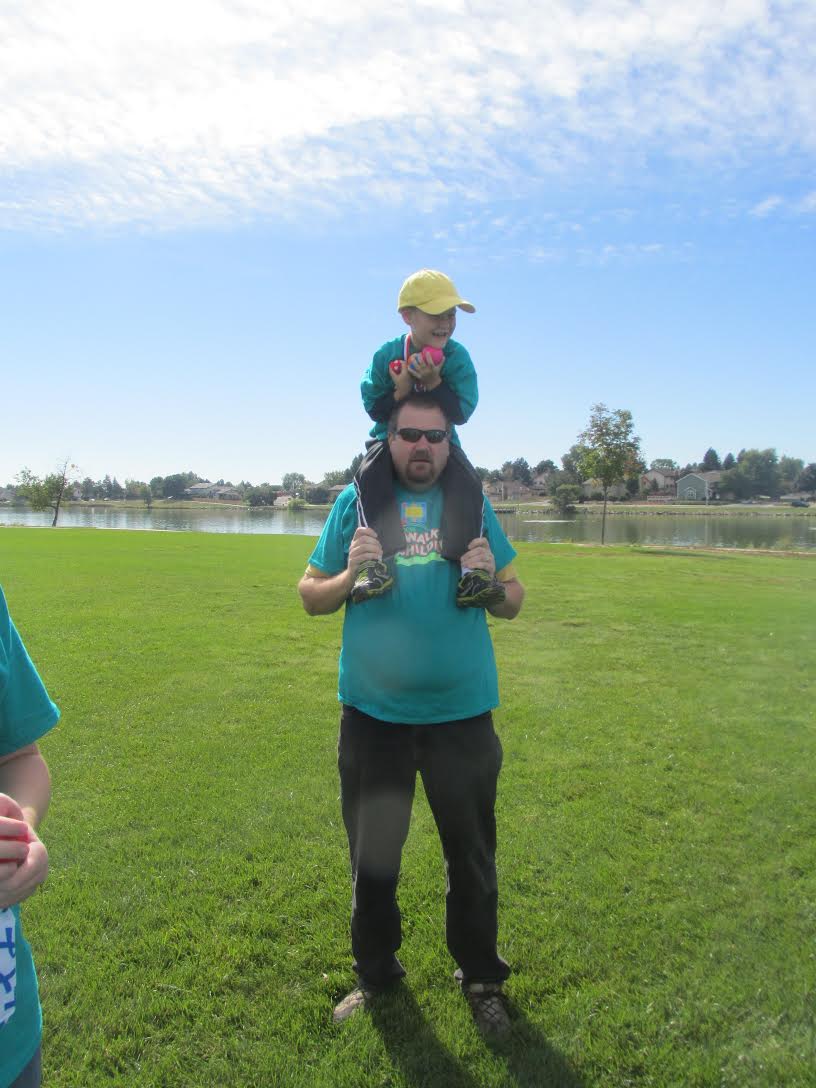
    To make a LARGE walk happen, and a walk I felt I could be proud of, takes WAAAAYYYYY more work.  I decided I wanted food at my walk, I wanted entertainment and family fun.  I wanted the award ceremony to be powerful so I wanted music. I wanted the day remembered picture perfectly, so I wanted a photographer.  I wanted the kids to have fun, like at a carnival, so I wanted games, and clowns, and characters.  I didn’t want people to be bored, so I wanted activities.   12079720_10205988736930094_3556973707872741955_n 12079199_10205988758250627_1805454580116476736_n12036832_10205988733009996_8087247006347836086_n
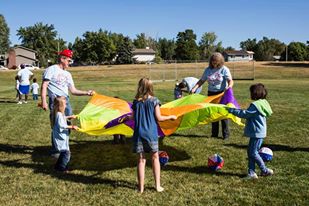
    I didn’t want people to be hungry or thirsty, so I wanted food and beverages.  Oh, and I wanted to make more money for CASANA so I wanted an awesome raffle table that would entice people to buy more raffle tickets with all proceeds going back to CASANA.
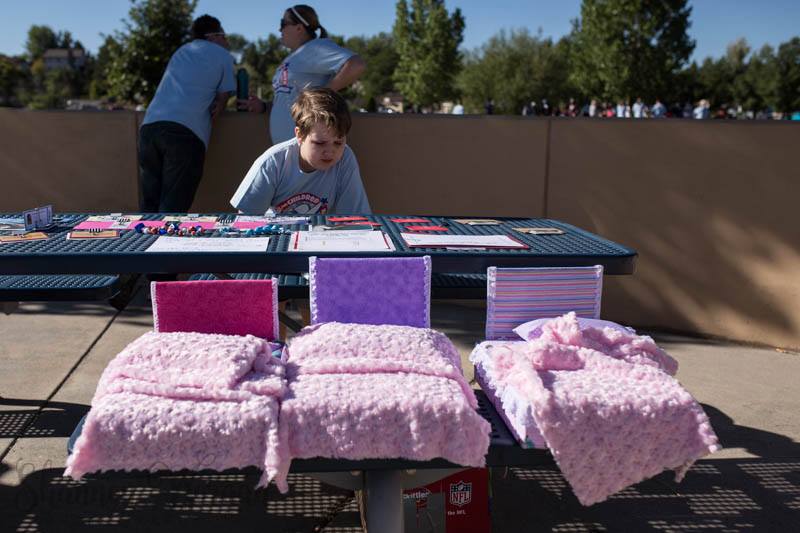
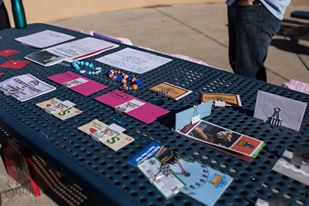
    12046758_10205988709929419_7409534962478059863_n 11224422_10205988709289403_4134373610276734910_n

    Oh, and in the middle of all of it, I became 100% committed to CASANA.  They keep their staff small and centralized to Pittsburgh, and rely on the help of walk volunteers around the country to raise their money.  The reason for this, is to maximize the amount of money raised going directly BACK into the community to help our kids via research, iPads, grants for speech therapy etc.

    I realized I wanted to help maximize their goal.  CASANA was life changing for my family.  I needed to raise enough money so they are life changing for as many families as possible in my position.  It literally becomes an obsession and a vocation.  I went from only caring about honoring Ashlynn, to making sure I raise enough money to help every kid and family possible affected by CAS in North America.  I’m not exaggerating people.

    THIS is the job of a walk coordinator.  It is soooo much more than just organizing a walk that gives everyone warm and fuzzy feelings.  You become so personally invested.  You can’t understand why people register late.  You can’t understand why people don’t make it their priority.  You can’t understand why people are only peripherally involved.  You can’t understand why people don’t understand they need to register.  You can’t understand why people are okay with buying shirts from other people to attend your event. You become SO obsessed with not only helping your own child, but realizing how much your own child benefited, that you now want to help EVERY SINGLE child who has struggled like your own.

    Oh, and might I add, it’s easy to do when you know the staff at CASANA.  As a walk coordinator, you become personally involved with them, and by personally becoming involved with them, you realize even MORE, if you didn’t before…….how this non-profit you are out raising money for, is truly staffed with selfless people.  You hear these horror stories on the news all the time of executive directors taking thousands of dollars in profit from the “non-profit.”  Not true at CASANA. You learn what these people make and I honestly think they SHOULD be making more for all the hours they put into this non-profit.  When you, in your heart, believe, like I do, that the staff at CASANA (all of them) should be making more than they earn because they truly EARN every single penny…..you are ALL IN.  Every single dollar counts.

    I wish I knew that my first walk.  I thought I was a peon.  The money I could bring in meaningless.  People, as walk coordinator, I have literally organized fundraisers that only made $50.  When I think of the amount of time and effort it took to set it up and to try and get people to go, and in my mind, we are still $50 closer to our goal, I ASSURE you, any and ALL efforts you make to get donations or to fund raise are appreciated.

    13321888_10207635409695884_4197158479487794822_n 13394212_10207692288717824_5946356672679042491_n 14034705_10208822638900855_2719801703149357701_n

    This year, Denver is  currently ranked 5th in terms of number of participants out of 90 walks…but barely making the top 20 in money earned.  I’m pissed about that.  We have so many teams, why isn’t the money matching that?  Can you believe this keeps me up at night?  I literally make NO money doing this.  That’s how much I believe in CASANA.  Can you believe I’m not the only walk coordinator who feels this way?   I know the other walk coordinators via a facebook group.  All day long people post things they are doing to help CASANA, or what places they are calling and emailing trying to get donations to make the walk the best it can be.   Mind you, these are ALL volunteers working for FREE because that is how much they appreciate and believe in CASANA.  We are all people willing to work for free, lose sleep, and possibly go on anxiety medication (lol) because we want every cent possible to go back to CASANA.

    Last year I posted why people walk.  This year I wanted you to know why I am a walk coordinator.  It’s not for money or recognition, let me assure you.  It’s because I believe in the organization I am representing.  It’s because I love what they stand for, and I love what our children will take away from the walk that day.

    It’s because EVERY CHILD DESERVES A VOICE.  I would appreciate any donations to the walk.  85% of every dollar goes directly back to helping kids when you support the non-profit CASANA.  They are amazing and a worthy cause.  I can’t say enough. If you are so moved, the link is included below.

    http://casana.apraxia-kids.org/site/TR?fr_id=1932&pg=entry


  • To tell or not to tell……..your child they have apraxia of speech?

    To tell or not to tell……..your child they have apraxia of speech?

    I see a question that gets asked a lot.  In fact, I asked it myself.  It usually goes something along the lines of,

    “Did you tell your child they had apraxia?  If you did, how did you say it? What did you say?”

    I remember thinking when I first saw this question that I wouldn’t tell Ashlynn until way later….and then…maybe if she still seemed apraxic, I would tell her.  I didn’t want her to feel different.  I wanted her to know I believed in her and I wanted her to believe in herself.  I wanted her to know that she can do anything anyone else can do.

    Yep.  That was my stance…..

    Until,

    Sharon Gretz, the executive director of CASANA answered someone’s question.  She made so much sense, I couldn’t help but immediately question my own decision.  She told this parent that it’s important kids know from an early age what their problem is, so they have a name for the difficulties they are facing. Providing a name empowers the child because they realize their struggles are due to something that is real.  In this way, they have a name for the struggles they are experiencing, and don’t develop their own schemas about it.  These schemas anyway, are usually negative and may include: I’m stupid, I’m dumb, or, I’m different.

    Aren’t we as parents the first to tell anyone who questions our child’s abilities that they are smart??  Aren’t we the first people to defend their honor?  What do we use an excuse?  Well, we explain apraxia don’t we?  We defend our children’s honor by labeling them.  Right?

    So, why wouldn’t you offer that SAME defense to your child?  You’re the first one to say your child is smart. I’m the FIRST one to say my child is capable.  If I, if you, truly believe this; can you really think your child doesn’t know they are different?  Do you really think that, or are you just hoping they don’t know?

    I have a feeling it’s the latter.  I have this feeling, because I have hoped the same thing.

    Truth is, Ashlynn has always known.  I remember when she had JUST turned three and was put in preschool as a nonverbal child, the teachers reported she would just laugh when they asked her to do something.  I could see it in their eyes:

    Low cognition
    Poor comprehension

    However, I knew….I KNEW as her mother, that Ashlynn laughed as a coping mechanism because she couldn’t do what was being asked.  It didn’t matter if it was speech or otherwise.  Ashlynn has GLOBAL APRAXIA, meaning overall motor planning difficulties. It didn’t matter what they asked her to do, she couldn’t do it…so…she laughed.

    Every heard of emotional intelligence?  My daughter has it in spades.  If you haven’t, it’s because we live in a society who only values academic intelligence, completely ignoring the fact that a genius who can’t relate to people or get along with people can’t be successful in life.

    No.

    I’m ever so thankful I read that post and the response from Sharon.  Before I was even sure my daughter knew what I was saying, I told her she had apraxia.  Whenever she even remotely paused and looked upset, I would tell her “oh dangit.  That darn apraxia!”

    If you have read my blog for awhile, I talk about apraxia being the new stuttering.  Back in the day, no one wanted to tell a child they stuttered.  Surely they didn’t notice, so you didn’t want to draw attention to it.  Years of research later, low and behold children who stuttered DID know they were different, and instead of understanding their disability, they developed shame.

    Shame is a bitch.  Shame develops when you feel as though you have done something wrong.  If we don’t talk to our kids about apraxia, we risk them feeling ashamed of it.  Apraxia is NOTHING to be ashamed of.

    That leads me to my final thought.

    The walks for apraxia taking place around the country.

    I recently learned so many people think the walk is about awareness.

    I mean, I guess.  I can see that.  Certainly a part of the walks is about awareness.  Publicity leading up to the walk and various news stories all bring awareness and awareness is very good.

    However, it may surprise you to know, especially from me, that the walk itself has very, very little to do with awareness in my eyes.

    The walk, in particular, the medal ceremony, has EVERYTHING to do with honoring our children.

    No shame.

    We HONOR them for their struggle.  We HONOR them for differences.  We HONOR them for their perseverance and hard work..

    We HONOR them.  We RECOGNIZE them.  Their family and friends HONOR them.  Their therapists HONOR them.  We all honor them, because despite the odds, they persist and achieve.  We recognize their achievement in spite of apraxia, and they can feel pride, not shame.

    Even if your child is considered “resolved,” I would urge you to rethink your stance on not telling them. People………..they KNOW.  They may not know what apraxia means, but they know they aren’t like other kids. They know they are different.

    On final thought.  A label should never be used an excuse and trust me, our sweet babes are smart enough to use a label to their advantage.  I’ve definitely heard a story or two about, “oh I can’t do that because I have _____.”

    On the contrary, it’s a teachable moment to say, “It makes it more difficult for you, but YOU are capable and I believe in you.”

    If you don’t believe me, ask my daughter some day!  We are obviously an atypical family because I specialize in apraxia so I see kids all day with apraxia and of course Ashlynn has it; however, my youngest son asked me why he DIDN’T have apraxia.  lol.

    No shame in this house.  Only knowledge…and knowledge is power.

    14067711_10208822639500870_2427710843928303952_n
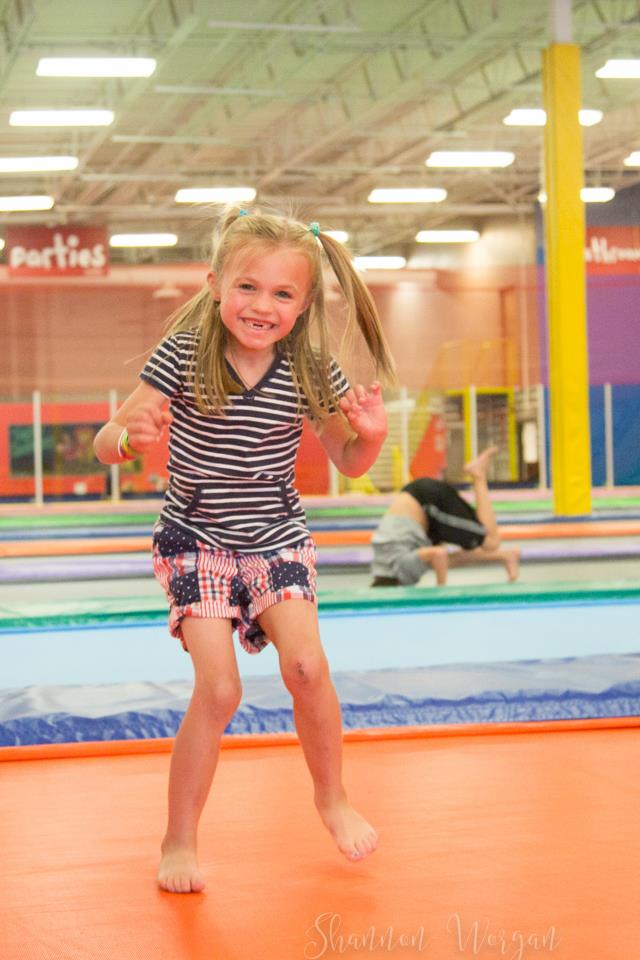
    Jumping her heart out at a fundraiser for the Apraxia Walk


  • Our kids need to meet others just like them.

    Our kids need to meet others just like them.

    This 4th Annual Apraxia Awareness day (it was trending, did you hear?), I organized a fundraiser at a local Chipotle to benefit the Walk for Childhood Apraxia of Speech.  I have a HUGE goal of 30K.  The walk last year made 16K, so basically I set this goal to double that.

    I’m probably crazy, but I set that goal with good reason.  That number ensures a visit for a free parent seminar given by the executive director of apraxia-kids.org (CASANA).  I was the lucky recipient of her visit one year and it was amazing.  The previous walk coordinators had amazing connections and one coordinator raised thousands of dollars just from his connections.  I don’t have anywhere near those connections, so I’m trying to do more fundraising activities to help raise money and get us closer to our goal.

    We had a really good turnout yesterday, with around 50-60 people gathering in South Denver.  One mom even drove close to an hour and half to be there, because she wanted to meet other parents in her shoes going through the same thing.  Social media has made it so we can connect with other parents and families, but of course, there is something different to have a face to face connection with a person who truly “gets” you.

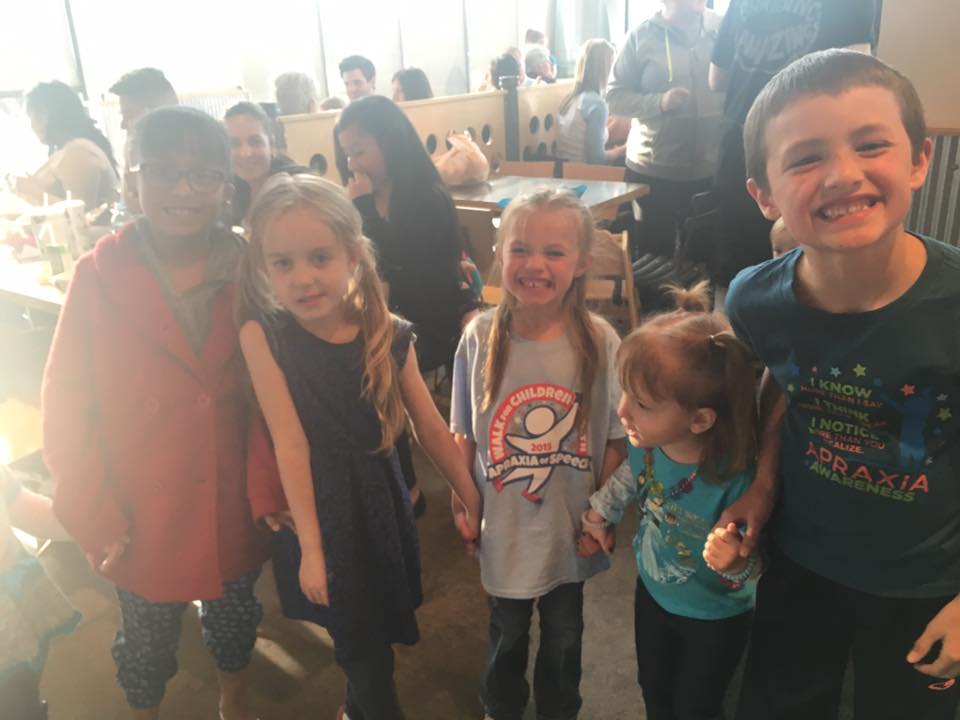
    Last night was interesting, because the kids with apraxia seemed to become instantaneous friends.  You could honestly not help but notice them gravitate to each other and form an immediate kinship.  They were holding hands and had created their own “walk for apraxia” by walking continuous circles around the tables. There was chatter, but there was more laughter, smiles, and pure happiness.

    13178924_10207483206930910_8066579104130304150_n
    Ashlynn holding the 2016 Colorado Proclamation declaring May 14th Apraxia Awareness Day in Colorado

    I was surprised to see a bossy side to my daughter Ashlynn.  Most girls her age have a bossy side, but Ashlynn is always the follower at school.  She has friends and is well-liked, but she is far from being a leader.  You wouldn’t have known it last night.  She was telling people to hold this hand and to walk this way.  She was sweet and smiling of course, but still bossy.  I told one young client of mine to tell her stop being so bossy.  He looked at her and told her “no” through a smile, and she laughed and moved on, only to return again requesting him to follow her.

    The mother of a second grade client came up to me and told me that her son listened attentively to all of the kids and had a look on his face that seemed to say “ohhhh, I get it.”

    And that’s when it dawned on me.  Here we all were, parents, networking with other parents.  Happy to talk and chat to others going through similar experiences.  An instant friendship is formed between the parents.  Without saying anything, everyone seems to understand you so perfectly, and I realized…as I watched smiling face after smiling face, and small hand locking another small hand……that the KIDS had formed their instant connections too.

    A famous actress Gage GoLightly shared a facebook post spreading apraxia awareness thanks to my friend and fellow apraxia advocate Michelle Leigh who discovered it on wikipedia and succeeded in bending her ear.  Anyway, her post outlined how she grew up with apraxia and dyspraxia, but implored people:

    If you know someone in school, or work who has apraxia, or dyspraxia- make today the day to reach out and just talk to them. Underneath everything in the end we are all just people. We all have our unique challenges and special qualities that make everyone incredible. Love and acceptance are what make this world beautiful. Reach out and be apart of the beauty.

    I realized it’s important these kids meet other kids with apraxia.  That they not only meet them, but get a chance to interact with them.  We need it, why wouldn’t they?  I love a quote by C.S. Lewis I reference frequently in my apraxia journey:

    friendship-is-born-at-that-moment-when-one-person-says-to-another-what-you-too-i-thought-i-was-the-only-one

    No one could deny the instant connection these children had.  lt made me realize they need to get more opportunities to meet others who have the same disability.  It was absolutely beautiful to witness.  I wish I had taken more pictures.  I probably only captured a third of the kids holding hands with each other.

    13174133_10207483211571026_2836952414490607233_n

    I’m urging you all for so many different reasons to get out and support the walk, go to the walk, and participate in the fundraisers.  It’s for so much more than raising money.  If you don’t believe me, just look at the smile on your child’s face when they can also finally meet another and say without words, “me too.”  As Gage said, “reach out and be part of the beauty.”

  • Walker Spotlight: An SLP shares her view on why she walks for her clients AND a bigger cause, by Lynn Zimmerman

    Last fall, I attended the 2owen014 Denver Walk for Apraxia with a client and his family. In my private practice, I have the privilege of working with many children with CAS and appreciate deeply the work of the CASANA community. Walks such as this, are a beneficial experience to share as a Speech professional with the community of families connected to the cause.
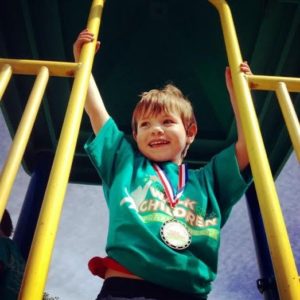
    As Speech Language Pathologists, we dedicate hours, weeks, and sometimes years to developing and nurturing a working relationship with each client — focused on maximizing the child’s communication potential. However, within such relationships, there is rarely opportunity to bond with a client without a progress-centered agenda. Participating in Denver Walk for Apraxia gave me a chance to share leisure time with a long-term client and his family. With no speech drills to practice, we instead spent the morning in the beautiful Colorado sunshine. Charity walks are occasions that, on the surface, raise money and awareness for a cause. But to a child, too young to understand the mission, the event is a celebration of their hard work.  It’s a party full of hope and excitement. As a professional, it was heart-warming to share with a client and family how much the community supports and embraces them.

    These charity walks draw in hundreds of cheerful, open-hearted people to a festive day in honor of families living owen 2with unique circumstances. To these families, who can come to feel isolated, such an event is a tangible manifestation of how supportive and optimistic the world can be. It is an opportunity for children, like those we see on our case-loads, to have fun amidst a friendly gathering in celebration of those on a common journey. Every day, parents strive to balance their child’s intense therapy schedule, frustrating social interactions, sibling relationships, and much more. But, at the event, I delighted in seeing parents bond as peers over their shared experiences and mission.
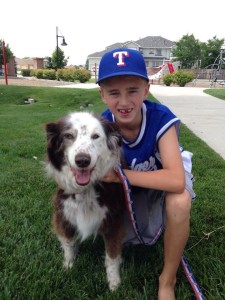
    While spending time with my client celebrating a charitable mission, I reflected on the idea that, as health professionals, the focus of our practices is on enhancing the lives of individuals. On this single-child basis, working with an SLP can be life-changing but a charity walk is an opportunity to further that statement by standing up on a larger scale for the global community of children like those we help. Donating to a charity that supports research and advocacy for people with communication challenges is a chance to help not just one child at a time, but to promote hope and long-term change in the scope of the cause.


    Lynn Zimmerman MA,CCC-SLP is the owner and primary clinician of Cobblestone Speech Language and Learning LLC, a Littleton, Colorado based pediatric Speech and Language private practice.

  • Apraxia Walker Spotlight: My renewed faith and hope in my Shining Star by Jenny Boncich

    It goes without saying that all my babies are amazing and wonderful!  It’s true. When11694302_10207014452382957_1967691699_n I delivered my 3rd child, I didn’t know it at the time, but I had just given birth to a star!  A shining STAR!  I know, I know, every woman believes her child is a star!  But the kind of star I am talking is pretty special.  My son Mark was born with Childhood Apraxia of Speech (CAS).  CAS is a neurological motor planning disorder.  In a nutshell my son’s brain isn’t able to send the right messages to his mouth, lips, cheeks, jaw, or tongue; so he has great difficulties in executing intelligible speech.  His words are understood by only about 65% of unfamiliar listeners.  In addition to coordinating his speech, our son also has great difficulty globally with his body movements.  That means he struggles with coordinating all of his body, and that just plain SUCKS!
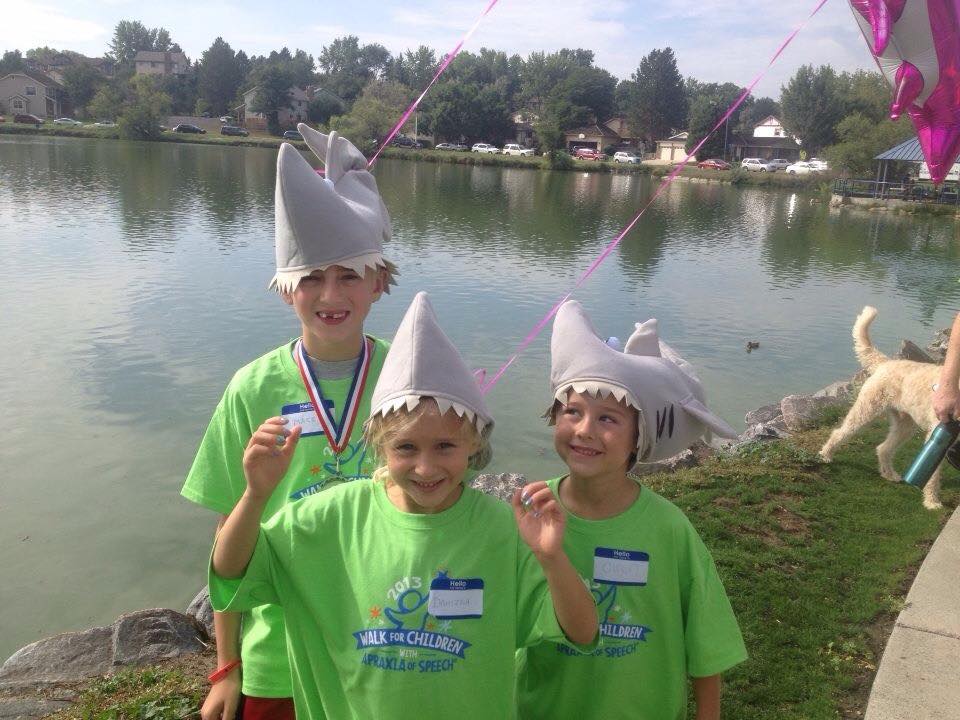
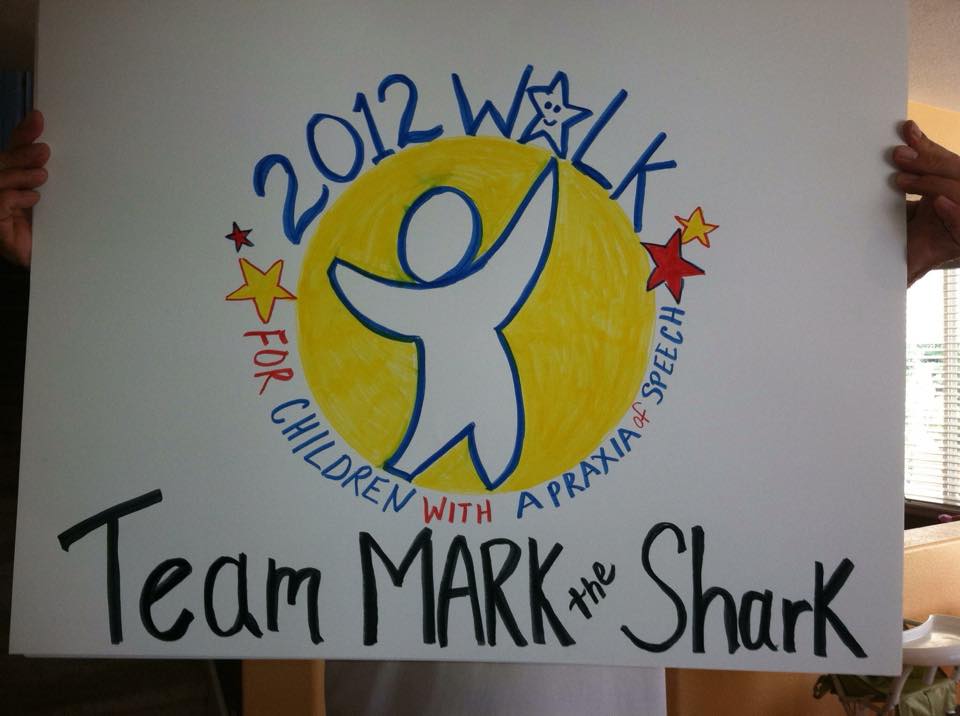
     

    At about two years old I noticed the beginning of Mark’s symptoms.  No babbles, not walking, etc. I turned to our pediatrician and as much as I loved that man he didn’t have a lot to offer.  A doctor is supposed to know EVERYTHING!  What the heck was I to do??  Oh yeah… GOOGLE THAT S*$%!!   I surfed the web hour upon hour upon hour.  I was in the fight or flight mode.  I needed to put on my suit of armor and begin the good fight!  In doing so, I stumbled upon CASANA.  Thank God I did!  As I began reading the family start guide I just kept nodding, “yep, that’s Mark.  Uh huh that’s Mark. Why yes….that’s my kid!!!!  I took all the information I had devoured and went back to our pediatrician with the diagnosis.  He was as humble as he could be and said, “You’re onto something here!” He even let me wear his stethoscope for a few minutes, as it was I that delivered the diagnosis (I’m just kidding). Over the next couple of months, together we started making the necessary appointments to have him professionally diagnosed by starting Speech Therapy and Occupational Therapy.

    What got me through those first few years were other parents of children with apraxia, my rock solid husband and friend, and CASANA.  It felt good to know I wasn’t alone in this journey.  There were other families out there enduring the same things. What helped me get through this were other Facebook groups. I became educated and encouraged.  It wasn’t long before my family began participating annually in CASANA’s awareness walk.  I really looked forward to CASANA’s annual Apraxia walk, as it was a time we celebrated Mark and all the hard work he done throughout the year. We walked with our family and friends and it felt GREAT!  It was Mark’s day to SHINE like the star he is.

    11693048_10207014452622963_642304763_n

    However…..

    The years have continued to come and go.  My son is now 11.  We have climbed many MOUNTAINS.  We do live in Colorado so that isn’t too amazing.  However,

    I’m not talking about a 14’er.   I am talking the things most of us parents of typical children take for granted.  Crawling, walking, babbling, cooing, coloring, writing, potty training, tricycles, 2 wheeled bikes, blowing bubbles, buttoning, zippering, tying shoes, play dates, sports, and singing.  The list is literally ENDLESS!  Every single thing has been a CHORE for my child.  And I began to get really pissed off about it.  It began to sink in that this was a more severe diagnosis then that of most children. I saw many of the kids that I first met on walks beginning to resolve the issues they had with Apraxia, while my son continued to have such slow progress. It all became too much. Denial after denial from insurance companies, and then ultimately thousands and thousands of dollars in private speech therapy, battle upon battle in conference rooms during our annual IEP meetings fighting for what seemed to be so obvious in what he needed and deserved, the constant stares from strangers, one even asking, is he death?”  (Wanting to say, “No, he’s alive…oh, did you mean deaf?”)  But instead answering kindly,  “No he’s not deaf but we use sign language for expressive communication and…..blah…..blahhhh, blaaahhhh!”

    UGH! “Make it all stop!”  I would scream in my head!  It was obvious that the once very optimistic part of me gave into the GREAT APRAXIA MONSTER, and I became a very cynical, defensive and angry woman.  I actually withdrew from the people and things that once made me feel like we were not alone.  Last year, I purposely and proudly boycotted the Annual Apraxia Kids Walk.  There take that!  I am done.  I’m going to take our toys and go play somewhere else.  Very immature, I know.

    That is until I was fortunate enough to come across a very well written blog from a woman I had sat next to in one of CASANA’s conferences.  The one in Denver a couple of years back.  I remembered her because I thought how LUCKY her daughter was in having a mom who was an SLP!!  If you’re going to have an Apraxia diagnosis, how blessed to be born to a mommy who knows how to help you from the get-go!

    I began reading Laura’s blog about how she and her daughter Ashlynn got to go to a book signing.  The book was about a woman wrestler.  A BEAUTIFUL woman wrestler, Ronda Rousey, who not only wrestled in a ring with opponents, but that also once wrestled with WORDS!  The book was written about a famous person.  And this person once had APRAXIA too!  As I was reading the blog, I could literally feel the excitement and passion Laura had experienced in her meeting with someone that once had what our children are struggling with.  She overcame Apraxia, and then went on to lead a very successful life….despite her early struggles with Apraxia.

    And that’s when it happened.

    Because of this one very simple, loving, blog I began to cry. TEARS?  Yes Tears! And lots of them!  Happy ones.  Because it set in motion a familiar feeling in my stomach, like that of a roaring fire. A roar that made this mom want to start fighting the good fight again! That post not only helped me regain faith, it also restored hope in the fact that my son will someday resolve his struggles with Apraxia.

    Thanks to Laura’s enthusiasm spilling over and onto me, I am VERY proud to say, “WE ARE WALKING” in CASANA’s walk this September.  We have invited our friends and family to once again rally around our SHINING STAR and make the day all about him.  We look forward to celebrating his amazing resilience, stamina, and success.  I can’t wait to get TEAM MARK THE SHARK back on the track… in oh so many ways!


    11655524_10207014452142951_42301946_n 11720446_10207014452462959_463885552_n


  • Walker Spotlight: Why I walk for CASANA, by Monica Mayhak

    Our story is much like many other families’ stories. A relatively quiet baby, the missing “mama” and “dada,” the doubt creeping in. For us, it was easy to know that something was off. Our little Emmett is the youngest of six. We knew how this all worked and something wasn’t working here. After five typical and healthy children, when Emmett was 18 months old we had our first experience of asking our pediatrician if something might be wrong. Looking back, I realized I felt embarrassed—was I overreacting? I didn’t want to bother her with this if it was just that he was a bit different from our other children.

    But she was concerned too and referred us to early intervention services. I remember going for Emmett’s evaluation. We walked in, just Emmett and me, to what felt like a roomful of people. It was only about three evaluators, but it scared me. They played with Emmett one-on-one, having him try to go down a slide, stack blocks, do pretend play. As I watched, it slowly dawned on me that he couldn’t do any of these things. When one of them looked at me and asked, “Does he always drool this much?” my heart sank. Why yes, he does, and that is concerning me too. They didn’t give me any answers then, but when I got in the car and called my husband, I told him, something is really wrong here. I think really, really wrong.

    But I didn’t know what. Emmett qualified for services, so a speech therapist came to our home one day a week. This was supplemented with some meetings with an OT. Then, because Emmett couldn’t get through a therapy session without shutting down or hitting or just doing his own freaky things, they called in a DI. “What is a DI?” I asked. A developmental interventionist. Hmmm, what is that? We were told they used to be called “behavioral therapists.” Great I guess. She’ll help us, but what is going on? No one could tell us.

    So I did what probably every other confused mother does—turned to Google. I typed “2 year old can’t talk.” And boom—got lots of hits. Ok, not as helpful as I thought. Lots of ideas to encourage kids to talk and lots of reassurances that it all gets better on its own. Hmmm…ok, let’s try “3 year old can’t talk.” And again, boom—lots of links. But this time, they start referring to the possibility of autism. Emmett doesn’t have autism, so this wasn’t making sense to me either. Keep digging, going up in age, and deeper into links and I ran into my first encounter with apraxia.

    This was also my first encounter with CASANA. I read and read and read and read.  And cried and cried and cried, because this was describing my son. At our next speech therapy session, I asked the SLP about it. She said, “I’m not really familiar with that and it isn’t diagnosed until they are older.” And that was that. For her. But not for me. Back to the internet and reading more and more.

    And then, God mercifully gave us hope. In looking around I found that CASANA was putting on a small workshop here in Denver. Perfect! I’ll go to that! Looking back now, I realize how extraordinarily blessed we were to have this all line up like this. I could have easily missed this workshop, it could have easily not been scheduled here in Denver, I could have easily thought it wasn’t worth it. Sharon Gretz was the presenter. Didn’t know anything about her, but like many families with a child with CAS, I do know her now. And she is our hero!

    I attended the small workshop, absorbed everything, and then cried all the way home. Sobbed really. I went home to my husband and told him “we are doing everything wrong!” I realized that we had not been addressing his needs correctly because we simply did not know how. But this moment of despair disappeared quickly, and I realized that I had found something else besides information at that workshop. It was hope.

    But that fear that I felt when I first took Emmett to be evaluated got big and ugly. I was so very, very afraid. I told my husband, “I can’t do this.” He is a rock and said to me, “You are going to do this. We are going to do this. This is what God is asking us to do. He gave us Emmett…how can we say no?”

    So now we knew. But what to do from here? We found a private SLP who understood apraxia. She helped us to understand and started to work with Emmett. For a couple of years we worked with her and made some progress. Emmett’s behavioral issues constantly got in the way, but she was able to help him with that and help us understand. It was eye opening to see how I could help Emmett.

    And I began devouring everything I could find about CAS. I turned to CASANA’s resources more and more. And then another miracle! I learned that the national conference was to be held in Denver—it felt like my own private miracle, that God worked it so that I could go! I could never have attended it without it being in my own backyard.

    It may sound melodramatic, but that conference changed our lives. My mother had passed away a few short weeks before, and because I had spent six weeks caring for her in my home, Emmett’s needs got lost in the shuffle. That conference was an incredible boost for us, a new beginning in a way. I was exhausted at the end of those days—my brain trying to keep everything. Exhausted!

    And it was like meeting rock stars! David Hammer! Ruth Stoeckel! Dee Fish! Nancy Kaufman! (I sat down at her session and thought, “I HAVE HER CARDS!!!” That is how geeked out I was.) I absorbed everything. And learned and learned and learned. So I left there with information, motivation, ideas, and most of all hope.

    I discovered CASANA’s webinars. Fantastic! It is like being able to have those conference sessions in your own home. I have attended many of them and besides learning more and more, they became important periodic motivators for me. They are a reminder that I need to keep building knowledge and keep fighting every day for him. It is so, so easy to get discouraged–these webinars are great helps for my heart. The webinar presenters are familiar faces from the conference. It is like having a friend, who really cares about my child and my family, sit down with me to give me new information and some needed encouragement. unnamed (5)

    We then threw our hat in the ring to see if we could qualify for an iPad for Emmett through CASANA’s iPad for Apraxia Project. Our SLP helped us with the application and we did qualify! Emmett’s iPad is just his. He doesn’t share it with anyone else and it is loaded with speech apps and learning games. The ease of using the Ipad with Emmett gave us a new way to help him, and that now familiar dose of hope that only CASANA could provide us.

    It was after that we had a change in health insurance and thought that for the first time, we had a shot at getting coverage for Emmett’s treatment. While we were sad to leave our SLP, I realized what an opportunity this was for us. I looked around, and in doing so ran across mention of CASANA’s bootcamp attendees. I wondered if there was anyone from our area who had attended. I can’t remember how I stumbled across it, but I saw mention that Laura Smith from the Denver area was in the current class. Score! I then found out that she was working at a clinic that could help us with insurance. Score again! Our insurance didn’t change until October, so I began to see if I could make this work. To be honest, I began stalking Laura a bit on the internet—even found her picture!

    So, as you can imagine, when I saw her at the Denver Walk for Apraxia, I had to talk to her! I don’t know if she remembers, but I probably came across as a crazy person. I went up to her and I think I said something like, “Are you Laura Smith? I’ve been stalking you on the internet!” Great start! But thankfully I did not scare her off. I began to tell her about us and she patiently listened and then gave me her contact information. She gently told me she had to go be with her kids, and I then realized that I was keeping her hostage. She walked off and I felt like I had won the lottery!

    We were able to get scheduled with her and begin therapy the next week. I learned that she had a little girl the same age as Emmett with CAS. I watched her work with him that first time. I soaked in her gentle reassurances to me. I got in the car at the end of the session and cried and cried. She is just perfect for Emmett and just perfect for me. What CASANA gave to Laura through support and the bootcamp was trickling down to me. Laura, just like CASANA, gives me the tools and information and support I need to help Emmett. But more than that, we have been given hope!

    I started this out by saying that our family’s story is much like that of other families who have a child with CAS. But I know that our ending is not the same as many. At the conference in Denver, there was a final question and answer session. I chose to go the one offered for parents new to a CAS diagnosis with younger children. In the middle of the session, a mother approached the microphone with her question. She said that she was overwhelmed with information, but had a specific question for the panel. Her son was 15 and had just finally been diagnosed with apraxia. He had floundered in the school system and never had appropriate treatment. She asked, “Is there hope for him now?”

    The panel was gracious and so helpful, but I think everyone there felt a knot in their stomachs and knew how serious and devastating that situation was. When treatment is started early, yes, there is hope. For a child that age, it is difficult. The SLPs on the panel spent a good amount of time talking with her and did their best to help her.

    And again at a more recent visit by Sharon Gretz to Denver for another workshop, there was a mother who asked about how to help her nine year old son who had not received appropriate treatment. She said he was resisting all her efforts. She also asked, “Is it too late? Is there hope for him?”

    I think of those women often. That could have been me in a few years, confused and despairing. But we are not in that place. CASANA has provided a lifeline for our family. They offer workshops and the conference and webinars and more. They fund research and educate the world about this disorder. They provided the training that Laura uses to help Emmett. They helped us to see that we are not alone. But the most important thing they give to all of us is hope. And truly it is only with that hope that we can continue this fight and do this work with and for our kids.

    unnamed (1) unnamed (3) unnamed (4) unnamed (2)