Category: apraxia blog

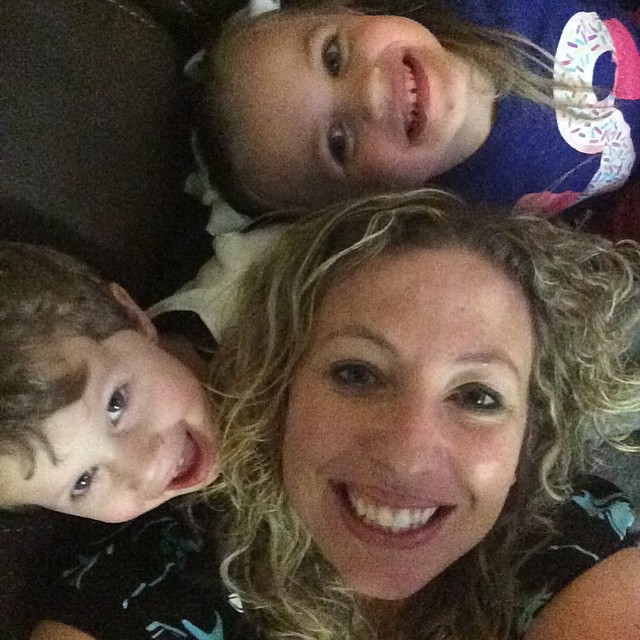
  • I need to remember they are my sunshine, when skies are gray.

    I always say they aren’t any easy answers, only tough choices in this game of parenting.  Sometimes, I think I know too much.  The special education teacher approached me yesterday about placement for Ashlynn going into Kindergarten.  Her attention is such a problem.  It could be related to the apraxia and sensory processing disorder, or it could be something else.  Who the hell knows.  I know she was giving me professional courtesy by asking what I thought would be best, but I have no professionalism when it comes to my children.  I’m their mama, plain and simple.  It is just tooo hard to be both.

    I could tell this woman was clearly hinting toward a program called ILC.  It basically means a more restrictive special education programming where Ashlynn would have a teacher’s aid assigned to her, but it would be integrated full time into the Kindergarten classroom  FML.  Decisions, decisions.

    I don’t want her to have that “label.”  Yes I know, I’m an SLP and I work with those labels everyday and yes, I love each and everyone of those kids.

    I also know this.  I know that this past week my colleague was working with a high functioning kiddo with ASD, also in “ILC.”  He is also mostly mainstreamed in regular education, holding his own.  The class was doing a compare/contrast assignment on characters in a story.  He did an amazing bubble map and flow chart and compared the characters, even comparing their feelings.  When he went back to class, the SLP had him share his work, including the great insight on the character feelings.  The teacher responded, “oh, well he could have just said one was a boy and one was a girl.”  I’m sorry, but I had to  wonder, was it because this boy was in ILC?  He had come up with something way more abstract than just one was a boy and one was a girl…but whatever.

    I had pretty much already decided last night Ashlynn wasn’t a fit for ILC.  I mean sure, extra teacher support would benefit her greatly, but she can do this.  Don’t underestimate her.  Oh, and may I mention I came to that decision easily (meaning tears).

    Then today happened.  The one day I’m not at my daughter’s school, I come home to find out my daughter “ran away” at recess, and no one found her until they did a head count.  She was still on school grounds “collecting rocks in a bucket with a friend” when they found her.

    So….is this the wake up call I need to admit my daughter needs this special programming?  If she had a teacher’s assistant, she would never be out of someone’s sight.  Ugh.  I hate this!!!

    Oh, and did I mention the social worker reminded me I still hadn’t filled out the “the Vanderbilt.”  For those of you that don’t know, that’s a test for ADHD.  Again, FML. All these decisions are freaking overwhelming.

    Then, as I was going home, my mother-in-law who watches my kids told me that Ashlynn, exasperated over something today exclaimed, “bummer!!”  When asked who said that, she matter of factly told her, “my mommy.”

    Smiles

    Oh, and Jace sang “You are My Sunshine” all the way through today.  Yep, he learned that from me.  I sing it to them every night.

    And I remembered.  That is what life is about.  Not the special programming, the teacher’s aid, the ADHD test, the “running away and, and, and…….

    Life is about my rays of sunshine.  Everytime.  Everywhere.  Always.  No matter what.  I wouldn’t trade it.

    “You are my sunshine, my only sunshine.  You make me happy, when skies are gray.  You’ll never know dear, how much I love you.  Please don’t take my sunshine(s) away.
    sunshine

  • Why nature weighs more heavily than nurture

    Why nature weighs more heavily than nurture

    Nature versus nurture.  It’s a phrase that comes up in my profession, even if it’s unspoken.  I’m in the business of child language development, and nothing raises more eyebrows about nurture than a child who can’t talk…. or who has poor vocabulary knowledge…… or is lacking in language skills.

    Oh it comes up in psychology too.  We’ve all heard the stories of twins separated at birth and raised in different environments.  How do they turn out?  Are they a product of their environment, or did nature play a bigger part?  I don’t really know the answers to those particular studies except what I’ve seen on talk shows like all of you.

    However, I’m here to talk about speech and language development.   I’m a professional in it, but nothing could have taught me more about nature versus nurture than having two of my own children.

    Maybe that’s why it took me until my daughter with CAS was almost three to get tested.  Was I in denial?  What the heck?  Well,  I’ve seen the eyebrows from fellow colleagues about children I’ve treated.  I’ve been privy to the comments, “well, his parents just never read to him!” or  “they just don’t talk to their children” or “those parents anticipate all of his needs that he has no NEED to talk.”  So yeah, I’m pretty sure THOSE comments were exactly why I waited so long.

    Deep breath.

    Teachers and speech/pathologists, we need to talk.  This talk is cancerous.  If only you KNEW what a parent who has a child with delays goes through on a daily basis, you would instantly take back your words.

    I am a speech/language pathologist, and had been practicing five years prior to the birth of my daughter.  I might have been unknowingly pompous once.  Let’s face it, I was.  I was convinced my first child, my daughter, would come out practically gifted.  Heck, I had a master’s degree in childhood language development and disorders.  If anyone could give their child the upper hand, it was going to be this mama.  I remember when she was very young, maybe a month, I had a red and green light rattle that I would slowly move around her visual field.  I even think I wrote on facebook I was having withdrawals from my job and was just doing some “speech therapy” with my child.

    I remember cooing at her, using “motherese,” talking to her while I went about my activities, and even using baby sign with her paired with visual models each time she went to “eat” “drink” or wanted “more.” I remember locking toys out of reach so she would have to request them, demanding some sort of verbal response before she received anything of interest, and having her use AAC on my iPad. We (I) sang nursery rhymes, sang our ABC’s, and had letters all over the house like in the bathtub and on the fridge.  I read religiously to her EVERY, SINGLE, NIGHT.  She was going to be a prodigy.  I just knew it.

    It pains me to write her whole story in this post.  I have an entire blog for that.  Suffice it to say, things didn’t quite turn out as I had envisioned.  Her SLP mama who knew the tips and tricks didn’t seem to know the key to unlocking her voice, or her other motor skills.  Despite nightly therapy sessions, it seemed I was to be the only SLP on the planet who had a child who couldn’t talk.  Who I couldn’t TEACH to talk.  Despite going to work everyday and helping my students find their voice, my daughter struggled with hers.

    Despite throwing myself in research, attending conference after conference on early intervention, or consulting with my colleagues, my daughter STILL struggled to speak.

    I’ve come a long way in this journey, but let’s just say my guilt and feelings of failure for Ashlynn were so strong that I specialized in the disorder.  I love what I do, and I love CAS, but I thought at least if I were a specialist I could finally and truly say I really did EVERYTHING I could to help her.

    “You’re an SLP” you might be saying.  “I have parents who don’t care like that.”

    Let me just tell you, that your parents are now MY parents and I have treated many kids with CAS….and I can tell you with absolute, positive, and definitive truth, that EVERY mother feels or has felt like me.  They may manifest it in different ways, but isn’t that to be expected?  We are all individuals after all.  However, every mother I have met is worried.  Every mother I have met is a praying woman.  Every mother I have met feels helpless.  I felt helpless and I’m a speech pathologist!!!

    My dear colleagues, I don’t want to get another phone call from a mother in Arizona who has a bubbly voice and seemingly carefree personality, confess that despite every night that she lays her head on her pillow pleading with God that her child gets better and praying it was nothing she did, the SLP told her if she had just read to her daughter more, she would have been in a different position.

    This is not okay.

    If you don’t believe that mother, than believe me.  I have finally come to terms with the fact that nothing I could have done would have made my daughter talk on time.  Please, please, don’t add to that mother’s guilt.  I assure you, she is full to the brim already with it….despite the fact there is nothing she could have done.

    I have another SLP mommy I have met now with a child who has CAS get a note from an SLP that stated,”still remains delayed despite excellent familial support.”

    That statement, seemingly benign, implies that that SLP believes nurture plays more than nature, and she is having a difficult time reconciling such delays that are accounted for….GASP…..an actual disorder.

    Friends, speech and language disorders are your livelihood.  Please stop assuming nurture played more of a part.  My son was born in the midst of my daughter’s diagnosis.  He never received the FRACTION of therapy my daughter did, and he said mama at 8 months old.  He went onto to say and do things that left me speechless.  Not  because I doubted him, but because based on my experience with my daughter with global apraxia, I didn’t have to TEACH him any of it!  Time after time, I shook my head asking him, “how can you say that?” or “how can you do that?  I haven’t taught you that yet!”

    If this journey has taught me anything, it’s that speech and language delays really ARE an actual disorder like we all learned in graduate school; and SLP’s, your role couldn’t be more important.  Please don’t taint it by coming in with an assumption “if only they had…..”

    Come in with the assumption that “they have….and they are spent.”  Please, please be the parent’s champion as much as you are the child’s.


    nature vs nurture


  • She observes more than we know.

    It started with the name disintegration at Thanksgiving.  My concerns about her writing were brought up to the staff as she flitted playfully around her preschool room while we talked.  I cried and I made tough decisions.

    She noticed.

    I didn’t know it at first.  It started out innocently with her asking when she would see Dione (her private OT) again.  I told her I had to apply for more funding and then we could see her.  I figured that was the end of it…..but it came up again.

    ” I need to see Dione,” she said again randomly one day.

    Me: “Oh I know honey, I’m still waiting on funding and hopefully we’ll see her soon.”

    Weeks passed.

    Again out of the blue she says one day, “Mommy.  I NEED  to see Dione.”

    Me: “Oh sweetie, I know.  Hopefully soon.  I applied and now I’m just waiting to hear back.”

    Crying.

    “MOMMY!! BUT I NEED TO SEE HER.”

    Me looking confused, “honey, what’s wrong?  why?”

    Ashlynn talking through tears, “because I need to practice my yetters (letters).”

    With my heart breaking in two I give her a hug.  I tell her that her letters are perfect, and that she always works so hard and she has nothing to worry about.

    That got me thinking though.  I am the FIRST one to defend her receptive language, her comprehension.  However, apparently I’m also the first one to talk about heavy things in front of her and just assume she was too busy being a kid to notice.  Not true…..apparently.

    Fast forward a month.  Her dad had a bad day at work.  Nothing catastrophic, but a pretty tough day. I was relaying it to her grandma (her dad’s mom) one day when she dropped her off for me to take Ashlynn to school.  Ashlynn seemingly oblivious, was playing on the curb and sidewalk, jumping down, climbing up, being a kid!

    I took her to class and the kids have to “check in.”  They get their name and place it under a feeling picture.  Ashlynn ALWAYS picks happy.  She is happy!  However, today, she placed it under sad.  “Ashlynn” I say, “you put your name under sad?”

    “Yeah, I sad mommy”  she said.

    “You’re sad??  Why?” I asked.

    “I sad for daddy…for his work,” she said.

    I absolutely folded.  What’s worse, I would have never known she felt sad about what I was telling her grandma if she hadn’t of “checked in” right after that.

    Are typical kids able to express these feelings, or do they just stuff them too?  Stuff situations they don’t understand, or is it because of Ashlynn’s apraxia?  My mom made a good point that Ashlynn would have probably brought it up “out of the blue” eventually like she did her OT and letter concerns.

    Maybe.

    I don’t know.

    All I know, is my child is so much more than you see, what I see, what anyone sees.  A five year old shouldn’t have to worry about needing help for writing, or worry that her daddy had a hard day at work.  It makes me wonder what else she worries about of which I have no idea.

    I love this meme: “Don’t underestimate me because I’m quiet.  I know more than I say, think more than I speak and observe more than you know.”

    I will try to never underestimate you again, Ashlynn.  You were born to move mountains.

    thinks more

  • Strategies to promote speech and language in the pre-verbal or minimally verbal child with Apraxia

    Strategies to promote speech and language in the pre-verbal or minimally verbal child with Apraxia

    The great thing about speech and language, is that it a task that can be worked on in any activity.  Familiar routines in the home provide the perfect platform for encouraging speech and language, because this “routinized language” is predictable and context based.

    A fellow SLP and mommy of apraxia, Kim from Landonjourney.blogspot.com and I teamed up for Part I in my series of parent strategies to promote speech at home.  We wrote a list of some of the most effective strategies to encourage early speech in the pre-verbal child, including those with Childhood Apraxia of Speech (CAS).  Part II in the series will focus on strategies for the verbal child with CAS.

    Parents ask a lot, “How do I get my child to practice speech at home?”  Well, we are here to tell you, you don’t need worksheets and flashcards.  Basically, with kids who are minimally verbal, we look for opportunities to model and encourage functional language.  Functional language refers to language the child is more apt to use frequently throughout their day, or may be highly motivating to them.

    With kids who have apraxia, not only do we think just about functional language, but words that also contain simple syllable structures.    These are some of our favorite strategies and targets and how we incorporate them:


    Powerful motivators:

    As moms, Kim and I know that when you have a child who is nonverbal, you anticipate their needs for them.  After all, our babies can’t tell us when they hurt, or where they hurt if they are crying.  They can’t tell us they’re hungry or thirsty; and if they have global apraxia like our kids, they may even have trouble pointing to communicate to us that way.  However, as SLP’s we know that kids need to be motivated to communicate.  If we keep anticipating their needs, they never have a reason to really force themselves to try at something they know is hard for them anyway.   As the parent, you are truly the best person to encourage them to try, even when it’s hard.

    Teach and pair signs with a verbal model:

    Some worry that teaching sign will inhibit speech; however, as long as you make sure to always pair sign with verbal models and give verbal reinforcement after the child uses a sign, sign language can be a powerful bridge to helping the child say it once they begin speaking.

    • “help” “more” “go” and “bye” are good beginning signs to teach. Always provide a verbal model when you sign to your child, but encourage your child to sign, and reinforce any attempt by repeating the word and modeling the sign before giving your child what they want.

    Cloze activities:

    • Cloze activities are great for our kids with CAS because their mouth/body gets ready to respond, and the response is familiar. It reduces cognitive allocation and helps get the motor plan “set.” We do cloze for everything.
      • “Turn the music (pause) ” on, and wait for “on.”
      • “Ready, set (pause)” go!  We do “go” at every green light and I start the sentence and he tries to finish it. This has helped him feel more success at speaking “on command.”
      • “One, two _____” three!
      • Sing nursery rhymes and pause before the last word.  Ashlynn and I would sing “The Itsy Bitsy Spider” and “The Wheels on the Bus” and I would pause before some words that had simpler syllable structures.  For example “down came the rain and washed the spider (pause) out.” or “The wheels on the (pause) bus go round and round.”
      • Read repetitive story books, pausing before the predictable repetitive words.  To read more about repetitive books and to get a free download on how to use them visit my on repetitive books that are great for apraxia.

        • Keep reading for more cloze ideas. 

    Require your child to respond to your yes/no questions:

    • assessing your child’s understanding (i.e. Do you want to go outside?) can often be done with simple yes/no questions before your child is verbally able to respond more.
      • I require my child to answer yes/no questions in anyway he can. Before he could nod/shake his head (difficult for motor planning), I modeled the response based on how I knew he reacted.  Do you want help? (giggle giggle). Yes (nodding my head), I want help. I had to physically move his head before he was able to do this. Now, I will say “yes” or “no” and wait.  This has also helped my son to be able to say yes/no, and they are words we have targeted often. 

    Focus on functional words:

                (These are some of our favorites, but individualize them for your child!)

    1. Bye-bye

                * Bye bye is good because it can also signal the end to an activity if the child cannot say “more.” We say bye to each activity, place, and even to our toys at bedtime.  This works on the motor planning for waving, and then saying bye bye.

    1. In

                * Emphasize each time you put them in: bed, the bath, car-seat, highchair, stroller, park swing.

    * Model when pouring a drink in their cup etc.

    1. Out

                * Emphasize each time you take them out of: crib, bath, car-seat, highchair, stroller, park swing

    * In the kitchen, model each time you take food out of a container, the fridge, a cupboard.

    * In the bathroom, model when squeezing out: toothpaste, shampoo, tissue, diaper wipes, etc.

    1. On

    * Emphasize each time you put music on, water on, lights on.

    * In the bath, “ok let’s turn the water (pause) on.

    1. Down

    * Emphasize when going down the stairs, getting them down from highchair, putting them down,                                       when something falls down, playing “Ring Around the Rosie,” etc.

    * Use a cloze procedure here too, “uh oh! The cup fell (pause) down.” Or “We all fall (pause)                                                down.”

    Again, these are some of our favorites, but work with your SLP to determine your own that work for your child.  Other suggestions:

    Uh oh

    Hi

    Nigh-Night

    More (Mo)

    Child’s age

    Mama

    Dada

    Put

    Done

    Do

    Set activities to song:

    • Based off of research done with melodic intonation therapy, music can provide a bridge to stimulate language.
    • Have fun and make up your own silly songs set to melodies you already know, to make it easy.
      • During bath time, I would sing a body parts song to Ashlynn set to the tune of “Mary Had a Little Lamb”:
        • “Now we’re washing Ashlynn’s hands, Ashlynn’s hands, Ashlynn’s hands, Now we’re washing Ashlynn’s hands while we are taking a bath.”  You can use a cloze procedure here too: “while we are taking a (pause) bath.” 
    • To get on demand phonation, something that is hard for our kiddos,  set songs to Row, Row your Boat and change it to:
      • Row, row, row your boat, gently down the stream, if you see your feet, don’t forget to scream. For my son, this song works to assess areas that he often can’t tell me/show me on command, but in a song, he gets his body ready and is more interested/able to do so.

     Repeat and reinforce spontaneous utterances.  

    • If your child says a sound or word, try to say it back at them and encourage them to say it again.  On demand speech is hard for our kids, so getting them to imitate back to you might be easier when you first imitate something they just said.
      • Ashlynn had a “go to” sound “a dah” that she said for everything.  I would tell her, “a dah?  dah dah, dah, dah” and see if I could get her to say it again on demand.  If she did, then I would change the vowel and see if I could get that on demand, “a dee, dee, dee, dee.”  Play around with sounds and have fun with your child.  This should be a low stress activity and just seem like fun to your child.

    Praise and Encourage ALL communicative attempts           

    • Our kids know talking is hard. A little bit of praise goes a long way!

    Laura Smith M.A. CCC-SLP is a speech/language pathologist in the Denver Metro Area specializing in Childhood Apraxia of Speech.  CASANA recognized for advanced training and expertise in Childhood Apraxia of Speech, she splits her time between the public schools and the private sector.  She is dedicated to spreading CAS awareness.  Her passion is fueled by all of her clients, but especially her own daughter who was diagnosed with Childhood Apraxia of Speech.  For more information visit SLPMommyofApraxia.com  

    Kimberly Haas-McEneny M.S. CCC-SLP, mom to two boys: one with CAS and the other with suspected CAS.  Kim is a Bilingual SLP practicing in Syracuse, NY at the Syracuse City School District. She blogs about her experiences with being both a mom and SLP at landonjourney.blogspot.com

    Parent strategies


  • SLPMommyofApraxia Top Posts of 2014

    SLPMommyofApraxia Top Posts of 2014

    top posts 2014
    Graphics by MyCuteGraphics

    [mojoitem platform=’wordpress’ type=’themes’ item=’popular’ quantity=’3′ seller=’ [pinit] ‘ aff=”]

    I initially started blogging as a writing outlet to express my feelings; however, it is has turned into so much more.  I’m so grateful for everyone who emailed me or reached out to tell me their story this past year, and look forward to connecting with many more.

    Here are my top ten viewed posts from 2014

    1. Interview with Sharon Gretz, founder of apraxia-kids about her journey with a son who has apraxia and what parents should be seeing in therapy:  Read here

    2. If we don’t say we’re scared, does it mean we don’t have fears? Read here

    3. Apraxia is elusive, even to professionals. Read here

    4. Interview with Tonya from Therapy Fun Zone about motor planning issues related to gross and fine motor skills. Read here

    5. What is DTTC therapy for CAS?  An interview with Dr. Ruth Stoeckel from the Mayo Clinic.  Read here

    6. The Day I realized Apraxia was a blessing.  Read here

    7. What is your future like when you have global apraxia.  Read here

    8. Apraxia: How does that affect her vision/hearing? Read here

    9. There are no easy answers, only tough choices.  Read here

    10. Apraxia Intensive Training Institute aka Bootcamp.  Read here


    In case you missed it.  These are 10 of my personal favorites

    1. Did I cause her apraxia? Read here

    2. Just Love: Read here

    3. She really does have special needs: Read here

    4. People will forget what you said…but will never forget how you made them feel: Read here

    5. I saw the light go out in her eyes: Read here

    6. My apraxia star sparkled at her first Walk for CAS: Read here

    7. Kids say the Darndest things….unless they don’t because they have CAS: Read here

    8. Working our way out of the apraxia tunnel: Read here

    9. Wait, is she the ……R word?: Read here

    10. Oh my goodness…Ashlynn turns 5: Read here


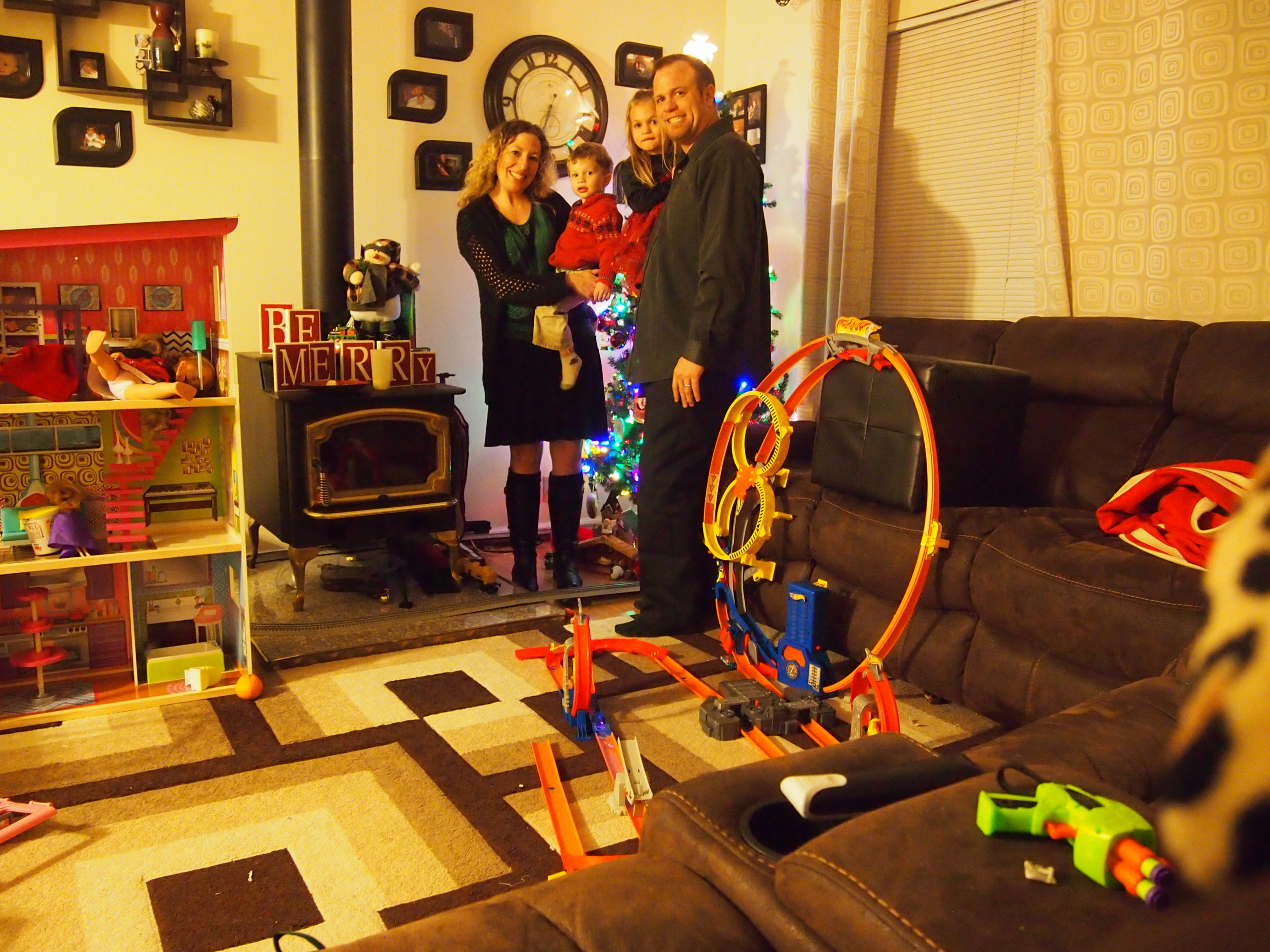
  • Christmas 2014 updates

    Christmas 2014 updates

    Christmas 2015!  Ashlynn is now 5 years 2 months old.  Last year, we hit so many milestones I had waited for, for so long, and I was happy, very happy.  She could jump, ask basic questions, and tell us what she wanted for Christmas.

    This year, I’m not sure if we hit any other major milestones for which I had spent so much time praying.  However, we hit milestones for which I NEVER spent time praying, and that my friends, is even better.

    I learned this year, that Ashlynn really is a leader and not a follower.  Without language or motor skills, Ashlynn is forced to follow her peers around and play with what interests them.  However, this year at our Christmas party, she kept asking to sing Christmas carols and she was front in center.

    FRONT AND CENTER.

    Rocking back and forth singing loud and proud.  The Baskall’s are a family of singers.  My brother, sister, and two nieces were all in choir.  I wasn’t in choir, but I can brag that I have won some karaoke awards in my day ;), and I will say my dad had an awesome voice to accompany him on the guitar.  Oh, and my husband was also a singer before he swore it off after his voice changed (but he can still sing).  Could it be my daughter, the girl who struggled to say every sound and every word, could actually be a singer?  Time will tell, but she’s pretty freaking awesome at it at five.

    I learned this year Ashlynn just may be a crafter. My husband’s side of the family are very crafty, so much in fact, when I married him he told me he expected I would just fall in line.  Um…not exactly.  I have no desire to craft, though I think those who do and what they make are AWESOME.  However, my desire has become a lot stronger now that I see how much Ashlynn thrives with it.  Santa bought her a whole bucket full of supplies: foam pieces, stickers, glue, tape, buttons, glitter, and tissue paper.  She has spent the last two days “crafting.”

    Every parent I think imagines what their child will be and do when they are born, and I’m pretty sure it’s based off of what THEY did or have done.  I definitely had visions of an awesome basketball player, a beautiful writer, an expressive dancer, an angelic singer,  a fierce debater, or an amazing orator.  Can you guess those might be MY interests?

    I’m pleasantly surprised though to realize my daughter just may be the best cook this side of the Colorado Divide, or the Martha Stewart of the Rocky Mountains.  These aren’t my passions, but to see they are hers is something so much more awesome.  To see my daughter has passions outside of any of my expectations lets me see HER.  Something I mourned for so long seeing,  since she couldn’t really talk to me and her motor skill difficulties made it hard for her to manipulate anything.

    Who knows?  I have no doubt though that the girl who has apraxia of speech, a disorder that affects speech AND prosody, the MELODY of speech, may turn out to be one badass singer.  I mean, the girl sings a mean Jingle Bells and Rudolph the Red Nosed Reindeer, just saying. I wish I had a video.  Or, the girl who struggled to coordinate both hands together, just may be one amazing cook.

    I see my daughter more each year. This Christmas was pretty great.

    Oh! I also confirmed my suspicions she has an incredible visual memory like her daddy.  Girl could remember and would tell us every spot Gimbel our elf had been in this year.

    Aside from apraxia though, other issues are more glaring this year.  Her SPD has really kicked in and she CONSTANTLY had her hands in her mouth or anything else she could find to suck on. Family events become so overstimulating that she has noticeably more meltdowns than normal.  In fact, she may have had more tantrums than my two year old. 🙁  These incidents are still hard to watch. They still fill me with worry and with a touch of sadness. Sadness though, that carries hope.

    We got Ashlynn a dollhouse this Christmas to work on imaginative language, something she lacks.  I knew it was a good purchase though when I heard her mimic hours later something I had modeled earlier, “oh how lovely it is outside.”  My husband, amused clarified, “Is it lovely outside?”  Yep….that’s what she said.

    He also got her a scooter to help her work on her balance at a recommendation from his brother.  Sure enough, yesterday she couldn’t even hop forward on it, but today, she could quickly balance while taking little hops.

    That’s the thing though with special needs.  We buy our toys based on how it will help our children with their deficits, and that still leaves me kinda sad.

    However, Ashlynn’s not sad.  She’s amazing.  She perseveres.  She always perseveres, and you know what?  A person who perseveres is a successful person.


    OLYMPUS DIGITAL CAMERA