Category: Apraxia Awareness Day

  • Shaming parents about home carryover

    Shaming parents about home carryover

    I’ve been on this special needs journey with Ashlynn for a long time now.

    I have grieved, recovered, grieved, and recovered again. I have developed thick skin.  I have felt guilt, then peace, more guilt, and then peace.

    I thought I was past all the BS.  I have accepted Ashlynn has severe needs.  I have accepted my journey with Ashlynn is going to be MUCH longer than I ever anticipated and I have embraced it.  This girl goes to school from 8 to 2:45, and almost every day after school she has some sort of therapy or tutoring strategically scheduled to help her overcome all of her learning disabilities.

    I’ve been done making excuses for not doing homework.

    I finally just started being honest and saying “We will see. She is a very busy and overscheduled little girl,” when therapists would ask about homework .  Ashlynn goes to school and then has therapies after school, and then we hope to get home to eat and then finally do her SCHOOL homework.

    That doesn’t mean there isn’t any other homework.  Oh no.  For all the therapies she receives after school there is also homework.  Always homework.  So not only does the average kid NOT go to therapy or tutoring everyday after school, they also then don’t have the homework assignments from said appointments after school.

    My daughter has it all.

    Go to school and get homework, and then attend therapy and tutoring that takes away from homework time after school and receive MORE homework on top of school homework for the extra after school services.  Oh, and my daughter has global motor planning issues, so any homework assigned is usually homework that needs to be done everyday.

    Everyday my daughter is expected to do regular school homework and then follow through homework for OT, PT, Speech and tutoring as well.

    If for some reason said homework isn’t done or done to the fidelity of a therapist’s expectations, I get to see the raised eyebrows and judgemental eyes.  I know what they are thinking even if they don’t say it.  “You couldn’t carve out 5 minutes for some simple yoga poses?  Speech word practice? Sight word drills?”

    Again, I thought I was past this.  I was done feeling guilt.  My whole life is running around trying to get my daughter the help she needs and then coming home and trying to be a mom and get dinner and then at least getting through her school homework. I have been done for a LONG time apologizing for not getting the therapy homework done.

    That was until today

    Two weeks ago I put Ashlynn into a therapy called oral facial myology to help with her mouth breathing, tongue thrust and immature swallow.  I knew going into this the homework component was going to be big.  I knew this! We received a sticker chart to keep us honest.  Ideally she would do the exercises 2x – 3x  a day and we would reconvene in 10 days.

    Today was our second follow-up appointment. I was so proud of Ashlynn!  We had done the exercises every single day!  A handful of days we managed 3x, most days we did 2x a day, and on three days including one where she spent the night at her grandma’s we did 1x a day.

    I was proud of us.  That was no easy feat. Sometimes it cut into bedtime but I knew this was important and I was willing to go the extra mile.

    My sails were immediately shredded within 5 minutes of our second visit.

    The swallowing therapist was warm and inviting as usual.  We were seven minutes late because we were driving from PT and I had forgotten to ask the physical therapist to end 5 minutes before and instead she ended 5 minutes late.  We still made it though! School ended at 2:45, we were at PT at 3:30 and then we were at swallowing therapy at 4:25. I was proud of myself for getting her to all these places.

    “How did the homework go?  Did you complete it?” the therapist asked Ashlynn.  Ashlynn enthusiastically nodded yes as I took out the sticker chart and the therapist looked on disapprovingly.  So there are three days here you could only do one practice session?  For this program to be successful, she needs to be doing the exercises at least 2x a day.

    “There are a couple days we did three!  Does that cancel out the three days we could only fit in one?” I laughed nervously.

    I looked up to a face of disapproval.

    “For this program to work, you really need to be more consistent,” she lectured.

    I swallowed a big swallow and collected our things. I think I literally gulped back tears.  I was paying a lot of money for this therapy.  Of course I wanted to see it be successful.  Of course I wanted to practice with Ashlynn as much as I could.  Guess what though?  I also needed to make sure we completed her homework and read at least 10 minutes per night.  Then and only then did I need to make sure she was doing her homework for reading tutoring, OT, PT, and speech as well.  Oh and she also needed to eat at some point and take a shower.  Being a kid?  Nope.  That’s not in the cards apparently.

    The guilt and responsibility is overwhelming

    I cried as I left the swallowing woman’s office.  I was trying!  I thought Ashlynn and I had done amazing!  We practiced what seemed like every spare minute we had together, which actually is very little spare time together!  I was proud of our dedication, but this woman had only criticism.  She told me if the program was to work, I really needed to get more serious about practice.

    I went home that night in a state of anger.

    I was yelling at my kids, my husband, the computer..really anyone who would listen.  I was devastated at having a therapist, a well respected therapist basically tell me if I didn’t take the homework seriously and with the fidelity it needed to be, my child wouldn’t improve.

    I railed against everyone and then I messaged an ally.

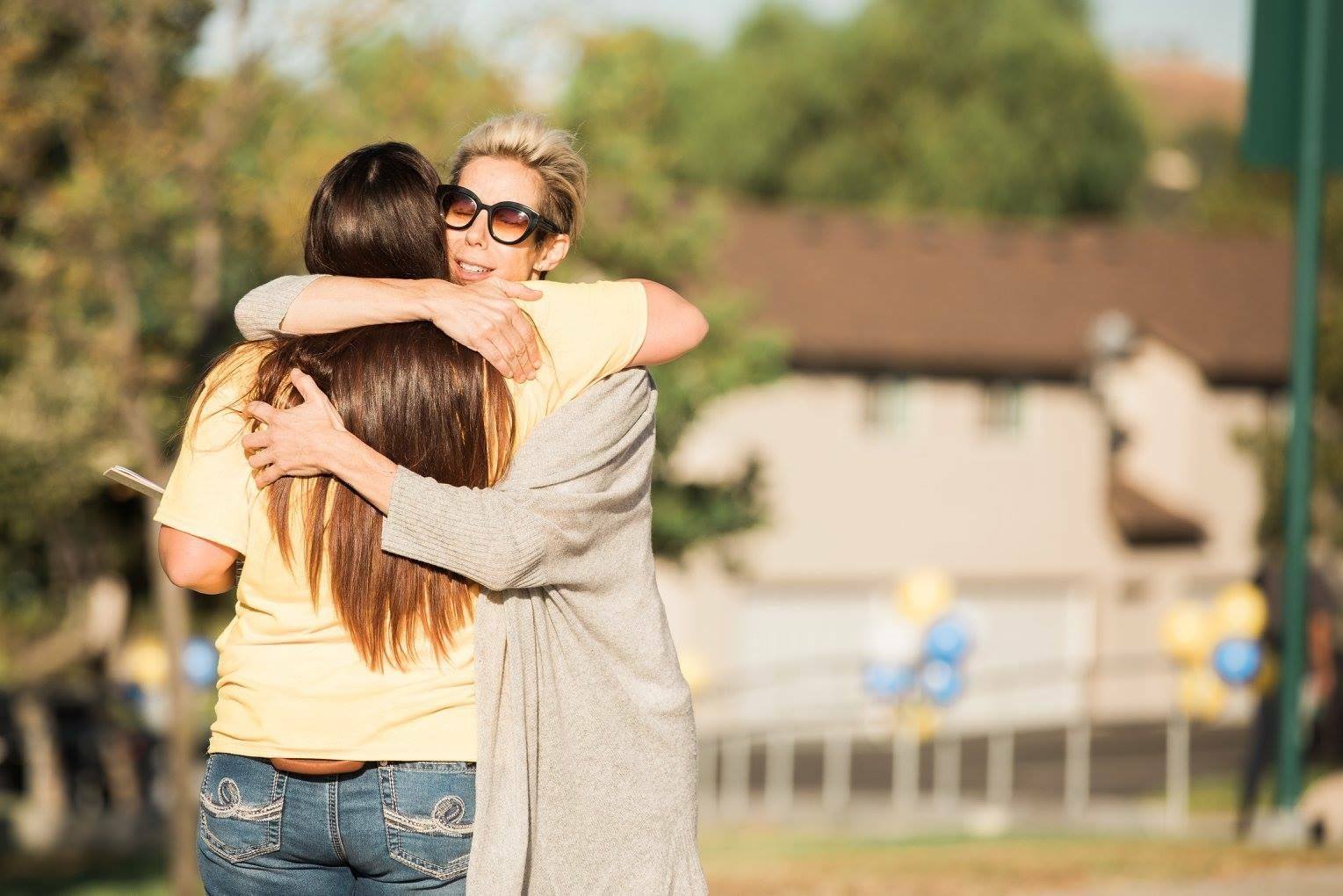
    The ally I messaged is an SLP who specializes in apraxia and oral facial myology.  I was so lucky to meet her at L.A.’s Walk to Talk for Apraxia when I took Ashlynn at 8 years old.  Her name is Lisa Klein and she has a reputation for not only being an amazing therapist, but being an incredible friend, mentor, and encourager. I barely know her yet knew I needed to talk to her.   Fortunately for me, she told me I could call her on my way home and like a crazy mom who is desperate I did.  I talked in a long winded series of run on sentences and questions and when I stopped she said the most impactful thing to me that brought me to tears.

    Laura, first of all, you are a great mom and that girl has come so far because of you.

    I started balling.  Not like crying either or tearing up.  No. Chest heaving ugly cry balling.  I just needed that validation.  She went onto say things that our myofunctional therapist suggested too like going every other week.  She brainstormed how to get in practice or what exercises we absolutely couldn’t miss. She said all of this though with compassion and free from judgement, and that is exactly the type of therapist I aim to be too.  We need to meet parents where they are at and we need to know parents are under an insane amount of pressure and are doing the best they can with the tools that they have.  I need a therapist to understand that.  I’m constantly shocked by the number of therapists who have so most judgement. I say this all the time but I say it again.  Please, if you are a therapist reading this please have compassion and understanding for the parents.  We are fighting daily battles and crying tears no one ever sees.  Please be kind.  Please.
  • Diagnosis, Disability, and Finding your Tribe

    Diagnosis, Disability, and Finding your Tribe

    ​Parenting children is hard.  That isn’t a secret.  Parenting a child with a disability has even extra challenges that shake us to our core.

    I have a daughter with special needs and numerous learning challenges.  When she was almost three, she received her first diagnosis of Childhood Apraxia of Speech, a rare and severe speech disorder in children.  That was the beginning of many a “dark day” in my parenting journey with her.  I remember putting her in her car seat, tears in my eyes as her bright blue eyes smiled back at me and seemed to ask, “why are you crying?”  I sobbed that day.  I cried for so many reasons.  Fear, uncertainty, guilt and confusion.  I texted a friend I was devastated, and I truly felt like I had the wind knocked out of me.

    Slowly I found a community of parents who had children with apraxia as well; and I started to feel hope again.  I started to believe what was possible for their children was possible for mine as well.  I found my tribe, as I like to say.  All these parents understood me, my daughter, our challenges and the significance of our small successes!  I discovered there was a walk to honor kids like mine and spread awareness.  I connected with others in my community and no longer felt alone.  I no longer felt devastated but instead felt blessed by the friendships I had formed.

    My daughter has went on to receive multiple and additional disabilities since that first one of apraxia.  I can’t lie.  Each new diagnosis, report, or low test score feels like a punch in the gut all over again.  However, we have our people now.  We have our tribe.  We have others who understand.  They understand that sometimes you are in such a state of deep grief you can do nothing else but cry and cannot face the world that day.  We also know that stage doesn’t last, and when a member of our tribe is down, we will rally around them and be ready to pick they back up when they are ready to face the day again.

    I learned that some of my darkest nights were followed by the most glorious sunrise; and I found that sunshine in the community around us.  No one should suffer alone.  No matter the struggle, we should all find others who understand our unique situation in the world.  For us, community was the light that found its way into the dark tunnel of grief and showed us the way out.

  • An open letter to the well meaning “I’m here for you.”

    An open letter to the well meaning “I’m here for you.”

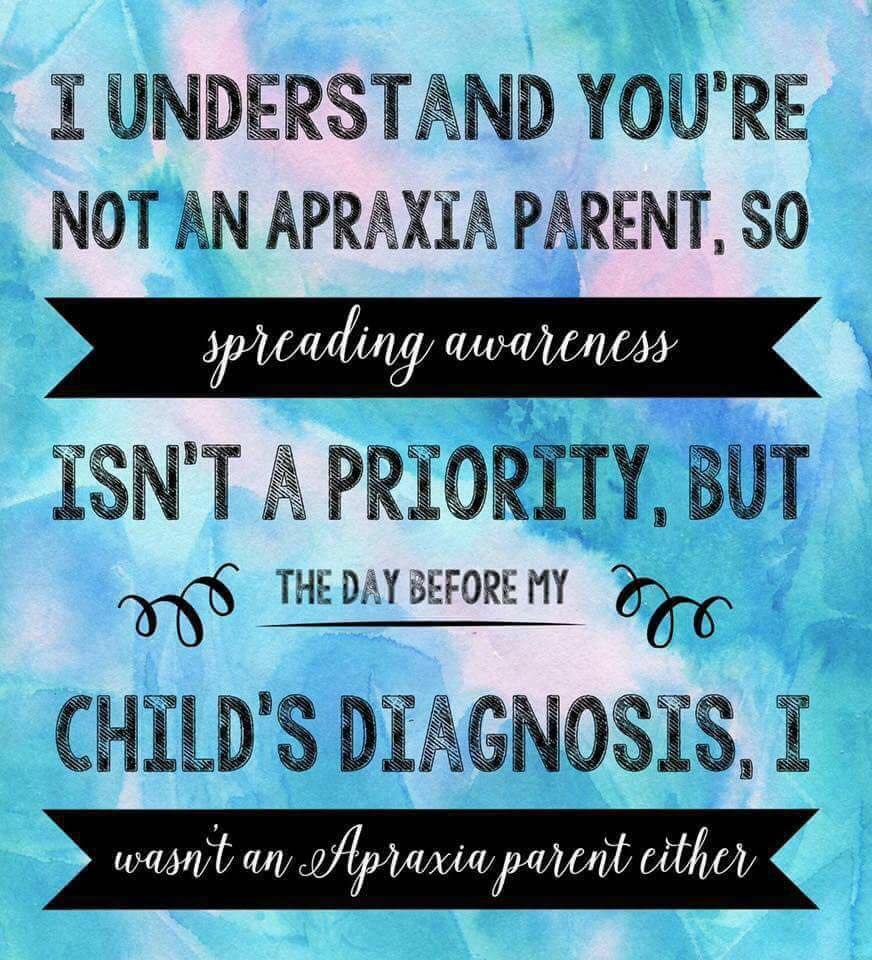
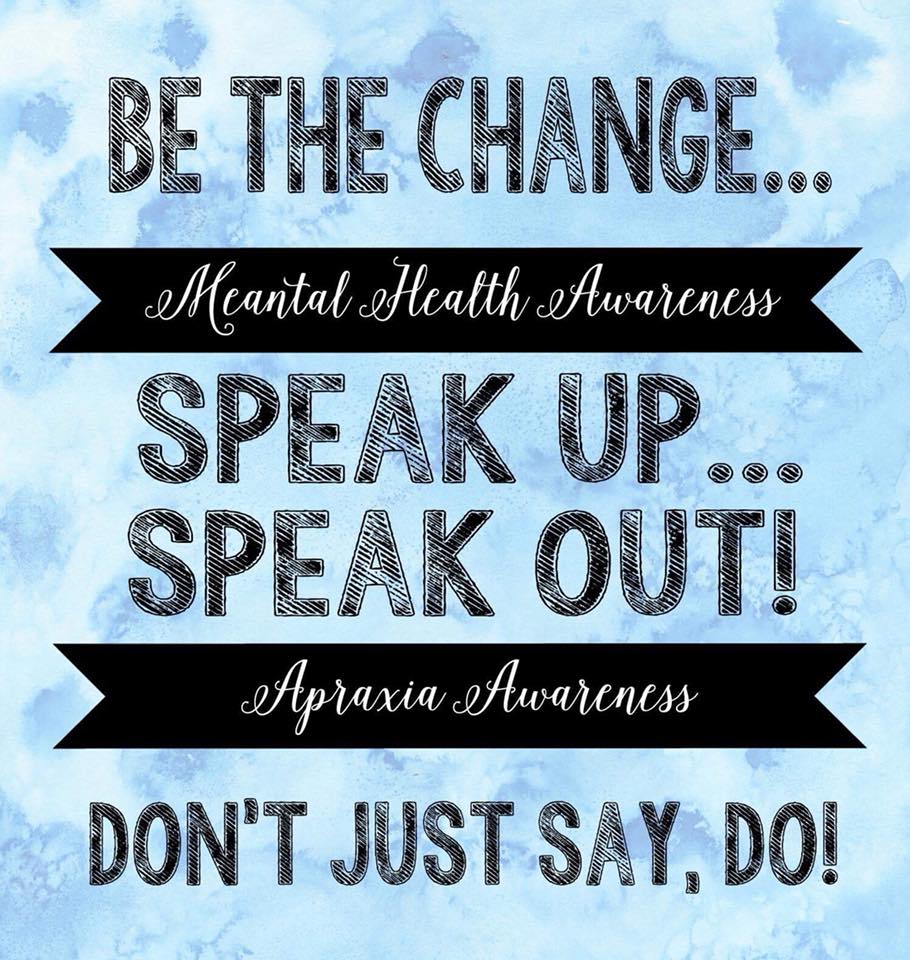
    May is Apraxia Awareness Month and Mental Health Awareness Month.  From the surface, it does not seem like they have very much in common.  Apraxia is a rare and severe speech disorder in children, and mental health has to do with, well mental health.  Ironically, they are the two conditions I write about the most.

    I like and do believe that most people are good. Regardless though of how good of intentions a person may have, I think we many times miss the opportunity we actually want to have happen.  I learned this the hard way unfortunately, when I wrote a popular piece on The Mighty for suicide prevention entitled “The Two Word I Would Have Told My Friend Who Died By Suicide.”

    In this piece, I lament that had my friend just called me I would have been there.  I say this as complete truth.  I know I would have.  I just would have.  Unless I had been gravely ill or incapacitated, had my friend called me during her time of crisis I would have been there.  Who could argue I didn’t have good intentions?  Well to my surprise, many did actually.  Many people pointed out that a person with depression isn’t going to reach out to anyone because they already feel like a burden.  Many people pointed out had I really wanted to help her it would have been I that would have reached out instead.  Oh, and not just reached out and asked, “How can I help you?”  No, not that.  I should have kept reaching out and reaching out because depression is insidious, trapping the person inside.

    Obviously, that was a hard pill to swallow.  However, Maya Angelou once said, “When you know better, you do better.”  In other words, there is no point in feeling guilty about the past because you didn’t know; but once you know, you have an obligation to do better in the future.  Knowing what I know now, I would have kept reaching out.

    This may seem like an odd jump, but the same is true when it comes to mothers to a child with a disability, or heck, the person WITH a disability.   The road is HARD.  That doesn’t mean we would change the road, or wish we had a different car for the road; but it is hard and many times lonely road.   Even close family members will not understand the struggle.  For all those of you telling your friends things like “I’m here if you need me” or “Call anytime” or “Let me know if you need a break.”  I’m asking you to just assume they do and go help them.  Show them that you are there for them.  Offer a day and time you are taking their kids or bringing them coffee and just going to have an adult conversation with them.

    No one, whether it is depression, special needs parenting, or being the person with a disability wants to feel like they are a burden or imposing themselves on anyone.  SHOW them you are there for them.  ACTION.  This is blunt but true.  No one cares what you say, they care what you do.  If you, or me, or anyone else really means “I’m here for you,” then do it.  Show it!

    Currently, I feel like people don’t understand another person’s plight that is not their own until they experience it themselves.  A person who has never had depression doesn’t understand why a person with depression wouldn’t reach out.  A person who has never had a child with special needs, doesn’t understand how difficult it is until or unless they have a child who has a disability.  A person who has never been a single mom doesn’t understand how difficult it is to be a single mom unless the person goes through being a single mom themselves.

    This doesn’t have to be the case!  In this age of the internet and information and knowledge at our fingertips, we have an even greater chance at becoming better people.  We may not know first hand the experiences of others, but we can read about them and then take actions to improving, enriching, and enhancing the lives of each other.

    I could have been indignant that those who actually had depression told me my well-meaning “had she just called me” didn’t hold any weight; or I could learn from it.  I chose the latter and I know that in the future, if I ever think anyone is struggling again I won’t wait for their phone call, but will deliver it myself.

    Le’ts let this age of information make our lives and the lives of those around us better, because knowledge is power and we have knowledge at our fingertips. If we know that it is a universal truth that everyone in this life will have or will be going through some sort of struggle, let’s choose to be kind and not simply say “we are here if you need me,” but take the actions that show others we truly care.

    Let this Apraxia Awareness Month and Mental Health Awareness Month not just be a crazy coincidence, but a reminder that everyone on this planet is experiencing joys, fears, heartaches, and love and that is simply this thing called LIFE.  Beyond the “I’m here for you,” let’s let this month be a chance for us to show it through our actions.  Mark Twain said, “Twenty years from now you will be more disappointed in the things you didn’t do, than by the things you did do.”  So in this month of May, what are YOU going to DO to make a difference?


  • The 6th apraxia awareness day brought smiles, tears, and a jaw dropping moment

    Can it be that this is officially the SIXTH Apraxia Awareness Day?  The first one was way back in 2013 and was fresh off the heels of Ashlynn’s diagnosis.  At that time I was in such a sad place and having an awareness day was uplifting, empowering, inspiring, and amazing.

    Not much has changed, but for different reasons.  This was the first year I decided to go into Ashlynn’s classroom and officially “teach” about apraxia to her classmates.  I hadn’t done it before because apraxia didn’t seem to be keeping her from living her life and making friends, but this year had been different.  Though Ashlynn’s apraxic component is considered mostly resolved, her co-morbidities of dysarthria and language disorder impact her word finding, ability to get her words out, and make her talk slower and sound a little slushier and not as crisp as other students.

    I had a 5th grade student I have seen since second grade come and give the presentation with me.  Interestingly enough, I met and started treating him in second grade, when he was in the very same classroom that Ashlynn was currently in.  As we sat in front of 86 second graders, I saw his confidence grow throughout the presentation.

    I sat behind him ready to clarify anything that didn’t need clarifying.  Like a pro, he listed the three main causes:
    1.) Genetic
    2.) Brain injury
    3.) No known cause and just present at birth

    He was adamant to me beforehand that the kids know you “can’t catch it.”  I thought it was odd and told him I thought most kids wouldn’t think that, but if he wanted to say that it was a valid point.  I was shocked, I mean stunned, when I tell you what happened when he asked those 86 second graders if they thought they could catch it like a cold.

    THEY ALL RAISED THEIR HANDS.

    I was shocked, but my 5th grade student wasn’t. He knew.  I know a lot about apraxia, but this was new.  I had no idea kids thought they could catch it just by hanging out with her.  Oh my gosh!!  Had I known this I would have been teaching about apraxia to her class EVERY awareness day since she was in preschool.    Like a professional, and with his apraxia on display, my 5th grade student explained apraxia was nothing like a cold and you couldn’t catch it.  He reiterated the three main causes and moved on.  I had to have been beaming with pride from behind him.

    Next up was our demonstrations on what it feels like to have apraxia. My student gave the example of having the kids imagine they wanted to say “dog” and they knew the word “dog” but when they opened their mouth they said something completely different like “bwog,” and no matter how much you know how to say it and what you want to say, your mouth won’t say it correctly.  The second graders eyes were big and curious.

    Since Ashlynn also has extreme word finding issues compounded by anxiety, I had prepared an activity in which we called up two students.  I had a sentence written on a piece of paper that student 1 would have to act out for student 2 to guess without saying words.

    My student called on a boy and a girl each time for the first three examples.  For the fourth, just like a true teacher, he asked Ashlynn to call on two students.  She was excited to have control.

    After this activity it was time for questions.

    “How many kids have it?” asked one student.  About to jump in this 5th grader said,
    “1 in every two schools.”  What a great way to say 1 in every 1000 students!

    “What does it feel like?  Does it hurt?” asked one child.  The 5th grader answered that it doesn’t hurt physically but it hurts emotionally.  Actually he had an apraxic moment and said the opposite, but I was there to make the minor clarification and he went on to explain that it hurts emotionally.  “It hurts when you want to get something out and you can’t and it makes you sad.”  I seriously think I had tears in my eyes.  He was getting through to these kids.

    The day was so full circle.  When I met this 5th grader, I had just completed my Apraxia-Kids bootcamp training and was ready to help and empower children with apraxia.  Here I sat three years later from bootcamp and six years later from Ashlynn’s diagnosis beaming with pride.  What I learned today was our kids with apraxia are going to be okay.  Empowering them with knowledge and giving them a platform to educate and be their true authentic selves is going to be the winning formula.  Beyond resolving or not resolving, having residual effects or not, empowering our kids with knowledge and then giving them the opportunity to educate is going to change the world.  It really is, and I know our kids may struggle in school, but they are going to win in LIFE.

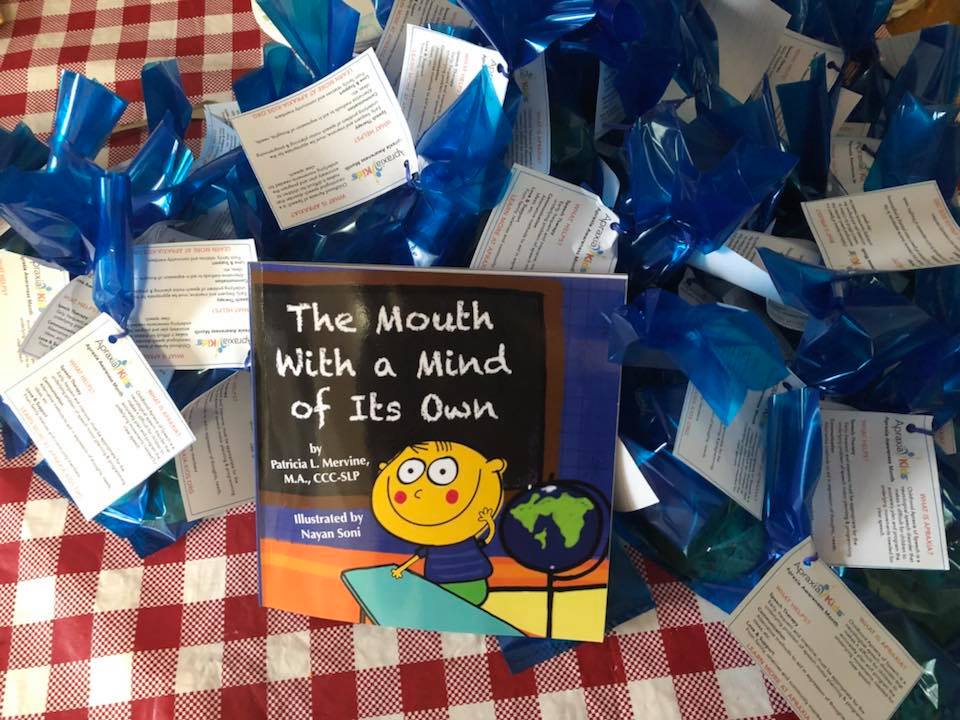
    We sent the kids away with treat bags and an informational tag on apraxia.  I had planned on reading the book in the picture but decided against it because the demonstration was so much more powerful and interactive.

    At the end, my 5th grade student passed out treat bags with Ashlynn.  Where Ashlynn was shy and reserved, he encouraged her to stand with him and help him pass them out.  She beamed and felt special.  I looked at them and saw the passing of the torch.  I had empowered him, and here he was empowering and encouraging my daughter.  I just sat back and watched with tears of gratitude in my eyes.  I have told him multiple times, begged him actually to come back and find me somehow when he is older.  I know he is destined for so many greater things than just his apraxia.  In fact, apraxia has prepared him to be the incredible person I know he’s going to be.

  • A fish in a tree and the teacher who helped her swim

    A fish in a tree and the teacher who helped her swim

    Ashlynn is in 2nd grade and is in Girl Scouts.  She has been in Girls Scouts since Kindergarten.  She loves it; but honestly, Ashlynn loves most activities and new adventures.  Yes she has apraxia, dyspraxia, SPD, ADHD, learning disabilities and a language processing disorder; but despite all of those disabilities she is a true extrovert that one.

    Ashlynn’s Girl Scout troop leader is seriously amazing.  If there were an award, I would nominate her to be the best girl scout troop leader in the state, because she is.    A girl scout troop leader is a volunteer who donates their time.  This woman though I think must be a real life saint who deserves a salary.  When Ashlynn first started Girl Scouts I wrote a post about how she became misty eyed and told me that she knew what Ashlynn was going through.

    When I first met her, I noticed something a little off with her speech.  Later I found out she has a hearing disability, and has had one since birth.  From the beginning she was very concerned about Ashlynn’s needs.  I was also surprised to learn that she had never had anyone with a disability before.  She told me she just wanted to make sure this experience was the best possible experience for her, and that she was willing to make accommodations or help her however she could.  We ended up having to make a few accommodations, especially with requirements. For example, in Kindergarten the girls needed to have memorized their name AND address to earn a special pin.  It took everything we could do for Ashlynn to learn the address, but we could just not get the phone number at that time.  Ms. E made an accommodation like a trained special education teacher would; and said as long as she can memorize one of the two, she would earn her pin.

    The other night the girls had homework.  It was a picture where you had to find items hidden in the picture.  She sent home the actual picture; and then she found, on her own, a simpler picture and told me that Ashlynn just had to finish one.  In special education we call this modifying the curriculum.  This woman has never read Ashlynn’s IEP.  She does not in fact know her modifications or accommodations.  She intuitively does them.  I can’t help but think it’s because she understands.  She has walked Ashlynn’s shoes.  She totally, totally gets it.

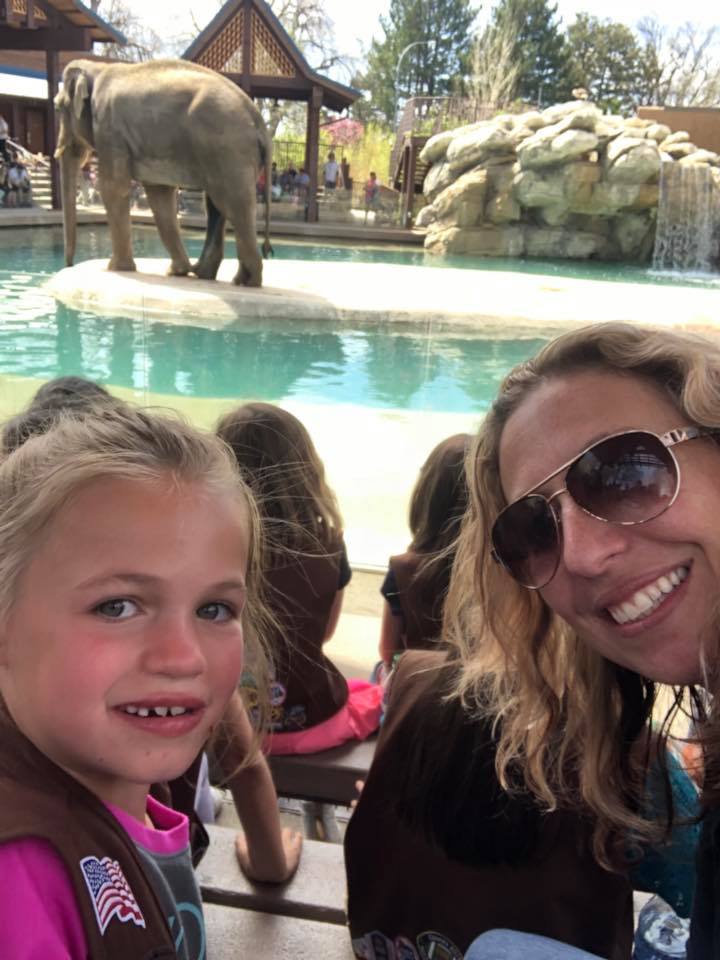
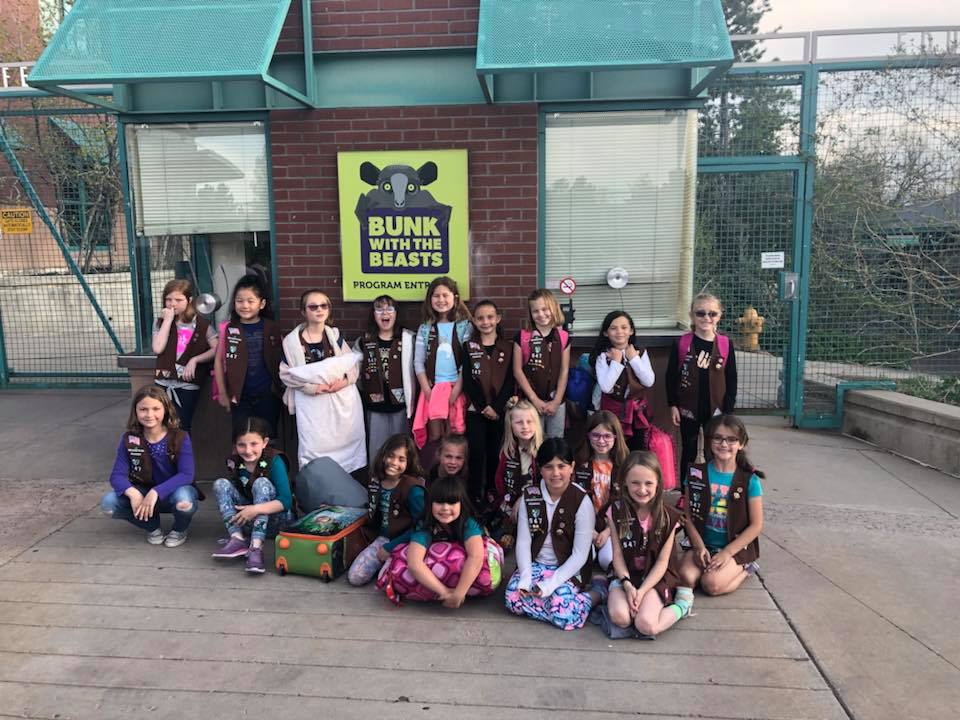
    This past weekend there was an event at the Denver Zoo called “Bunk with the Beasts.”  The girls would get to spend a night away from home and “camp” at the zoo.  Right after I received the group email about the event, her troop leader followed up with a personal email requesting that she know of any special accommodations or help that Ashlynn would need so she could do them.  She didn’t want Ashlynn to miss out.  I sent back a big list.  Ashlynn has dyspraxia.  Activities of daily living, like all the steps to get ready for bed are NOT easy. Her troop leader wrote back it wouldn’t be a problem.  A few days later a chaperone pulled out so I was asked to come.  I was thrilled!  I said yes immediately.  This way her troop leader could focus on the other 18 girls, and I could be there and help Ashlynn.

    When we arrived, there were 4 adults to 19 girls.  Her troop leader split them into groups of two.  She told me that usually a chaperone or leader is not placed with their girl, but in this case she made an exception.  So her and I were in charge of one group of girls in which Ashlynn was a part of, and the other two co scout leaders were in charge of the other group of girls for the zoo tour and excursions.  Some would find this preferential treatment; but it is in fact, an accommodation. I found a renewed sense of awe in this woman.  She went onto explain that many of the girls have developed “best friends” and she purposefully separated them for this event because a troop cannot be a troop unless they all learn how to work together.  I shrugged it off.  She looked at me more earnestly and said, “No, when I mean best friends I mean like this,” and she proceeded to hug my arm and not let go.  I still shrugged it off not realizing yet her point.

    As she gathered the girls and called out what group they were in, one of the girls was visibly shaken.  Her mom is a girl scout troop co-leader and I was standing next to her at the time.  She told me that this was a big reason her daughter wants to quit Girl Scouts next year, because Ms. E insists that the girls be separated from their best friends.  As she talked I looked on.  Most girls had a best friend in which they were sitting next too.  If not, they were still obviously part of the group.  Two girls sat in the back of the group slightly removed, but Ashlynn was basically completely removed in the back by herself.  Don’t get me wrong, she wasn’t acting upset or lonely.  Ashlynn loves girl scouts.  It just struck me in that moment that most girls had an “arm clinging” best friend, and my daughter had no one.  This mother I was standing next to felt so bad her daughter would feel alone and away from her best friend for a couple of excursions, and my daughter felt that way basically all the time.  I don’t fault this mom.  Maybe if I didn’t have a kid with a disability, I would feel the same way too.  Maybe I wouldn’t understand or even notice that another child in the group, the child with disabilities never had any of those best friend moments.  Maybe I would be sad that my child would be sad for a couple hours and never realize this girl in the same troop sitting in the back by herself doesn’t EVER have an “arm hugging” best friend. Maybe…..

    Ms. E did though.  Ms. E noticed.  That’s why she split them up.  Society needs to stop casting those who are different to the outside, but including them and accepting them too!  We are all better when we work together.  Ashlynn and I had the best time.  Ms. E paired each child with a “buddy” and Ashlynn was thrilled to have a peer’s hand to hold as she walked around the zoo.  Ashlynn’s joy is so contagious and she is an adult magnet.  I could see though in this setting, just how unlike her peers she looks.  She’s not shy.  She doesn’t get embarrassed or worried about making mistakes.  She bonks into stuff and people and laughs at herself.  She loses attention easily and starts to wander which would annoy her buddy.  She would randomly start talking or singing when you weren’t supposed to and her buddy would have to shush her. It didn’t matter though.  It made Ashlynn’s entire night to be part of her peer group.

    I came home and cried to my husband I get why girls think she’s different.  She’s not stuck up.  She’s not concerned about what other people think.  It’s amazing how society gets it’s grasp into children as young as second grade.  I noticed so many girls tugging at their shirts, checking their appearance, and censoring what they say because they want to fit in.  I couldn’t help but look at Ashlynn and think of the Dr. Seuss quote, “Why fit in when you were born to stand out?”

    What’s ironic is these kids who “stand out” end up changing the world.  I am almost obsessed with successful people.  Notice I didn’t say “famous” people, though many might be famous.  No SUCCESSFUL people.  People actually changing the world and making it a better place.  The innovators and visionaries.  Most of them were kids who were a little different.  Some may have had a “disability” like ADHD, dyslexia, or whatever.  Bill Gates said once, “Be nice to the nerds.  You might end up working for them.”

    Last month in the news the boy scouts were under fire for revoking the eagle scout badge for a teen with Down Syndrome.  The parents filed a lawsuit claiming that their son was being discriminated against because without accommodations, there would be no way he could earn the necessary requirements to get the Eagle Scout Award.    

    The argument against him earning the award was that though he tried his hardest, he did not meet the requirements set forth.  If you don’t have a person with a disability in your family, I could see how this could make sense to you.  There are requirements that have been established, and if a person can’t meet them for whatever reason, they don’t.  There are able bodied children who don’t meet the requirements either and that’s just the way it is, right?

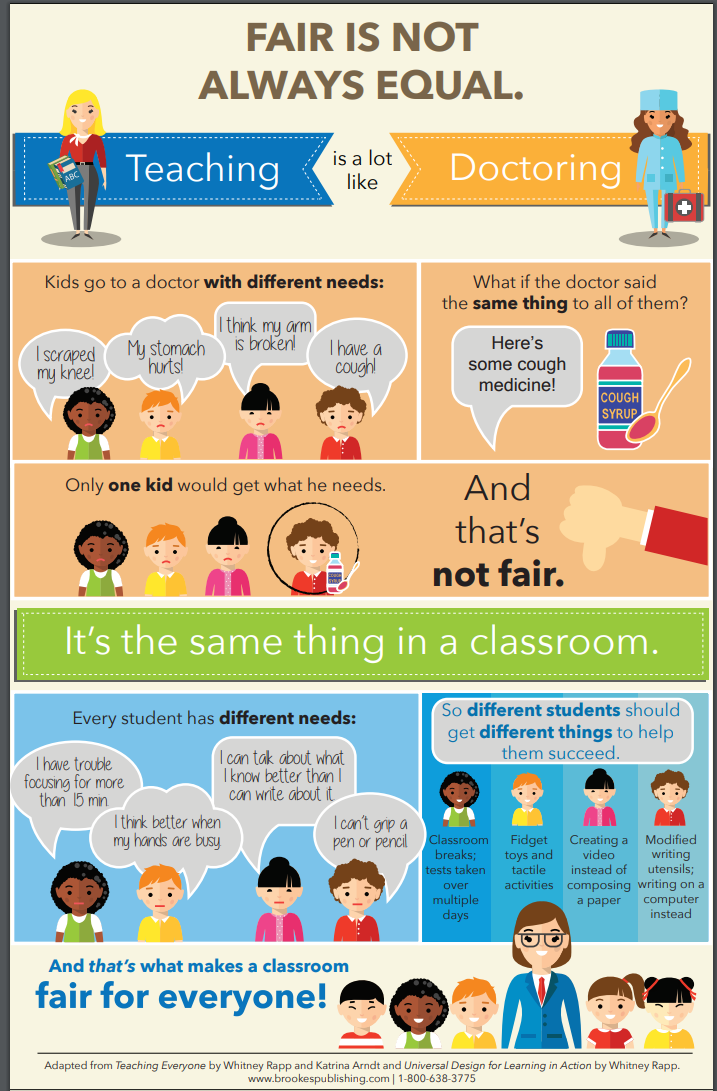
    Let me point out this graphic.

    This graphic compares teaching to going to a doctor.  Kids go to the doctor for different symptoms, and the doctor treats the symptoms.  It would be ridiculous though if you went in with a broken arm and the doctor prescribed antibiotics.  Under our current educational model that is not inherently inclusive; this is exactly what is happening.  The current educational model is based on a child without any learning, attention, or behavioral disabilities.  The lessons are made and the classrooms are set up for kids who can sit in a chair, listen and interpret information, and then attend to their work.  It is not equipped for  the child who needs sensory breaks, or the child who needs to use asisstive technology to help them write because they can’t, or the child who needs assistive technology to have something read to them because they can’t read.  It is not set up for the child who cannot learn through the auditory channel but learns best through visual and tactile channels.  Here is the most important piece though about all of this.  Children who are not “typical” CAN show their learning and skills in other ways if they are just given accommodations!!

    That’s not fair, you might say.  I would counter that it’s not fair we have a bunch of children with broken arms (learning disabilities) being forced to take antibiotics (traditional education), and then are penalized for failing. They are SET UP to fail.  A system that mandates all children must learn the same and prove they have learned the same is a broken, discriminatory system.  As Albert Einstein once said, “If you judge a fish by it’s ability to climb a tree, it will spend it’s whole life thinking it is stupid.”

    Ms. E understands this and I am so, so thankful to her.  The challenge today for apraxia awareness month was to recognize a teacher making a difference.  There are so many amazing people I could choose, but today I Thank you Ms. E, for recognizing my daughter is a fish and deserves a chance to swim.

  • The journal entry I wrote when I learned my daughter had apraxia

    The journal entry I wrote when I learned my daughter had apraxia

    [wysija_form id=”1″]It’s November of 2017 and we are decorating for Christmas!  I’ve been trying to do some deeper cleaning too because man do things accumulate!  I happened to run across some old journals of mine.  This one struck me, I guess because since I wasn’t yet blogging, I had not ever gone back and read what I wrote around the time she was diagnosed.  It’s a good reminder of just how far we have come.

    10/4/2012

    Oh Ashlynn.  How my heart breaks that you have apraxia.  You are such a sweet, fun, and happy little girl, and it makes me sad you can’t tell me what is in that pretty head of yours. People always stop wanting to talk to you.  You smile, but no words come out. You’re talking so much more at home, and I work on your speech with you everyday.  I don’t want to burn you out or have you think I’m disappointed when I correct you, and so far you are agreeable to the help.

    I always want you to know I love you and I’m so proud to be your mom.  You are a wonderful big sister to Jace, so sweet, loving,and caring.  Jesus is in your heart and shines through you.  Together we’re going to beat apraxia.  I love you Angel, my little Ashlynn Kay.

    Love,
    Mommy